


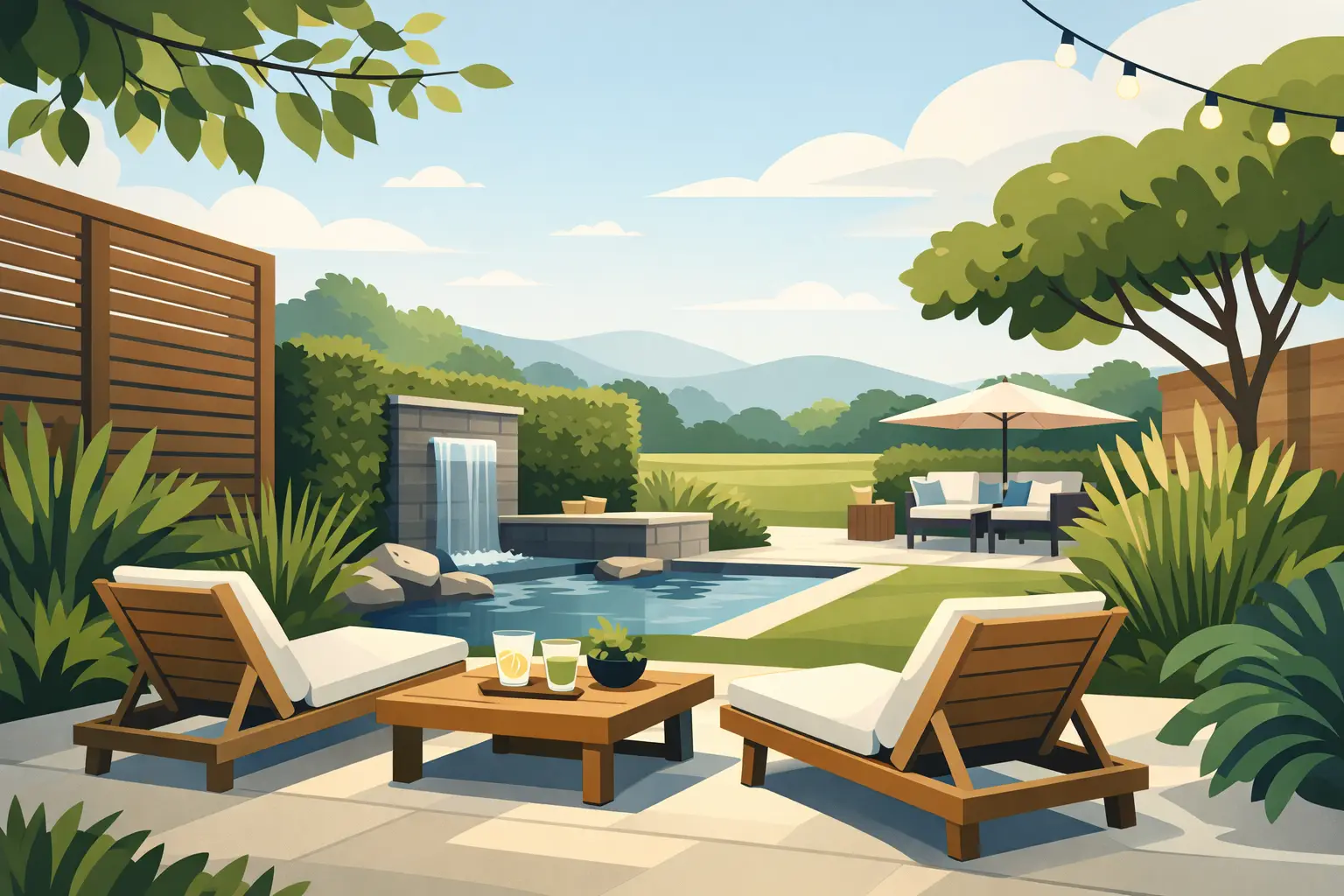
03 Aug How to Design a Privacy Backyard That Feels Open
A backyard should feel like part of your home, not a space you hesitate to use because the neighbors have a clear view. Learning how to design a privacy backyard starts with more than choosing a tall fence. The most successful private yards use thoughtful layers of planting, structures, grade changes, and outdoor living spaces to create comfort without making the property feel closed in.
For homeowners investing in a custom landscape, privacy should support the way the space will be used. A secluded dining terrace needs a different solution than a poolside lounge, a family play area, or a quiet place for morning coffee. When privacy is planned alongside circulation, views, drainage, and planting, the result feels intentional from every angle.
Start With the Views That Matter Most
Walk the property before deciding where screening belongs. Stand at the kitchen window, on the patio, beside the pool, and at any future seating area. Then look outward. Identify direct sightlines from neighboring windows, upper-story decks, driveways, sidewalks, and nearby commercial areas.
Not every edge of the yard requires the same level of enclosure. Often, one or two carefully placed screening elements can solve the most intrusive view while preserving open sightlines to mature trees, sky, or a well-designed garden. This approach makes a yard feel expansive rather than boxed in.
Also consider the views into the property after dark. A backyard that feels private during the day can become exposed when interior lights illuminate the home and landscape lighting highlights seating areas. Planning for both conditions leads to a more comfortable outdoor environment year-round.
Let the intended use guide the design
A dining area generally benefits from a sense of enclosure around its perimeter, while a lounge may need privacy at seated eye level without blocking the view above. Near a pool, screening should account for changing sightlines from standing, sitting, and neighboring second-floor windows.
The goal is not always total visual isolation. It is to create places where your family and guests can relax naturally. A well-positioned planting bed, decorative screen, or pergola can create that sense of separation without turning the yard into a series of walls.
Build Privacy in Layers, Not One Solid Barrier
A single fence has a role, particularly where clear property boundaries and immediate privacy are needed. But a fence alone can look flat and can feel imposing, especially on a smaller lot. Layered privacy design produces more depth, softness, and seasonal interest.
Start with a durable boundary element where appropriate, then place planting in front of it. Evergreen hedges provide consistent coverage through winter, while decididuous shrubs, ornamental grasses, and perennials add texture and movement. A small tree canopy can lift the eye upward and help screen upper-level views that a fence cannot address.
This layered composition also gives a landscape greater visual richness. Rather than seeing one uninterrupted wall, you see a sequence of foliage, form, and color. It is a more refined solution and one that better reflects the quality of the home.
For properties with limited depth, choose plants according to their mature size, not the size they are on installation day. Overplanting may create fast coverage, but crowded materials compete for water and light, lose their intended shape, and require more aggressive maintenance over time. A professional planting plan balances immediate impact with healthy long-term growth.
Choose living screens for the site, not just the look
Evergreens are a natural choice for year-round privacy, but the right species depends on sun exposure, soil conditions, available space, and the level of maintenance desired. A narrow upright hedge may suit a side yard, while broader layered planting can be more effective along a rear property line.
In the Greater Toronto Area, winter hardiness and salt exposure can be decisive factors, particularly near driveways and streets. The landscape should be built to perform through local weather, not simply look appealing in the first season. Thoughtful plant selection is part of sustainable landscape design: healthy, site-appropriate plants require fewer replacements and less intervention over time.
Use Structures to Create Privacy Where You Gather
Living materials take time to establish. Architectural features can provide immediate privacy while planting matures, and they can define outdoor rooms with a level of precision that hedges alone cannot achieve.
A pergola over a dining area creates a strong sense of shelter without closing off the space. Add a slatted roof, drapery designed for outdoor use, or strategically placed climbing plants to filter views from above. A custom wood or metal screen can shield a hot tub, seating area, or fire feature while adding a distinctive design detail to the yard.
The key is proportion. An oversized screen can dominate a modest yard, while a screen that is too low or too narrow may not solve the privacy problem. Materials should also relate to the home and surrounding hardscape. Warm wood, natural stone, contemporary metal, and masonry can all work beautifully when the palette is cohesive.
Privacy structures are especially effective when they do more than block a view. A screen may conceal pool equipment, frame a garden focal point, support climbing vines, or define the transition from a patio to a lawn. Every component should earn its place in the design.
Shape the Yard Into Distinct Outdoor Rooms
Privacy often improves when a large, exposed yard is organized into smaller, purposeful spaces. This does not mean filling the property with obstacles. It means creating a clear relationship between the home, entertaining areas, gardens, and open lawn.
A patio placed directly against the house may be convenient, but moving a secondary lounge farther into the garden can provide more seclusion. A low retaining wall, raised planter, or change in elevation can establish separation while keeping the landscape visually connected. Even a gently curving path can shift sightlines and make a destination space feel removed from neighboring activity.
Consider where people will enter, sit, cook, and move through the yard. A private space should not require guests to cross the center of a play area or pass directly beside a grill station. Good circulation protects comfort and helps the design feel effortless during everyday use and larger gatherings alike.
Plan for Light, Sound, and Maintenance
Visual screening is central, but a private backyard is also shaped by what you hear and how the space feels after sunset. The sound of traffic, pool equipment, or nearby activity can undermine an otherwise peaceful setting. Moving water, dense planting, and well-placed solid structures can soften unwanted noise, though they will not eliminate it completely.
Outdoor lighting should make paths, steps, dining areas, and key planting safe and inviting without broadcasting the entire yard to neighboring properties. Downlighting in trees, subtle path lighting, and warm illumination at gathering areas create atmosphere while preserving a sense of retreat. Avoid excessive glare and fixtures aimed toward property lines or neighboring windows.
Maintenance deserves the same level of planning. Fast-growing hedges can offer rapid coverage, but they may need frequent pruning to stay dense and proportional. Decorative screens require durable finishes and secure installation. Irrigation, drainage, access for seasonal care, and snow storage all affect how well a privacy landscape performs over time.
Respect Property Lines and Local Requirements
Before installing a fence, tall planting, pergola, or screen, confirm the property line and review local requirements. Height restrictions, setback rules, utility locations, drainage patterns, and homeowner association guidelines can affect what is possible. This is particularly important for corner lots, properties near ravines, and homes with complex grading.
It is also wise to consider your neighbors. A privacy solution does not need to create conflict. When screening is attractive on both sides, properly located, and designed with care, it can improve the experience of adjacent properties as well. Professional planning helps avoid costly corrections after installation.
How to Design a Privacy Backyard With Lasting Value
The best privacy backyard feels like a natural extension of the property, not a defensive response to nearby homes. It protects the moments that matter while preserving light, greenery, and a sense of openness. That balance requires a complete view of the site, from plant maturity and drainage to architecture and the way your household actually lives outdoors.
For a custom project, the strongest results come from coordinating the design and installation as one process. Redleaf Landscape Inc. brings that level of attention to detail to outdoor spaces across the GTA, creating landscapes where privacy, beauty, and function work together. Start with the view you want to enjoy, then build the layers that allow you to enjoy it comfortably for years to come.