


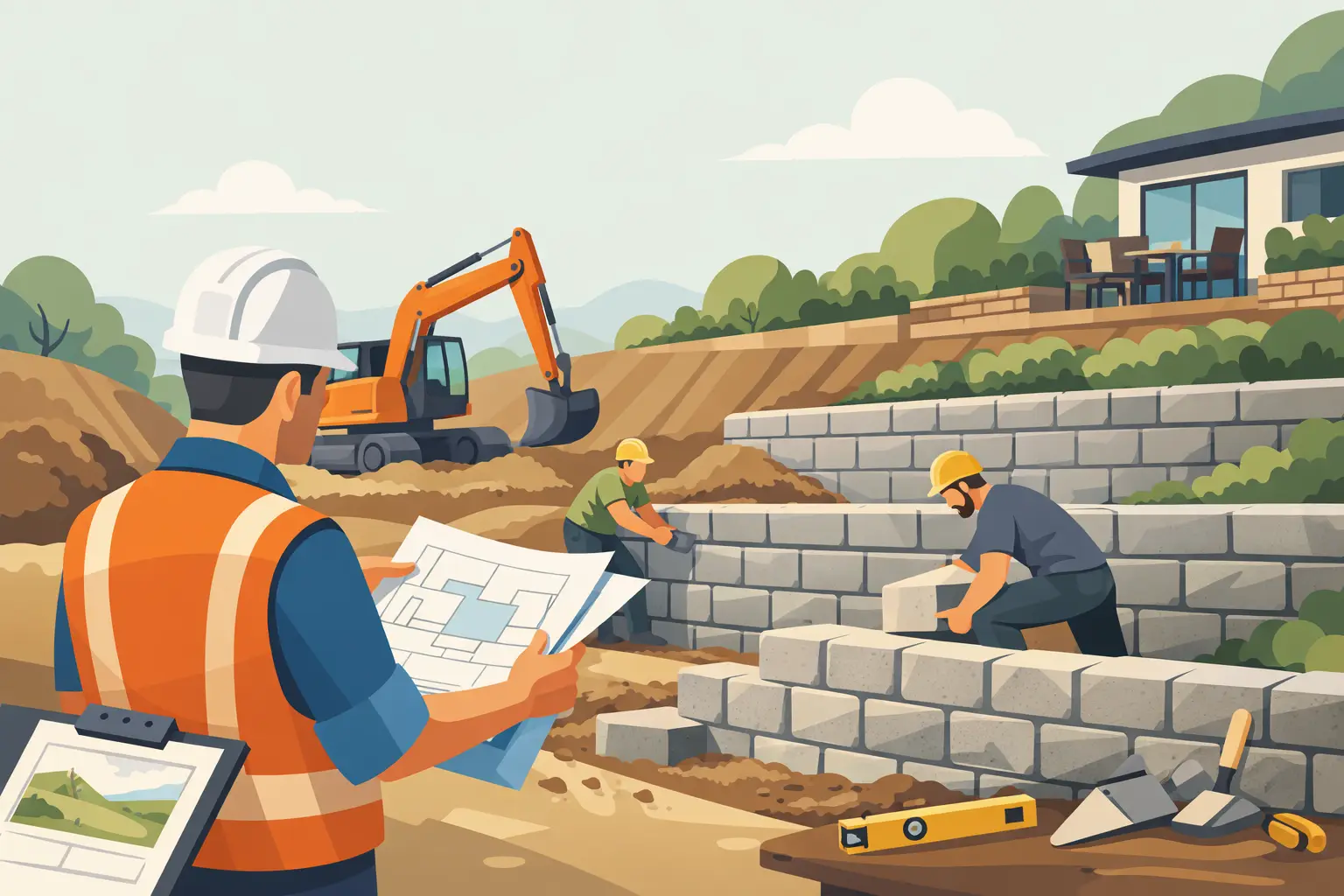
03 Apr What a Retaining Wall Design Contractor Does
A retaining wall usually enters the conversation after something has already gone wrong. Soil is washing out after heavy rain, a slope is limiting how the yard can be used, or a once-flat-looking space now feels awkward, unstable, and hard to finish properly. That is where a retaining wall design contractor becomes more than a builder. The right partner solves the grade problem, protects the property, and turns a difficult area into part of a cohesive outdoor environment.
For homeowners and property decision-makers, this distinction matters. A retaining wall is not just stacked material holding back dirt. It is a structural landscape element that affects drainage, safety, visual balance, and long-term performance. When it is designed well, it can create usable lawn space, frame a patio, support a driveway edge, or define planting areas in a way that feels intentional rather than forced.
Why retaining wall design matters before construction
The biggest mistake with retaining walls is treating them like a simple installation. On the surface, the work can look straightforward: excavate, set a base, stack stone or block, backfill, and finish. In practice, the wall has to resist soil pressure, direct water away from the structure, and fit the grades of the surrounding landscape.
That means design decisions come first. Wall height, wall length, setback, material selection, reinforcement, and drainage all need to work together. Even the appearance of the wall changes how the property feels. A wall that is technically functional but visually disconnected from the home can make the whole landscape look pieced together.
This is why an experienced retaining wall design contractor starts with the site itself. Grade changes, soil conditions, water movement, access, nearby structures, and intended use all shape the final solution. In some cases, one wall is enough. In others, a series of terraced walls creates a better result, both structurally and aesthetically.
What a retaining wall design contractor should evaluate
A professional process begins with more than measurements. The contractor should assess how the land behaves and what the client wants the space to become. A steep backyard might need stabilization, but it may also be the key to creating a better patio level, outdoor kitchen area, or lawn for children to use.
Grade and soil conditions
Not every slope needs the same type of wall. Soil composition, erosion patterns, and load conditions change the engineering approach. A wall supporting only a garden bed is very different from one near a driveway, pool, or structure. The more weight and water involved, the more critical the design becomes.
Drainage and water control
Water is behind many retaining wall failures. Pressure builds when water cannot move through and away from the wall properly. A capable contractor plans drainage from the start, including base preparation, backfill strategy, drainage pipe placement, and how runoff moves across the wider property.
Material selection
Natural stone, concrete wall block, and poured concrete each create a different look and come with different performance and cost considerations. Natural stone can feel timeless and high-end, but it often requires a more customized installation approach. Segmental block systems can offer strong structural performance with a clean, refined finish. The right choice depends on the architecture of the property, the wall requirements, and the level of finish expected.
Integration with the full landscape
A retaining wall should not look like an afterthought. It should connect with stairs, walkways, patios, planting, lighting, and grading transitions. This is where a design-build mindset adds value. Instead of solving one problem in isolation, the wall becomes part of a complete outdoor plan.
The difference between a wall that lasts and one that fails
Retaining walls often look acceptable when they are first installed. The real test comes after freeze-thaw cycles, heavy rainfall, and years of soil pressure. Leaning, bulging, cracking, movement at the base, and drainage issues usually point to shortcuts that were hidden during construction.
Base preparation is one of the most important factors. If the foundation is poorly compacted or not suited to site conditions, movement is only a matter of time. Backfill matters just as much. Using the wrong material behind the wall can trap water and increase pressure. Drainage details, reinforcement methods, and careful installation at every course are what separate a premium build from a quick fix.
There is also a design judgment that comes with experience. Sometimes the most efficient answer is not one tall wall. Breaking the grade into smaller terraces may improve stability, soften the visual impact, and create better opportunities for planting or circulation. That kind of decision reflects craftsmanship and planning, not just labor.
How to choose the right retaining wall design contractor
If you are investing in a custom outdoor project, it makes sense to look beyond whether a contractor can install wall units. The better question is whether they can design and execute a solution that fits your property and your goals.
Look for a contractor who talks about drainage, grade management, and long-term performance as confidently as they talk about finishes. Ask how the wall will connect to the rest of the landscape. Review past projects to see whether their work feels integrated and tailored, not repetitive. A premium contractor should be able to explain why a particular wall type, layout, and material make sense for your site.
It also helps to work with a single accountable firm. When design and construction are handled together, there is less room for disconnect between concept and execution. Details are coordinated earlier, site conditions can be addressed in real time, and the finished result is more likely to reflect the original vision.
For clients who value a polished, long-term outcome, that alignment matters. It reduces guesswork and creates a clearer path from consultation to completed installation.
Retaining wall design contractor services and project value
The value of a retaining wall is not limited to holding soil in place. When designed properly, it changes how a property functions and how it is perceived.
Better use of space
Sloped yards often waste square footage. Retaining walls can carve out level areas for patios, dining spaces, lawns, fire features, or planting zones. The gain is practical, but it also changes how the property is lived in day to day.
Improved curb appeal
Front yard grade changes can either create visual tension or become an architectural asset. A well-designed wall adds structure and refinement. It can frame an entry sequence, support elegant planting, and give the property a more finished, high-value appearance.
Erosion control and protection
Function comes first in many projects. Containing soil, managing runoff, and protecting surrounding hardscape or building elements can prevent bigger repair costs later. In these cases, good design is not an upgrade. It is the standard required for the work to perform.
Long-term property investment
Quality landscape improvements should support value, not just appearance. A retaining wall that is built with proper design intent, strong materials, and skilled installation contributes to the overall usability and credibility of the property. Buyers and visitors may not know the technical details, but they recognize when an outdoor space feels permanent, orderly, and professionally built.
When custom design is worth it
Some retaining wall projects are relatively simple. Others involve multiple elevations, drainage challenges, tight access, or a need to blend structural work into a broader outdoor living plan. In those cases, custom design pays for itself in fewer compromises.
This is especially true for upscale residential properties and presentation-focused commercial sites. If the wall is going to be highly visible, support important use areas, or influence the character of the entire landscape, it should be treated as a design feature as much as an engineering necessity.
That does not always mean choosing the most expensive material or the most complex layout. It means making disciplined decisions based on the site, the architecture, and how the space should perform over time. Premium results usually come from restraint, proportion, and precise execution.
A firm like Redleaf Landscape Inc, with a design-build approach and a craftsmanship-led standard, is positioned to think about retaining walls in that larger context. The goal is not simply to install a wall. It is to create a landscape that feels resolved, functional, and worthy of the property.
The best retaining walls feel inevitable
The strongest retaining wall projects do not call attention to the problem they solved. They make the grade feel natural, the outdoor space feel more usable, and the entire property feel better composed. That is the mark of a well-chosen retaining wall design contractor – someone who understands structure, respects craftsmanship, and builds with the finished landscape in mind.
If your property has a slope that is limiting its potential, the right wall can do more than stabilize it. It can give the space purpose.