


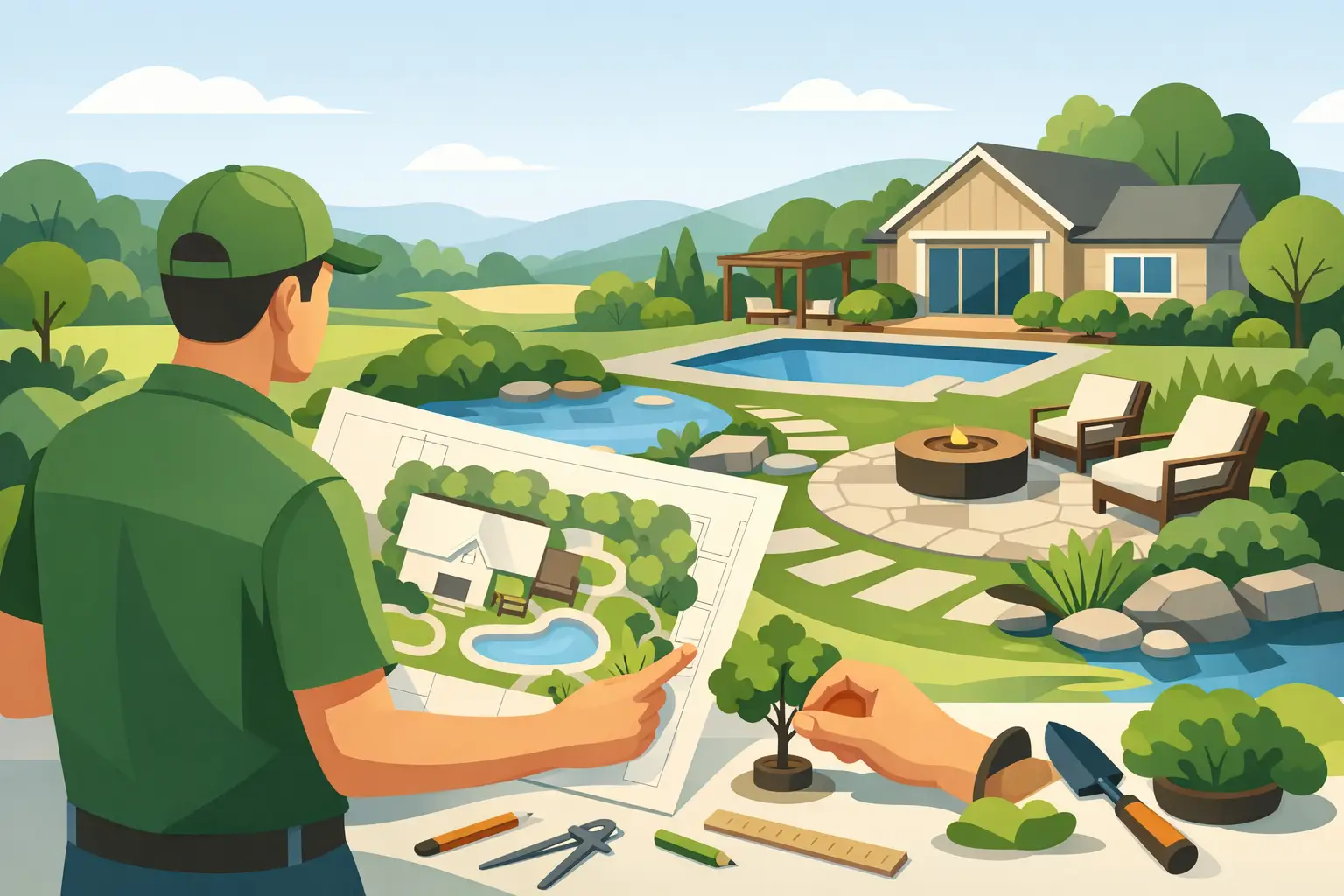
09 Apr A Guide to Residential Landscape Planning
A beautiful yard rarely starts with plants. It starts with decisions.
That is why a guide to residential landscape planning matters more than most homeowners expect. Before the first paver is set or the first tree goes in the ground, the real work is defining how the space should live, perform, and age over time. The difference between a yard that looks finished for one season and one that feels complete for years usually comes down to planning.
For homeowners investing in a custom outdoor space, planning is not a formality. It is the foundation for everything that follows – layout, drainage, materials, planting, lighting, privacy, and the overall experience of being outside. When done well, it creates an environment that feels natural to the home, supports daily routines, and adds lasting value to the property.
What residential landscape planning actually involves
Residential landscape planning is the process of shaping outdoor space with intent. It brings together function, aesthetics, site conditions, and construction realities into one clear direction. That means deciding where people will gather, how they will move through the yard, what needs screening, where sun and shade matter most, and how each element supports the next.
A thoughtful plan looks beyond surface beauty. A patio may seem like a simple feature, but its size, placement, elevation, and material selection all affect comfort and usability. A planting bed is not just about color. It also influences maintenance levels, seasonal interest, privacy, and drainage performance. Every choice should connect back to how the property is used.
This is where many projects either gain momentum or lose it. Homeowners often begin with isolated ideas – an outdoor kitchen, a fire feature, a pool, new front entry steps. Each can be valuable, but without an overall plan, even high-end features can feel disconnected. Good planning turns separate wants into one cohesive outdoor environment.
Start with how you want the space to function
The best guide to residential landscape planning begins with lifestyle, not decoration. A yard should reflect the people who use it.
For some homeowners, that means creating a polished front approach that improves curb appeal and gives the property a stronger architectural presence. For others, the priority is a private backyard built for entertaining, complete with dining space, grilling, lighting, and room for conversation. Families may need open lawn areas, better circulation, and safer transitions between surfaces. Some want a quieter retreat with layered planting, shade, and a sense of separation from neighboring homes.
These goals shape the plan in practical ways. If you entertain often, the patio needs to be sized for furniture and guest movement, not just fitted into leftover square footage. If privacy matters, the solution may involve strategic grading, planting, fencing, or structures rather than a single row of shrubs. If low maintenance is a priority, that affects material choices and the complexity of planting design.
There is rarely one correct answer. There is the answer that fits the property and the way you live.
Read the site before designing the space
A strong landscape plan respects the realities of the site. Every property has constraints, and the best work accounts for them early rather than trying to cover them later.
Grade changes, drainage patterns, soil conditions, sun exposure, wind, and existing trees all influence what is possible. In some cases, the ideal location for a patio may create runoff issues. In others, a mature tree may be worth designing around because it brings scale and long-term character that new planting cannot replicate.
Homes in established neighborhoods often come with another layer of complexity. Tight lot lines, existing structures, aging hardscape, and inconsistent grading can limit clean solutions if they are not addressed upfront. This is one reason experienced design-and-build planning matters. It allows construction logic to inform the design from the start, which reduces costly revisions once work begins.
A plan should also consider how the landscape relates to the house itself. Outdoor spaces feel more refined when they connect to the home’s architecture rather than compete with it. Material tones, linework, scale, and transitions all play a role. A landscape does not need to mimic the house, but it should feel like it belongs there.
Build the layout around zones, not features
One of the most effective ways to approach residential landscape planning is to think in zones. Instead of asking where a pergola or walkway should go first, define the outdoor rooms the property needs.
Most well-planned landscapes include some combination of arrival space, circulation, gathering space, service space, and visual softening. The front entry and driveway should feel intentional and welcoming. Paths should move people where they need to go without awkward detours. Entertaining areas should have enough clearance to function comfortably. Utility areas, trash storage, or equipment zones should be practical but visually controlled. Planting should unify the experience rather than fill gaps as an afterthought.
This zoning approach helps prevent one common mistake: overcrowding the yard with features that leave little room to breathe. Bigger is not always better. A smaller number of well-placed elements usually creates a more elegant and useful result than a yard packed with competing ideas.
Materials and planting should work together
Landscape planning is often reduced to hardscape decisions on one side and planting choices on the other. In reality, the best projects treat them as one composition.
Hardscape establishes structure. It defines movement, edges, gathering areas, and visual order. Planting brings softness, depth, seasonal change, and a more natural sense of scale. When one overpowers the other, the result can feel either too stark or too uncontrolled.
Material selection deserves careful thought because it affects both appearance and long-term performance. Natural stone, concrete pavers, porcelain, wood, and composite elements each create a different character. Some are more forgiving in freeze-thaw conditions. Some require more maintenance. Some pair better with modern architecture, while others support a more traditional or timeless look.
Planting should be just as intentional. The right plant palette does more than add color. It can frame views, define privacy, guide movement, soften built edges, and carry visual interest across seasons. In higher-end residential work, planting should not feel random or overly busy. It should support the architecture and the lifestyle the space is meant to serve.
Plan for comfort, not just appearance
Homeowners often focus first on what the finished yard will look like from the window. That matters, but comfort is what determines whether the space gets used.
Sun and shade are a major part of that equation. A patio that receives full afternoon sun may photograph well but feel unusable in midsummer without cover or thoughtful orientation. Wind exposure can make fire features less effective and seating areas less comfortable. Lighting can turn a space from attractive to truly livable after sunset, but only if it is planned with purpose rather than added at the end.
Privacy is another area where it depends. Some properties need full screening from neighboring views. Others benefit more from partial enclosure that preserves openness while reducing exposure where it matters most. The goal is not always to block everything. It is to create the right sense of comfort.
Think beyond installation day
The best landscape plans account for what the property will become, not just how it will look when construction wraps up. Trees grow, planting fills in, usage patterns change, and maintenance habits become clearer over time.
That future view should influence many early decisions. Fast-growing plant material may offer quick screening, but it can also create pruning and crowding issues later. A highly detailed planting scheme may look rich on paper yet demand more upkeep than the homeowner realistically wants. Premium materials often cost more upfront, but they can deliver better durability, stronger visual consistency, and a more refined finish over the life of the landscape.
This is where craftsmanship matters. Good planning sets the direction, but quality execution is what gives the plan integrity. Alignment, grading, edge restraint, drainage, finish work, planting installation, and lighting placement all determine whether the finished space feels custom or simply assembled.
For homeowners who want a polished, cohesive result, working with one accountable team from design through build often leads to a stronger outcome. It keeps the original vision intact and reduces the disconnect that can happen when planning and installation are handled separately. That approach has guided Redleaf Landscape Inc since 1986, with a focus on outdoor spaces that are as functional as they are visually resolved.
A guide to residential landscape planning that leads to better outcomes
If there is one principle worth keeping at the center of any guide to residential landscape planning, it is this: every outdoor space should earn its place. Every patio, path, wall, planting bed, and lighting choice should answer a real need, support the property, and contribute to a complete experience.
The strongest landscapes do not feel overdesigned. They feel inevitable, as if the property was always meant to function that way. That comes from planning with clarity, building with discipline, and making choices that balance beauty with performance.
A well-planned landscape does more than improve a yard. It changes how a home is lived in, how it is presented, and how it holds value over time. If you are investing in the outdoors, start with a plan worthy of the space you want to create.