


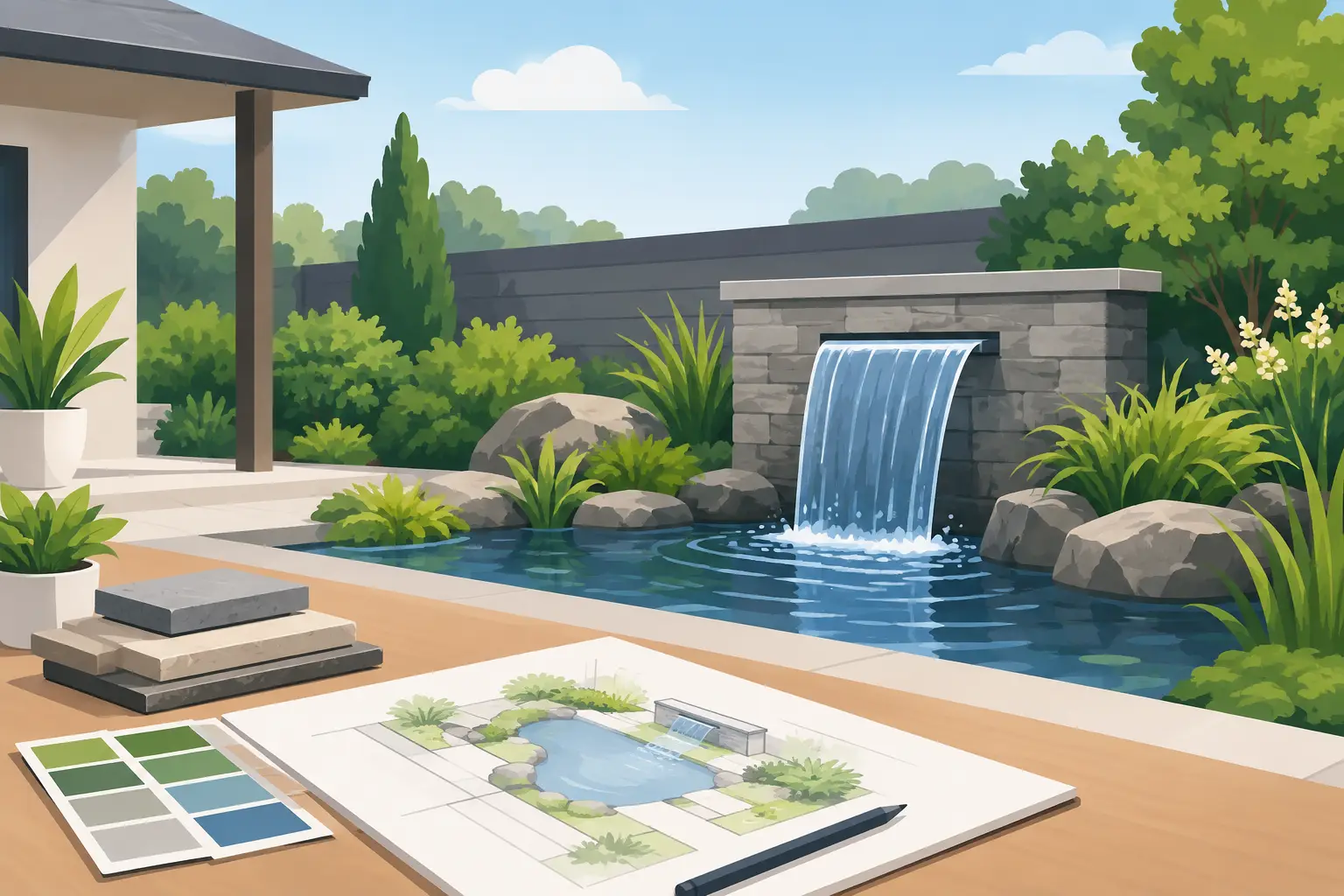
10 Oct Outdoor Water Feature Design Considerations
A water feature should feel like it belongs to the property, not like an accessory placed in the corner after everything else is finished. The most successful outdoor water feature design considerations begin with the experience you want to create: a calm view from the kitchen, a focal point beside a patio, gentle sound that softens street noise, or a memorable arrival at the front of the home.
Whether the feature is a reflecting pool, pondless waterfall, formal fountain, or naturalistic pond, its success depends on far more than selecting a shape and finish. Placement, circulation, drainage, planting, maintenance access, and seasonal performance all influence how the feature looks and works over time.
Start With the Purpose of the Feature
Water can serve very different roles in an outdoor living environment. A still reflecting pool delivers architectural clarity and can make a compact space feel more refined. A cascading waterfall introduces movement and sound. A fountain can provide a formal focal point near an entry or courtyard, while a pond may create a more natural, garden-centered setting.
Defining the purpose early helps guide every later decision. For example, a feature intended to mask road noise requires enough falling water to be heard from the seating area. A shallow, quiet spillway may look beautiful but will not provide the same acoustic benefit. Conversely, a feature built mainly for reflection should avoid excessive movement that breaks the water’s surface.
The intended use of the surrounding space matters just as much. If the patio is designed for dinner parties, the sound should be present without making conversation difficult. If the feature sits near a lounge area, it should create a relaxed atmosphere without occupying valuable circulation space.
Place Water Where It Can Be Experienced
A water feature is most valuable when it is visible, audible, or both from the spaces people use most. That may mean aligning it with a view from inside the home, positioning it beside an outdoor kitchen, or framing it at the end of a garden walk.
Avoid treating placement as an afterthought. A beautiful fountain hidden behind mature shrubs will have less impact than a simpler installation positioned with intention. Sightlines from interior windows, patios, pool decks, entrances, and primary seating areas should all be reviewed during design.
Consider Sound, Sun, and Surroundings
Sound changes with distance, walls, fences, nearby traffic, and the style of water movement. A tall waterfall can be energetic in a large yard but overpower a smaller courtyard. In a busy urban setting, a stronger cascade may be exactly what is needed to create a sense of separation from the street.
Sun exposure also affects both appearance and care. Direct sunlight can create dramatic sparkle, but it may encourage algae growth in ponds and still-water features. Shade can reduce heat and evaporation, though dense tree cover brings falling leaves, needles, and organic debris. The right answer depends on the feature type and the character of the site.
Large trees deserve particular attention. Roots can complicate excavation, while seasonal leaf drop can add unnecessary maintenance. A skilled design team will balance the appeal of established greenery with the practical needs of the system.
Match Scale to the Home and Landscape
Scale is one of the most overlooked outdoor water feature design considerations. A feature that is too small can disappear within a large property, while one that is oversized can dominate the garden and make the landscape feel crowded.
The scale of the home, hardscape, garden beds, and mature plant material should all inform the design. A contemporary home with clean architectural lines may suit a linear basin or formal wall fountain. A property with layered plantings, natural stone, and curved pathways may call for a pondless waterfall that feels integrated into the terrain.
The feature should also relate to the spaces around it. A compact patio may benefit from a vertical fountain that preserves usable square footage. A larger rear yard can accommodate a broader water element with boulders, planting pockets, or a sequence of falls that becomes part of the overall landscape experience.
Design the Feature as Part of the Whole Property
Water looks most convincing when it is connected to the larger design language of the property. Materials should complement the home and existing outdoor elements. Stone used around a waterfall may echo a retaining wall or fireplace finish. The color of a basin, tile, or fountain surround can relate to pavers, coping, or exterior architectural details.
Planting is equally important. Water features need a thoughtful transition into the garden so they do not appear abruptly placed. Ornamental grasses can soften stone edges, while evergreen structure helps the feature maintain presence through colder months. Perennials, shrubs, and carefully selected groundcovers bring seasonal interest without creating excessive leaf litter.
Naturalistic does not mean unplanned. A convincing stream or pond edge requires deliberate grading, properly sized rock, controlled water flow, and planting that appears relaxed while remaining manageable. Formal designs require the same discipline, especially where crisp edges, level waterlines, and symmetry are part of the intended effect.
Plan for Drainage, Utilities, and Construction Details
The details below the surface often determine whether a water feature performs beautifully for years or becomes a source of frustration. Proper excavation, base preparation, plumbing, electrical connections, waterproofing, and drainage should be considered as a coordinated system.
Water must be directed away from the home and managed within the overall grading plan. Rainfall, overflow, splash, and runoff from adjacent hardscape all need a place to go. This is particularly important where a feature is close to foundations, patios, or lower-level entries.
Access to pumps, filters, lighting components, and valves should be incorporated discreetly from the beginning. A feature may look simple once complete, but routine service should not require dismantling stonework or disturbing established planting. Professional installation makes this technical work invisible while keeping it practical.
Choose the Right System for the Desired Maintenance Level
Every type of water feature involves care, but the degree varies. Pondless waterfalls are often a strong choice for homeowners who want the sound and movement of water without maintaining exposed standing water. The reservoir sits below grade, creating a safer and lower-maintenance option for many family landscapes.
Ponds can be exceptionally rewarding, especially when designed with aquatic plants or fish in mind, but they require a greater commitment to water quality, debris management, and seasonal care. Formal fountains may be comparatively straightforward, though their nozzles, basins, and pumps still need regular cleaning.
The best choice is not necessarily the most elaborate one. It is the feature that delivers the desired atmosphere while fitting the owner’s realistic expectations for upkeep.
Build for Safety and Seasonal Conditions
Safety should be addressed without compromising the design. Depth, edge treatments, slip resistance, visibility, and access all matter, particularly in homes with young children, pets, or frequent guests. Shallow rills, disappearing waterfalls, and raised basins can provide the appeal of water while reducing certain concerns associated with deeper ponds.
In regions with freezing temperatures, winterization is not optional. Plumbing, pumps, basins, and finishes must be selected and installed with seasonal conditions in mind. Freeze-thaw cycles can affect stone, mortar, tile, and concrete when materials or drainage details are poorly specified.
A quality installation anticipates these realities. It includes durable materials, correct water management, and a clear seasonal care plan so the feature remains an asset rather than a spring repair project.
Give Lighting a Purpose
Lighting extends the value of a water feature long after sunset. Underwater fixtures can reveal movement and texture, while carefully placed landscape lighting can emphasize adjacent plantings, stonework, or the feature’s silhouette. The goal is not to illuminate every surface. It is to create depth and a sense of atmosphere.
Glare should be avoided, especially where the water feature is viewed from indoor living spaces or a primary seating area. Warm, restrained lighting generally feels more inviting than overly bright fixtures. It also allows the water itself to remain the focus.
For a custom landscape, the strongest water feature is one that feels inevitable – as though the property was always meant to have it. With thoughtful planning, skilled construction, and materials chosen for the way you live, water can bring lasting calm, character, and value to the outdoor spaces you enjoy most.