


27 Apr Landscape Designer vs Contractor Explained
A backyard renovation usually starts with one simple question and turns into three more: Who should design it? Who should build it? And who is responsible if the finished space looks nothing like the original idea? That is where the landscape designer vs contractor question matters. If you are investing in a custom outdoor space, the difference affects your budget, timeline, accountability, and the final result.
For homeowners and property decision-makers planning more than basic planting or routine upkeep, this is not a minor distinction. A well-designed landscape is not just attractive. It should function well, suit the architecture of the property, hold up over time, and feel intentional from every angle. Getting there depends on choosing the right professional structure from the start.
Landscape designer vs contractor: what is the difference?
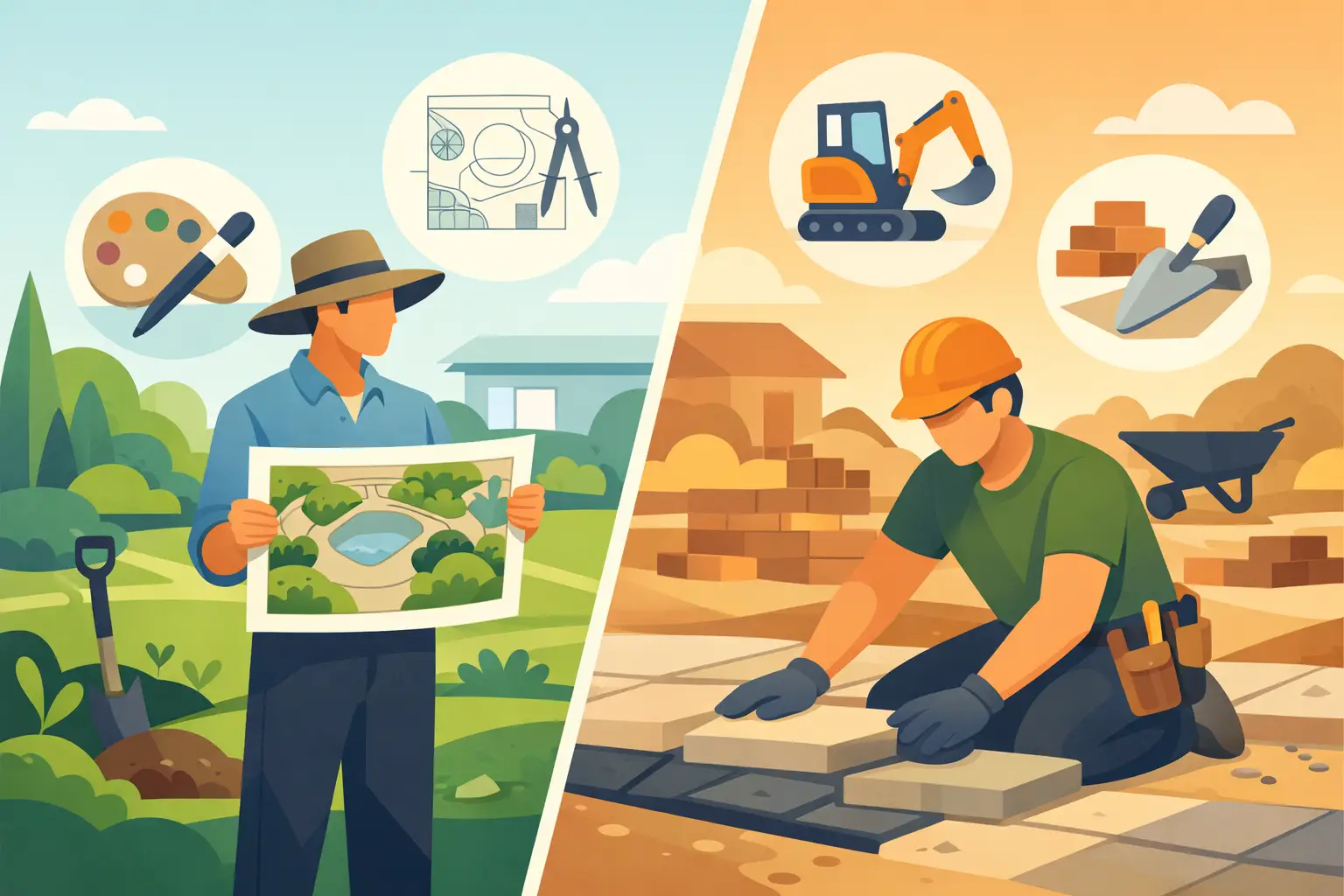
At the most practical level, a landscape designer focuses on planning the space, while a landscape contractor focuses on building it. The designer shapes the vision. The contractor turns plans into physical work on site.
That sounds clean and simple, but real projects are rarely that tidy. Some designers provide highly detailed plans but do not manage construction. Some contractors are excellent builders but rely on clients to bring them a complete design. Others operate as design-build firms, where the same company handles concept development, material selection, installation, and project coordination from beginning to end.
The right choice depends on the scope of your project and how much complexity you want to manage yourself.
What a landscape designer typically does
A landscape designer studies how the outdoor space should look, feel, and function. That includes layout, traffic flow, planting concepts, grading considerations, hardscape relationships, and how each area supports the way you live or use the property.
If you want a backyard that feels like an extension of your home, with a patio for entertaining, planting that softens the edges, lighting for evening use, and clear transitions between features, the designer is the person thinking through that composition. They are also considering proportion, scale, drainage impact, maintenance expectations, and long-term visual balance.
A strong designer is not decorating a yard. They are solving spatial and functional problems while creating something that feels refined and cohesive.
What a landscape contractor typically does
A landscape contractor is responsible for execution. That can include excavation, grading, drainage work, retaining walls, patios, walkways, planting, lighting installation, and other site construction elements depending on the company and the project.
A good contractor understands materials, build quality, site conditions, sequencing, and labor management. They know how to install a paver patio so it performs properly through changing weather. They know when drainage needs to be corrected before the visible finishes go in. They know the difference between a job that looks good on day one and one that still performs years later.
That technical skill matters. Even the best design can be undermined by weak execution.
Why the gap between design and installation causes problems
The landscape designer vs contractor debate becomes most relevant when these two roles are split across separate businesses. In some cases, that works well. In others, it creates avoidable friction.
A designer may produce a beautiful plan that exceeds the client’s installation budget. A contractor may price the drawings accurately but flag site conditions or constructability issues the designer did not fully address. If revisions are needed after the work begins, the client can end up in the middle, trying to reconcile intent, cost, and logistics.
That does not mean separate firms are always the wrong approach. For some highly specialized projects, it may make sense. But for many residential and commercial landscapes, the handoff between design and construction is where momentum gets lost. Details are interpreted differently. Material substitutions change the look. Timelines stretch because one side is waiting on the other.
When that happens, the original vision often gets diluted.
When you should hire a landscape designer first
If your property has no clear direction yet, a designer can be the right place to begin. This is especially true when you are trying to solve broader questions like how to organize the yard, where to place entertainment areas, how to improve curb appeal, or how to connect architecture with the landscape.
Design is also valuable when the project includes multiple elements that need to work together, such as stonework, planting, privacy screening, lighting, and outdoor living features. Without a plan, many properties end up with piecemeal improvements that never fully relate to one another.
A designer-first approach helps if your priority is concept clarity before construction pricing. You are paying to think through the property carefully before crews ever arrive on site.
When you should hire a landscape contractor directly
There are projects where hiring a contractor first is entirely reasonable. If you already know exactly what you want and the scope is straightforward, a contractor may be all you need.
For example, replacing an existing walkway with a similar material, rebuilding a failing retaining wall, correcting drainage, or installing a simple planting plan may not require a formal standalone design process. In those cases, construction knowledge and execution quality are the main priorities.
The trade-off is that contractor-led projects tend to work best when the desired outcome is already well defined. If the project still needs creative direction, layout development, or a more customized vision, skipping design can lead to expensive changes later.
The design-build advantage for more complex projects
For clients who want a custom result without managing multiple parties, a design-build firm often makes the most sense. This model brings design, planning, and installation under one roof, creating a single point of accountability.
That matters more than many clients expect. When the same team is responsible for both the concept and the build, the design is shaped with real construction knowledge in mind. Budget discussions happen earlier. Material choices are grounded in durability as well as appearance. Site conditions are factored into the process before they become expensive surprises.
It also creates better continuity. The people developing the vision understand how it will be executed. The installation team understands the intent behind the details. Instead of protecting separate scopes, everyone is working toward the same finished result.
For premium outdoor spaces, that alignment is often what separates a good project from one that feels complete.
How to choose the right fit for your property
The better question is not simply landscape designer vs contractor. It is what kind of support your project actually needs.
If you are planning a meaningful transformation, start by looking at complexity. A simple install may only require construction expertise. A custom outdoor living environment usually requires both design thinking and disciplined execution.
Then look at accountability. Are you comfortable coordinating between designer, contractor, and possibly other trades? Some clients are. Many are not, especially when the investment is substantial and the timeline matters.
Finally, consider the standard of finish you expect. If you want a space that feels tailored to your home, supports your lifestyle, and improves long-term value, the process matters as much as the materials. Great landscapes are not assembled feature by feature. They are composed, then built with care.
Questions worth asking before you hire anyone
Ask who is responsible for the design intent during construction. Ask how pricing is developed and whether the design is created with budget realities in mind. Ask who manages revisions if site conditions change. Ask to see completed projects that reflect the level of finish you want, not just isolated details.
These questions reveal whether a company is thinking beyond installation and whether they have the process to deliver a cohesive result.
What many clients actually want
Most clients are not looking to hire a designer or a contractor in the abstract. They are looking for confidence. They want to know the investment will be handled professionally, the details will be thought through, and the finished property will feel polished rather than patched together.
That is why full-service landscape firms continue to appeal to busy homeowners, families, business owners, and property managers. The value is not only convenience. It is clarity, consistency, and a higher likelihood that the final space reflects the original vision.
For a custom project, that level of coordination is not a luxury. It is part of protecting the outcome.
A landscape should feel like it belongs to the property and the people who use it. If you choose the team structure that supports both strong design and quality execution, the process gets easier and the result has a better chance of feeling right for years to come.