


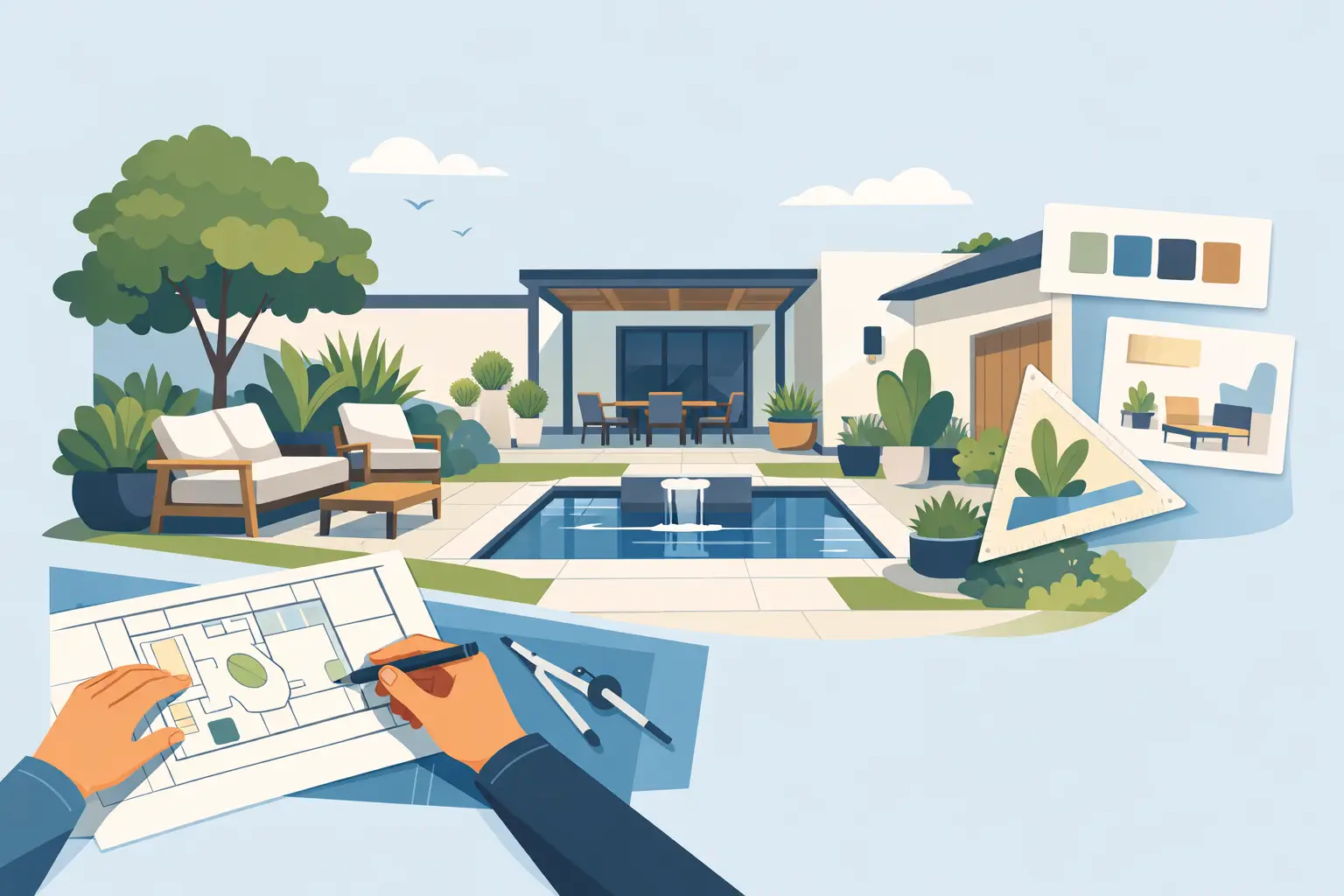
11 Apr How to Design a Courtyard That Works
A courtyard can feel exposed, underused, or unexpectedly awkward even when the square footage is generous. That is usually not a space problem. It is a planning problem. If you are figuring out how to design a courtyard, the goal is not simply to fill an enclosed outdoor area with attractive materials. The goal is to shape a space that feels intentional, comfortable, and connected to the way you live.
The best courtyards work because every element has a role. The paving guides movement. The planting softens walls and edges. Seating sits where people actually want to gather. Shade, privacy, drainage, and lighting are handled early rather than patched in later. When those decisions are made with care, a courtyard becomes more than a gap between structures. It becomes a true outdoor room.
Start with the courtyard’s purpose
Before selecting stone, furniture, or plant material, define what the courtyard needs to do. That sounds obvious, but this is where many projects lose clarity. A courtyard designed for quiet morning coffee will not be planned the same way as one built for family dining, evening entertaining, or a polished front entry experience.
In residential settings, the courtyard often needs to support more than one function. It may need a dining area, a lounge zone, and a clean path between doors or gates. In a commercial setting, the priorities may lean more toward first impressions, ease of circulation, and lower-maintenance planting. Neither approach is better. The right answer depends on how the property is used day to day.
This is also the point where scale matters. A compact courtyard can feel exceptional when it serves one or two purposes very well. Trying to force too many features into a small footprint usually makes the space feel crowded and expensive without improving how it performs.
How to design a courtyard layout first, not last
Layout should lead the project. Materials and styling decisions come after the circulation, proportions, and focal points are solved.
Start by identifying fixed conditions. Doors, windows, grade changes, utility access, and drainage patterns will influence the layout whether you account for them early or not. Existing walls, fences, and adjacent architecture also matter because a courtyard is always experienced as an enclosed composition. The surrounding vertical surfaces are part of the design, not just the backdrop.
A strong courtyard layout usually includes a clear destination and a clear path. In some projects, the destination is a dining table centered on a paving field. In others, it is a fire feature, water element, sculptural tree, or built-in bench. Without that visual anchor, the space can feel flat.
Circulation should be simple. People should not need to weave around furniture to get from one side of the courtyard to the other. Good planning preserves generous movement lines while still creating places to pause. This balance is one of the biggest differences between a professionally resolved courtyard and one that feels pieced together.
Create enclosure without making it feel closed in
A courtyard is defined by enclosure, but too much visual weight can make it feel tight. Too little, and the space loses intimacy. The design challenge is finding the right balance.
Walls, fencing, planters, trellises, and built structures all contribute to enclosure. So do hedges and layered planting. Hard vertical surfaces often need softening, especially in smaller courtyards where masonry can feel dominant. Climbing vines, espaliered trees, or tall planting at the perimeter can reduce that hardness without compromising structure.
Privacy is another key layer. In many urban and suburban properties, overlooking is one of the main reasons homeowners want a courtyard to feel more protected. That does not always require a taller fence. Sometimes a more strategic solution, such as screening at sightline level or placing a pergola over a seating zone, creates privacy more effectively.
The trade-off is light and openness. If privacy is pushed too far, the space may become dark or visually compressed. That is why the best solutions are shaped around actual sightlines rather than generic screening everywhere.
Choose materials with restraint
Courtyards reward discipline. Because the footprint is enclosed and every surface is highly visible, too many finishes can make the design feel busy.
In most cases, one primary paving material supported by one or two secondary accents is enough. Natural stone, architectural concrete pavers, clay brick, or high-quality porcelain can all work well depending on the architecture of the property. What matters is proportion, finish, and installation quality. In a courtyard, small alignment issues and awkward cuts are hard to hide.
Material selection should also respond to function. A surface used for dining should feel stable under chairs and easy to maintain. A path that receives shade may need better slip resistance. Lighter paving can help a compact courtyard feel brighter, but it may also show more staining depending on the environment. Darker materials can feel more refined, though they tend to absorb more heat.
This is where craftsmanship matters. A courtyard is not just seen from a distance. It is experienced up close, often from inside the home looking out. Joint lines, edge details, step proportions, and transitions all have a major impact on the finished result.
Planting should soften, frame, and guide
The planting plan is where many courtyards either come alive or fall flat. A few random shrubs around the perimeter rarely create the polished, integrated effect most owners want.
Planting should be structured. Think in layers. Trees or large-form specimens establish height and rhythm. Mid-level shrubs and grasses create body. Groundcovers and seasonal accents finish the composition. In a compact courtyard, every plant earns its place, so shape and mature size matter more than quantity.
Evergreen structure is especially valuable because courtyards are often viewed year-round. Deciduous planting can add seasonal change and softness, but it should work with the bones of the space rather than carry the whole design on its own.
Microclimate also matters more in courtyards than people expect. Some are hot and reflective, with surrounding walls intensifying sun exposure. Others are shaded for much of the day and stay damp longer. Wind patterns can be unusual as well. Plant selection has to reflect those conditions or the space will look great on install day and struggle after that.
Treat seating and features as part of the architecture
Furniture should not be an afterthought. In a well-designed courtyard, seating feels integrated into the layout rather than dropped onto it.
Built-in benches are often a smart choice in smaller spaces because they reduce visual clutter and make the most of the footprint. Loose furniture adds flexibility, which can be useful for entertaining, but it needs enough clearance around it to function comfortably. If circulation becomes tight once chairs are pulled out, the courtyard will not perform the way it should.
Features such as fire elements, water features, outdoor kitchens, and overhead structures can elevate the experience, but only when they fit the scale of the space. A dramatic feature in a small courtyard can be striking. Too many features in one space usually compete with each other.
The strongest courtyard designs tend to have one main moment and several supporting ones. That creates hierarchy, which is what makes a space feel composed.
Lighting is what extends the courtyard beyond daylight
A courtyard that only works at noon is only half designed. Lighting shapes how the space feels at night and how often it is actually used.
The most successful lighting plans are layered. Ambient light provides overall visibility. Accent lighting highlights planting, walls, or architectural details. Task lighting supports dining, steps, and transitions. The goal is not brightness for its own sake. It is atmosphere, safety, and depth.
Overlighting is a common mistake. A courtyard with harsh, uniform lighting often feels flat and commercial. Controlled, warm lighting usually creates a more refined effect. It also protects the sense of privacy that makes courtyards appealing in the first place.
Think through maintenance from the start
A premium courtyard should still be practical to own. That means thinking beyond the reveal and into the long-term care of the space.
Drainage is one of the most important details. Because courtyards are enclosed, poor grading or limited outflow can lead to standing water, staining, and winter damage. Access is another overlooked issue. If furniture, planters, or custom features block service points or make cleaning difficult, the space becomes harder to maintain.
Planting maintenance should match the owner’s expectations. Some clients enjoy seasonal container rotations and more expressive planting. Others want a cleaner, lower-maintenance composition with strong structure year-round. Neither is wrong, but the design should reflect that choice from the beginning.
For property owners who value a cohesive result, end-to-end planning makes a real difference. A courtyard is a detail-rich project, and details rarely improve when design and installation are disconnected.
How to design a courtyard that feels like part of the home
The best courtyard is not treated as a separate zone outside. It feels connected to the architecture, the interior style, and the way the property is used overall.
That connection can come through material continuity, aligned sightlines, consistent proportions, or repeated design language between inside and out. When the courtyard relates clearly to the home, it feels calmer and more valuable. It reads as an extension of the property rather than an isolated project.
At Redleaf Landscape Inc, that is where craftsmanship shows itself most clearly. Not in adding more, but in resolving the space so every decision supports the whole.
If you are planning a courtyard, resist the urge to start with finishes. Start with purpose, layout, and how you want the space to feel when you step into it. The right courtyard does not just look finished. It feels settled, usable, and built for the way you live.