


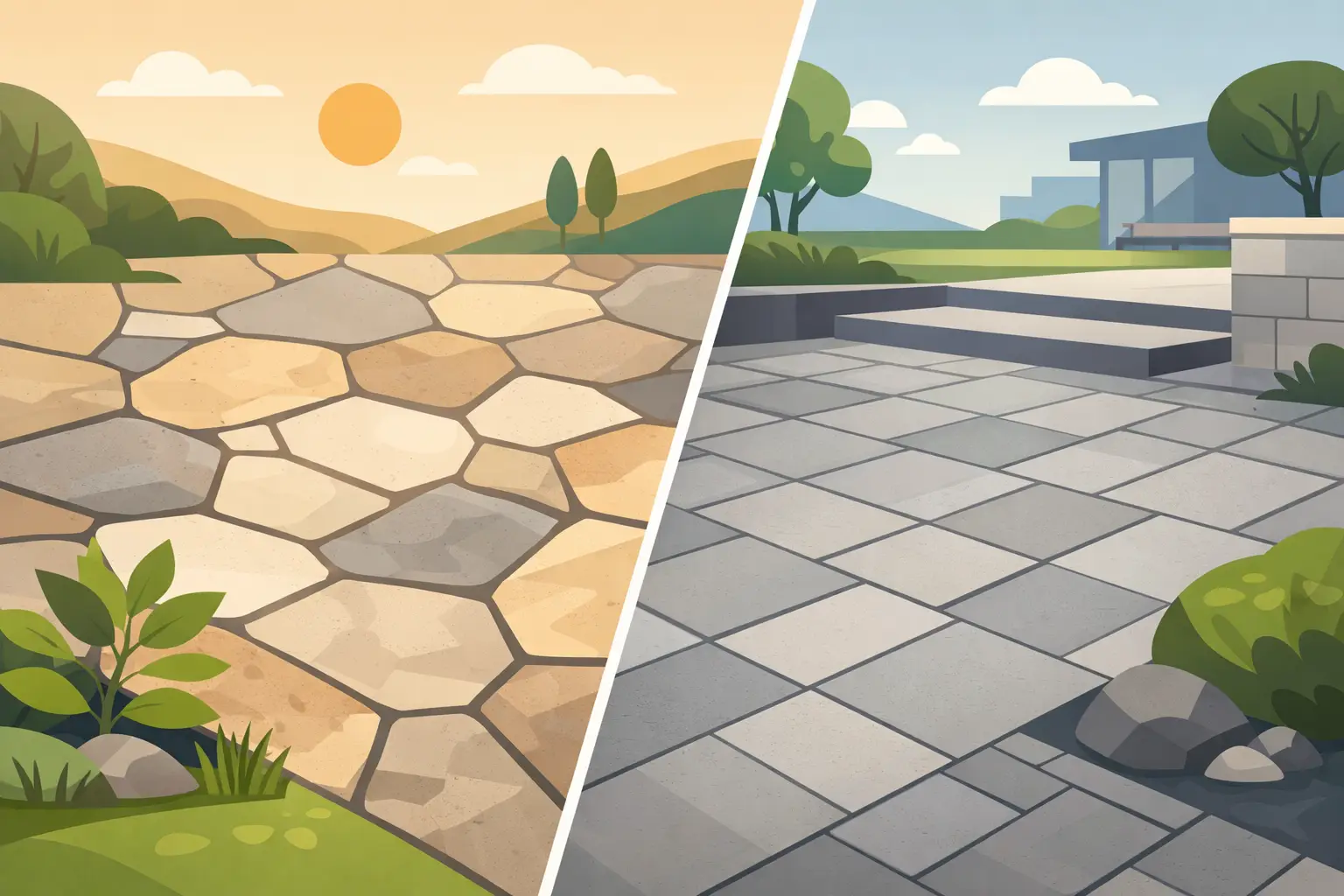
07 Apr Natural Stone vs Concrete Pavers
A patio can look great on day one with almost any hardscape material. The real question is how it will feel, wear, and perform after years of weather, foot traffic, furniture movement, and seasonal freeze-thaw cycles. When homeowners weigh natural stone vs concrete pavers, they are usually deciding between two very different kinds of long-term value: one rooted in organic character and permanence, the other in flexibility, efficiency, and design control.
For a custom outdoor space, that distinction matters. The surface underfoot does more than finish a backyard. It shapes how the entire landscape reads against the home, how comfortably the space functions, and how well the investment holds up over time.
Natural stone vs concrete pavers: the core difference
Natural stone is quarried from the earth and cut into usable pieces for patios, walkways, pool surrounds, steps, and other hardscape features. Materials such as limestone, flagstone, granite, and sandstone each carry their own texture, movement, and color variation. No two pieces are exactly alike, which is part of the appeal.
Concrete pavers are manufactured units made in controlled sizes, shapes, and finishes. They can mimic stone, deliver a more contemporary modular look, or support patterned installations with clean lines and repeatable consistency. Because they are produced rather than quarried, they offer more predictability in dimensions and often more straightforward budgeting.
Neither option is automatically better. The right choice depends on the style of the property, the intended use of the space, maintenance expectations, and how much value you place on material authenticity versus design uniformity.
Appearance and design impact
If your goal is a landscape that feels established, layered, and naturally integrated with the architecture, natural stone has a distinct advantage. It brings visual depth that manufactured materials rarely match. Subtle variation in tone, veining, edge detail, and surface texture gives the finished space a custom character that feels refined rather than repetitive.
That matters especially in premium outdoor environments, where the hardscape is expected to work as an extension of the home rather than a separate surface in the yard. Natural stone often complements traditional architecture, transitional homes, and settings where planting, masonry, and built elements are meant to feel grounded and timeless.
Concrete pavers offer a different kind of design strength. Their consistency makes them ideal for crisp geometry, modern layouts, and projects where alignment and pattern are central to the look. If you want a sleek patio grid, a formal motor court, or a driveway with coordinated borders and accents, pavers give designers more control.
This is often where preference becomes personal. Some homeowners are drawn to the uniqueness of stone. Others prefer the order and tailored finish of a well-selected paver system. A strong design can be built with either, but the visual language is different.
Cost and where the budget goes
In most cases, natural stone costs more than concrete pavers. The material itself is usually more expensive, and installation can be more labor-intensive depending on the stone type, pattern, thickness, and site conditions. Irregular stone layouts, custom cuts, and detailed edge work add time and craftsmanship, which is reflected in the final investment.
Concrete pavers are often more budget-friendly upfront. Their uniform sizing tends to support faster installation, and there is usually a broader range of price points available. For larger areas, that can make a significant difference.
Still, upfront cost should not be the only comparison. Lower material cost does not always mean better long-term value. On high-visibility projects, the finish quality, fit with the home, and resale impression can matter just as much as initial savings. In many premium landscapes, the budget conversation is less about the cheapest option and more about selecting the material that supports the right overall result.
Durability in real-world conditions
Both materials can perform well when properly installed on a sound base. That point is worth emphasizing because base preparation, drainage, edging, and installation quality affect longevity as much as the surface material itself.
Natural stone is known for its strength and long lifespan. Dense stones such as granite and certain limestones hold up exceptionally well. They do not rely on manufactured surface coatings for their appearance, so wear tends to read as aging rather than failure. In the right application, stone can look better with time.
Concrete pavers are also durable and are specifically designed for hardscape use. They handle foot traffic well and are commonly used for patios, walkways, and driveways. However, they can be more prone to surface fading over time, and lower-quality products may show wear sooner, especially in demanding climates or heavily used areas.
In freeze-thaw regions, installation becomes even more critical. A well-built paver system has the advantage of being segmental, which can help with movement and future repairs. Natural stone can also perform beautifully in these conditions, but the correct stone selection and installation method are essential.
Maintenance and repair
Maintenance expectations can steer the decision more than many homeowners expect.
Natural stone typically requires periodic cleaning and, depending on the material, sealing. Some stones are more porous than others and may be more susceptible to staining if used around dining areas, outdoor kitchens, or poolside spaces. The advantage is that stone tends to weather with authenticity. Minor variation, patina, and age often contribute to its appeal rather than detract from it.
Concrete pavers may also need sealing, especially if preserving color is a priority. Joint sand maintenance, weed control, and occasional resetting can be part of long-term care. The practical upside is repairability. If a section settles or a unit gets damaged, individual pavers can often be lifted and replaced without redoing the entire area.
That said, repair is only as clean as the material match. With older pavers, sourcing the same product years later is not always simple. Natural stone can be easier to blend in some cases because variation is already part of the look.
Slip resistance, comfort, and everyday use
The best patio material is not just attractive. It has to feel right in daily life.
Natural stone can offer excellent slip resistance, particularly when a textured finish is selected. Thermal performance is another consideration. Some lighter stones remain more comfortable under direct sun than darker manufactured surfaces, which can matter around pools and family gathering areas.
Concrete pavers also come in textured options and can be selected for slip resistance, but performance varies by product and finish. For entertaining spaces, outdoor kitchens, and circulation routes, this is not a detail to leave to appearance alone. The right surface should support how the space is actually used.
This is where a design-build approach adds value. Material selection should account for traffic patterns, drainage, exposure, furniture layout, and surrounding features so the surface works as well as it looks.
Which option adds more property value?
Both natural stone and concrete pavers can enhance curb appeal and improve usable outdoor living space, which are strong contributors to property value. The difference is often in how the finished project is perceived.
Natural stone generally carries a more premium impression. Buyers recognize it as an upgraded material, and it often signals custom workmanship and lasting quality. On higher-end homes, that alignment can be especially important. A beautifully executed stone patio or walkway tends to feel architecturally intentional.
Concrete pavers can absolutely add value too, particularly when the design is cohesive and the installation is precise. They are a substantial improvement over basic poured concrete in many settings and can deliver a polished, upscale appearance when thoughtfully specified. The result depends heavily on product quality and design execution.
How to choose between natural stone vs concrete pavers
If you want a timeless, elevated finish with one-of-a-kind character, natural stone is often the stronger choice. It suits homeowners who see their landscape as a long-term architectural investment and want materials with authentic texture and enduring presence.
If you want design flexibility, cleaner geometry, and more control over budget, concrete pavers may be the better fit. They are especially effective for structured layouts, larger hardscape areas, and projects where repair access and modular consistency are priorities.
The best answer often comes from the broader design. A contemporary backyard with linear detailing may call for pavers. A property with mature plantings, custom masonry, and a more established aesthetic may be better served by stone. Sometimes the right solution is not choosing one over the other across the entire project, but using each where it performs best.
At Redleaf Landscape Inc, that material decision is part of a larger conversation about how the space should live, function, and reflect the property as a whole. The finish matters, but so does the craftsmanship underneath it.
A great hardscape should still feel right years from now, when the furniture has been rearranged a dozen times, the seasons have left their mark, and the space has become part of how you live at home.