


18 Jun A Guide to Landscape Project Timelines
A beautiful landscape rarely comes together on a weekend. The projects that feel effortless when finished usually involve careful planning, skilled coordination, and disciplined execution behind the scenes. That is why a guide to landscape project timelines matters so much – especially when you are investing in a custom outdoor space meant to add lasting value, function, and visual harmony to your property.
For homeowners and property decision-makers, the biggest frustration is often not the work itself. It is uncertainty. When does design begin? How long do permits take? What happens if weather shifts the schedule? A well-managed timeline answers those questions early and keeps the project aligned with your expectations from concept to completion.
What shapes a landscape project timeline
No two properties move at the same pace. A front entry refresh with new planting beds and lighting will naturally move faster than a full backyard transformation with stonework, drainage, a covered structure, and a custom planting plan. The timeline is shaped by scope, site conditions, municipal requirements, material availability, and the level of detail required in design.
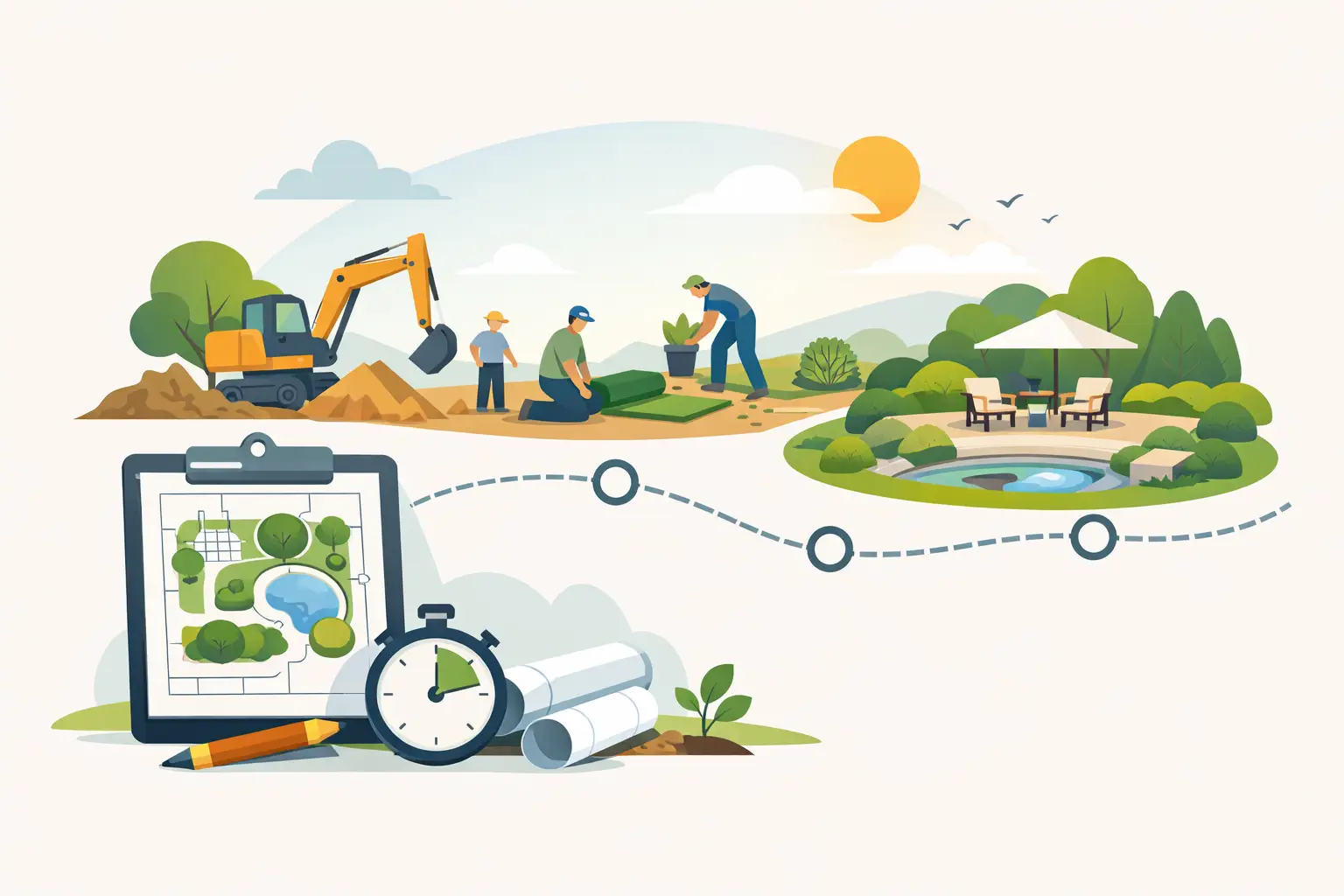
The clearest way to think about timing is in phases rather than one start date and one finish date. Design-build landscape work typically moves through consultation, design development, approvals, scheduling, site preparation, construction, and final detailing. Each phase has its own purpose, and rushing one usually creates delays later.
This is especially true for custom work. If the goal is a landscape that reflects your home and lifestyle rather than a basic install, the early planning stage deserves real attention. Good decisions made on paper save time, cost, and disruption on site.
A realistic guide to landscape project timelines by phase
Consultation and site review
Most projects begin with a consultation and property review. This is where priorities become clear. You may want better curb appeal, a more functional entertaining area, improved drainage, or an outdoor environment that feels like a natural extension of the home.
This stage is often relatively quick, but it is more important than many clients realize. A strong first meeting helps establish scope, budget range, site constraints, and the overall direction of the work. Depending on scheduling and project complexity, this phase may take a few days to a couple of weeks.
Design and planning
Design is where the project becomes real. Layout, grading strategy, hardscape materials, plant selection, lighting, and functional details start to take shape. For a simpler project, design may move fairly quickly. For a high-end custom landscape with multiple elements, revisions and refinement can take several weeks.
This phase often lasts two to six weeks, and sometimes longer for larger properties or more detailed outdoor living spaces. That range depends on how quickly decisions are made and whether the design includes features such as kitchens, pergolas, retaining walls, water management systems, or specialty finishes.
The trade-off is simple. Faster decisions can shorten the design timeline, but thoughtful planning usually produces a better final result. When a space is meant to perform well for years, precision matters.
Permits, approvals, and engineering
Some landscape projects can move forward without municipal approvals. Others require permits, zoning review, or engineered drawings, especially when structures, grading changes, retaining walls, or drainage systems are involved. This stage can be straightforward or unpredictable depending on the municipality and the scope of work.
For clients, this is often the least visible part of the process and one of the most important. Approval timelines may range from a couple of weeks to several months. That does not mean the project is stalled. It means due diligence is happening before construction begins.
If your property has unique conditions, limited access, conservation considerations, or shared boundaries that affect the design, expect this phase to carry more weight.
Scheduling and material procurement
Once the design is finalized and approvals are in place, the project moves into scheduling. This is where the installation calendar is set and materials are ordered. Premium natural stone, specialty fixtures, custom fabricated elements, and certain plant material may have lead times that affect the start date.
Seasonality matters here. Spring is often the busiest booking period because many property owners want results as soon as the weather improves. The clients who secure the smoothest timelines are usually the ones who begin planning months before they want construction to start.
In practical terms, procurement and scheduling may take one to four weeks, though specialty products can extend that window.
Site preparation and construction
Construction timelines vary the most because they reflect the actual scale of the work. A smaller installation may be completed in one to two weeks. A fully customized outdoor living project may require four to ten weeks or more, particularly if it includes multiple trades, extensive grading, irrigation, drainage, masonry, carpentry, lighting, and planting.
This is the phase where coordination matters most. A professional design-build firm sequences the work so each layer supports the next. Drainage and grading must be right before hardscape is finished. Base preparation must be right before pavers or stone are installed. Structural work must be right before finishing details are added. Quality in craft depends on this order.
Weather can affect this phase, and that is not just about rain. Excess moisture can delay excavation, compaction, concrete curing, and planting. High summer heat can also change how certain materials are handled and when crews can work most effectively.
Planting, finishing, and final walkthrough
The finishing phase brings the project to life. Planting, lighting adjustments, cleanup, and detailing happen here, followed by a final walkthrough to confirm the work meets the original vision. This part may take a few days on a modest project or one to two weeks on a larger property.
It is also where the craftsmanship becomes most visible. Edges feel cleaner. Transitions make sense. Materials feel intentional. The space starts to read as one complete environment rather than a series of separate improvements.
Seasonal timing matters more than many clients expect
In northern climates, the calendar has a direct impact on landscape scheduling. Spring and early summer are high-demand periods, but they are not always the only or even the best time to begin. In many cases, fall is excellent for planting, and winter is ideal for design planning so the project is ready to build when the season opens.
If you want a major transformation ready for next summer, waiting until late spring to start the conversation can create unnecessary pressure. Starting earlier gives you more room for design refinement, permit processing, and material selection without compromising the outcome.
For GTA-area properties, this planning-first approach is especially valuable. Established neighborhoods, custom homes, and premium outdoor spaces often involve more detail than a standard landscape install. Redleaf Landscape Inc has seen that the projects with the strongest results are usually the ones given enough time to be properly considered and properly built.
What causes delays in landscape projects
Most delays come from a short list of issues. Scope changes during construction are a major one. When features are added after work begins, the schedule often has to be reworked. Material substitutions can also cause disruption if selected products are unavailable or delayed.
The other common factor is hidden site conditions. Poor drainage, unstable soil, buried debris, or old utility conflicts may only become fully visible once excavation begins. A seasoned contractor plans for this possibility and communicates clearly when site realities require adjustments.
None of this means delays are guaranteed. It means the best timelines are realistic, not overly optimistic. A credible schedule should leave room for variables while still giving you a clear sense of progress and milestones.
How to plan your project with fewer surprises
The best way to protect your timeline is to start with clear goals. Know how you want the space to function, what level of finish you expect, and what investment range makes sense for your property. From there, work with a firm that can guide the project end to end rather than leaving design, trades, and scheduling disconnected.
It also helps to make key decisions early. Material selections, layout approvals, and feature priorities are easier to manage before construction starts. Once crews are mobilized, changes tend to affect both schedule and cost.
Finally, ask for a phased timeline, not just a completion date. A professional partner should be able to explain what happens first, what dependencies exist, and where flexibility may be needed. That kind of transparency builds confidence because you understand not just when the project should finish, but how it will get there.
A well-built landscape is more than an installation. It is a carefully managed process that turns vision into a finished environment with purpose, beauty, and staying power. Give that process the time it deserves, and the result will feel right long after the construction equipment is gone.