


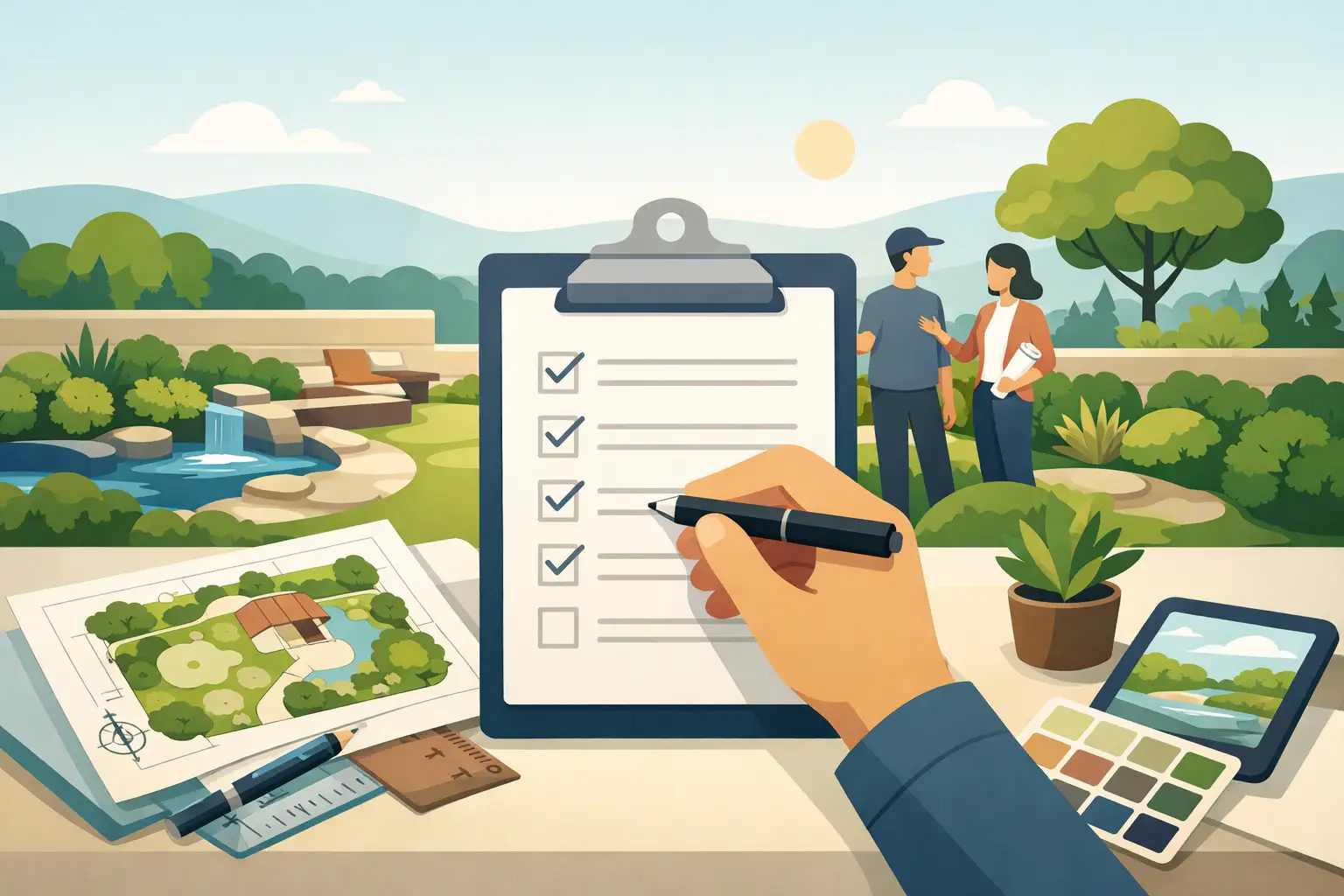
22 Mar Landscape Design Consultation Checklist
The best landscape consultations are not the ones where a homeowner says, “I just want something nice.” They are the ones where the vision starts taking shape in real terms – how the yard should function, what the property needs, and where quality matters most. A strong landscape design consultation checklist helps you arrive prepared, ask better questions, and make smarter decisions before design work begins.
For homeowners investing in a custom outdoor space, that preparation matters. A consultation is not a casual walk around the yard. It is the starting point for a finished environment that should feel intentional, durable, and aligned with the way you live. If you want an outdoor space that adds beauty, usability, and long-term value, the consultation should be approached with the same care as any major home improvement.
What a consultation is really meant to accomplish
A landscape design consultation should do more than collect measurements and a wish list. It should clarify the purpose of the project, reveal site constraints early, and establish whether the design direction matches your expectations for craftsmanship, function, and investment.
This is where broad ideas become practical ones. Maybe you want a backyard built for entertaining, but the real priority is shade, circulation, and enough room for dining without crowding the lawn. Maybe curb appeal matters most, but drainage and grading are the issues that need attention first. The consultation is where those layers get sorted out.
For premium residential and commercial projects, that clarity is what prevents expensive missteps later. It also sets the tone for a more cohesive result.
Your landscape design consultation checklist starts with priorities
Before the meeting, define what success looks like. Not just visually, but in day-to-day use. A landscape that looks impressive in photos can still fall short if it does not support how you actually move through the space.
Think about the role the property should play. Is the backyard meant for quiet evenings, large gatherings, family use, or low-maintenance enjoyment? Is the front yard about stronger architectural presence, privacy, or a cleaner arrival experience? For a commercial property, the goals may be visibility, durability, seasonal interest, and a polished first impression.
These priorities should be ranked, not just listed. Most projects involve trade-offs. A larger patio may mean less green space. Mature planting can create privacy faster, but it comes at a different cost than younger material. A water feature may add atmosphere, but it also introduces maintenance and mechanical considerations. Knowing what matters most helps your designer guide the project with precision.
Know your budget range before design begins
One of the most common reasons projects lose momentum is that the budget conversation happens too late. Custom landscapes can include hardscaping, planting, lighting, drainage, structures, irrigation, and site work. Without a realistic investment range, it is difficult to design responsibly.
You do not need to know exact numbers before a consultation, but you should know your comfort zone. A clear range allows the design team to recommend the right scope, materials, and phasing options. It also helps distinguish between must-haves and upgrades.
This is not about limiting creativity. It is about directing it. A well-planned project with a defined budget almost always produces a stronger result than an oversized concept that needs to be cut back later.
Gather the site information that affects the design
A strong concept depends on the realities of the property. Before your consultation, collect whatever information you already have. That may include a survey, lot dimensions, grading details, utility locations, or any plans from previous work.
You should also note practical site conditions. Pay attention to where water collects after rain, which areas receive full sun, and where wind exposure or privacy is an issue. Existing trees, roots, fences, neighboring sightlines, and access for construction all matter.
This part of the landscape design consultation checklist is often underestimated. Homeowners tend to focus on finishes first, but site conditions shape what is possible. A beautiful design still has to manage drainage, support plant health, and fit the architecture and grade of the property.
Be ready to talk about style without speaking in vague terms
Saying you want a modern, classic, or natural landscape is a start, but it is rarely enough on its own. Those words mean different things to different people. A more productive approach is to describe what you are drawn to in specific terms.
You may prefer clean lines, structured planting, and restrained material palettes. Or you may want a softer, more organic look with layered greenery and seasonal texture. Some clients are drawn to formal symmetry, while others want a landscape that feels relaxed and understated.
Reference images help, but they need context. It is useful to explain what you like in each one – the paving pattern, the lighting mood, the privacy planting, the way the outdoor kitchen connects to the house. The goal is not to copy another project. It is to give your designer a clearer read on your taste.
Think through how each zone should function
A custom landscape works best when each part of the property has a role. During the consultation, you should be ready to discuss how you want to use different areas and how often.
For a backyard, that may include dining, lounging, cooking, sunning, poolside use, play space, storage, or a quiet retreat. For the front yard, it may be about walkway design, lighting, planting structure, and the transition from street to entry. For commercial settings, circulation, visibility, and low-maintenance durability tend to be central concerns.
This is where measurements and habits matter. How many people do you typically host? Do children or pets need open space? Do you want the fire feature near the dining area or set apart as a second destination? The more clearly these use patterns are discussed, the more refined the final design can become.
Prepare questions about materials, maintenance, and longevity
A polished outdoor space should do more than look complete on installation day. It should age well, perform reliably, and suit your tolerance for upkeep. That is why material and maintenance conversations belong in the first consultation, not at the end.
Ask how different pavers, natural stone, wood alternatives, and planting choices perform in your climate and exposure conditions. Some materials deliver a more premium finish but require more care. Some planting schemes create a lush appearance quickly but need more pruning or seasonal attention. Others are more restrained at first and mature beautifully over time.
There is no universal right answer. It depends on how you want the space to look, how you plan to use it, and how much maintenance you are willing to support. Strong design balances appearance with practical ownership.
Use the consultation to understand process, not just design ideas
A professional consultation should also explain how the work will move from concept to completion. That includes design development, revisions, approvals if needed, installation sequencing, and who is accountable along the way.
This matters because landscape projects are built, not just imagined. The quality of the outcome depends on execution as much as design. Homeowners who want a cohesive result should understand whether the same team is carrying the project through or whether multiple parties will need to be coordinated.
For clients who value craftsmanship and accountability, end-to-end delivery often reduces friction. It keeps design intent connected to the finished work and minimizes the common disconnect between plans on paper and reality on site.
A practical landscape design consultation checklist for your meeting
Bring your goals, budget range, inspiration images, and any available site documents. Be prepared to discuss how you use the property now, what is not working, and what you want the space to become.
Also come with honest expectations. If your timeline is tight, say so. If privacy is more important than entertaining, make that clear. If you are open to phasing the project, mention it early. A productive consultation is built on specifics, not assumptions.
If you are looking for a firm that approaches outdoor spaces with craftsmanship, function, and long-term value in mind, Redleaf Landscape Inc has been serving clients since 1986 through design-build execution rooted in detail and quality.
The right consultation should leave you with more than inspiration. It should give you confidence that your property can become something deliberate, personal, and exceptionally well made.