


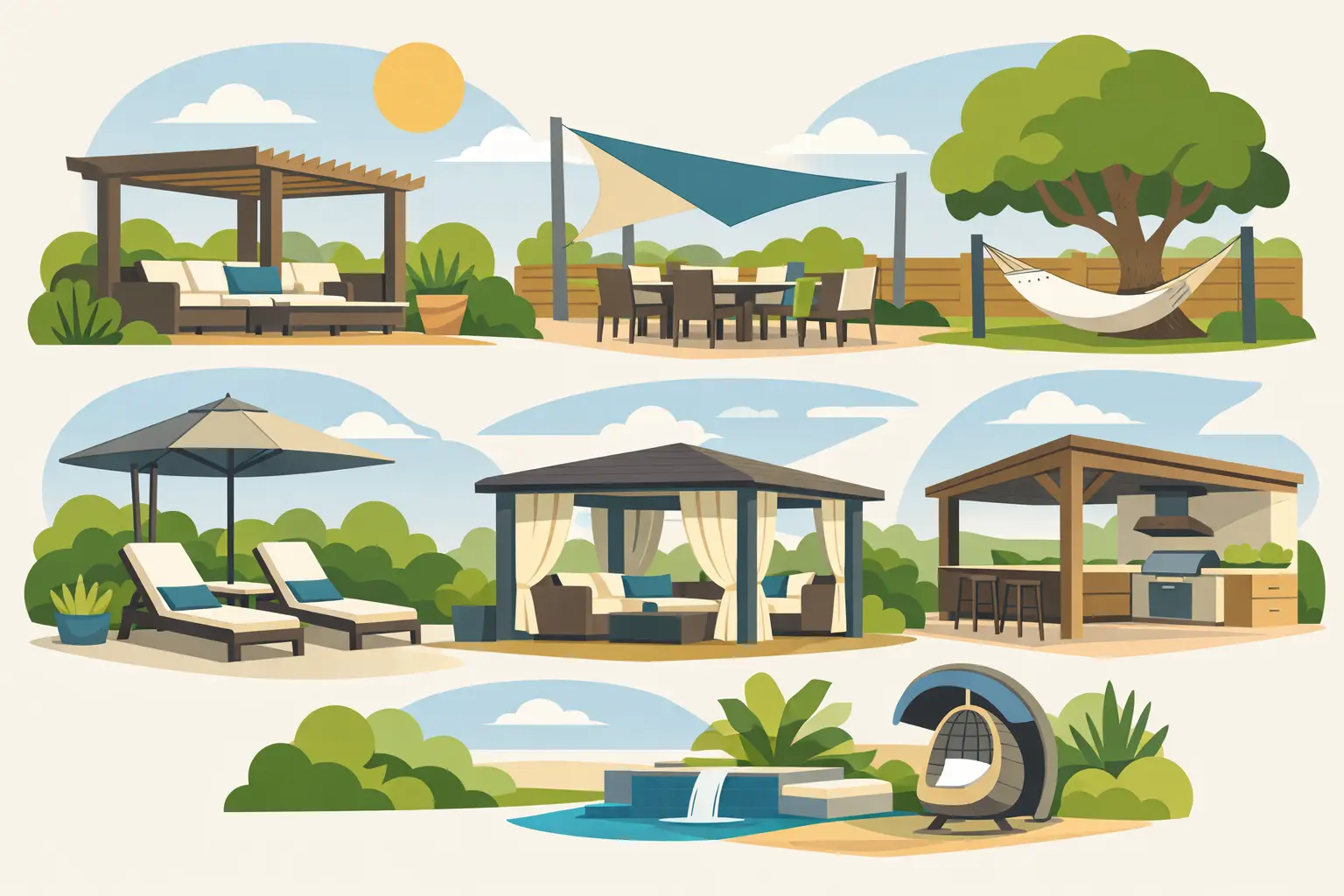
11 May 10 Best Backyard Shade Ideas That Last
A backyard that gets full sun at 2 p.m. can look beautiful in photos and still feel unusable in real life. If your patio is too hot for lunch, your poolside seating goes empty, or your outdoor kitchen becomes uncomfortable by midafternoon, shade is not a finishing touch. It is part of how the space works. The best backyard shade ideas solve heat, glare, and comfort while still feeling integrated with the architecture of the home and the landscape around it.
For premium outdoor spaces, the right answer is rarely a one-size-fits-all umbrella. Shade needs to match how you live, how your yard is positioned, and how permanent you want the solution to be. Some options are architectural and built to define an outdoor room. Others are softer, more natural, and better suited to layered landscapes.
How to choose the best backyard shade ideas
The first question is not what looks best online. It is where the sun actually falls across your property and when the space needs protection most. A west-facing patio usually needs stronger afternoon coverage than a breakfast terrace that gets gentle morning light. Poolside lounging has different needs than a dining area, and a children’s play zone should be approached differently than a formal entertaining space.
The second question is whether you need seasonal flexibility or a permanent structure. Homeowners often want adjustable shade near the house but something more natural near the garden or lawn. That is where a thoughtful design plan matters. The strongest results come from treating shade as part of the landscape design, not as an accessory added later.
1. Pergolas for structured, architectural shade
Pergolas remain one of the best backyard shade ideas because they create definition without making a yard feel closed in. They are especially effective over patios, lounge areas, and outdoor kitchens where you want a sense of enclosure while still keeping the space open to air and views.
A pergola on its own provides filtered shade, not full protection. That distinction matters. If you want a cooler seating area but still like shifting light and a more open feel, a traditional slatted pergola works well. If you need more coverage, the design can be enhanced with retractable canopies, integrated louvers, or climbing greenery.
Pergolas also work well when the goal is visual cohesion. Done properly, they can echo the home’s lines, materials, and scale, which helps the outdoor living area feel like a true extension of the house rather than a separate project.
2. Pavilions for full coverage and all-weather comfort
If pergolas are about filtered structure, pavilions are about commitment. A pavilion gives you solid overhead protection, making it one of the most practical options for dining areas, outdoor lounges, and entertainment spaces that need reliable coverage from both sun and light rain.
This is often the better fit for homeowners who want their backyard to function consistently through the season. A covered structure can support lighting, fans, heaters, and integrated finishes that elevate comfort well beyond basic shade. It also creates a more finished, luxury look.
The trade-off is visual weight and cost. A pavilion is more substantial, so the design has to be carefully scaled to the yard and home. In a smaller backyard, too much roofline can overwhelm the space if it is not proportioned properly.
3. Retractable awnings for flexible shade near the house
For patios directly off the home, retractable awnings offer practical flexibility. They are especially appealing when you want shade on demand without adding posts or a freestanding structure in the yard.
Awnings are useful for decks and smaller patio areas where the architecture already supports the layout. You can extend them for summer sun and retract them when you want more light in cooler months. That seasonal control is one of their biggest advantages.
What they do not provide is the same level of permanence, presence, or design impact as a custom-built structure. They are functional first. For some homes, that is exactly the right call. For others, especially higher-end outdoor living projects, they may feel more like a utility solution than a fully integrated design feature.
4. Shade sails for modern lines and targeted coverage
Shade sails can work beautifully in the right setting. Their strength is visual lightness. They create a crisp, contemporary look and can be positioned to cover specific zones such as a small lounge area, play space, or poolside section.
They are often a smart option when you need shade in an area where a larger structure would feel too heavy or where the budget does not support a custom pavilion. They can also suit properties with clean modern architecture.
Still, installation details matter. Poorly placed sails can look temporary or out of sync with the home. They also tend to be more exposed to wind, weather, and seasonal wear than more permanent built solutions.
5. Large cantilever umbrellas for movable comfort
Not every shade solution needs to be built in. Large cantilever umbrellas are one of the most useful choices for homeowners who want mobility and targeted relief over seating or dining areas.
Their biggest advantage is flexibility. You can reposition them as the sun moves or as the layout changes for entertaining. They are also ideal when you want to test how a space functions before committing to permanent construction.
The limitation is durability and visual presence. Even premium umbrellas do not deliver the same long-term performance or design value as an integrated structure. In a refined backyard, they often work best as a secondary layer of shade rather than the main solution.
6. Trees as natural shade that improves over time
Some of the best backyard shade ideas are alive. Mature trees bring cooling, texture, privacy, and character in a way manufactured elements cannot fully replicate. They soften hardscape-heavy yards and make outdoor spaces feel established.
The key is choosing the right tree in the right place. Shade trees can be positioned to cool patios, frame seating areas, or reduce heat gain near the home. Deciduous trees are often especially useful because they provide summer shade while allowing more winter sun.
This option requires patience. Trees do not create instant coverage unless you are installing larger specimens, and even then, long-term health depends on proper placement, soil conditions, drainage, and maintenance. But from both a design and sustainability perspective, they are hard to beat.
7. Covered porches for a seamless extension of the home
When a backyard renovation includes major structural work, a covered porch can be one of the most valuable additions. It creates strong, permanent shade while making the transition from indoors to outdoors feel effortless.
This works particularly well for families who use their backyard as a daily living space rather than just a weekend retreat. A covered porch supports dining, lounging, and gathering with a sense of shelter that feels connected to the home’s architecture.
Because it is such a defining feature, execution matters. Roofline integration, drainage, lighting, material selection, and proportion all need to be resolved carefully so the addition looks original to the home rather than attached as an afterthought.
8. Privacy screens and vertical elements that block low sun
Not all sun comes from directly overhead. Late afternoon glare often enters from the side, which means roof structures alone may not solve the problem. Privacy screens, decorative panels, tall hedging, and vertical planting can all help block low-angle sun while adding intimacy.
This is an effective move in exposed suburban backyards where neighboring sightlines and western sun create a double challenge. Vertical elements can shape the space, improve privacy, and make seating areas more comfortable at the times they are most used.
These features work best in combination with overhead shade, not as a full replacement. Think of them as part of a layered strategy.
9. Outdoor curtains and soft-shade details
For homeowners who want a more resort-like atmosphere, outdoor curtains can add comfort and softness to pergolas, covered patios, and pavilions. They are useful for managing glare, creating privacy, and making large spaces feel more intimate.
Their role is usually atmospheric as much as functional. Curtains move with the breeze and bring a finished look that can elevate an outdoor room. At the same time, they require maintenance and material selection that can stand up to weather and sun exposure.
This is not the first place to start if your yard has major heat issues. It is better thought of as a finishing layer once the core shade structure is in place.
10. Layered shade plans for the most livable results
In many custom landscapes, the smartest answer is not choosing one of the best backyard shade ideas. It is combining two or three in a way that fits the property. A pavilion over the dining area, trees along the lawn edge, and a cantilever umbrella by the pool can solve very different problems without making the yard feel overbuilt.
Layered shade also gives you resilience. Trees mature. Sun angles shift through the season. Entertaining needs change. A well-planned backyard accounts for that by giving each area the kind of coverage it actually needs.
What matters most is fit, not trend
The most successful shade solution is the one that makes your outdoor space more usable while still looking like it belongs there. That means balancing architecture, comfort, maintenance, and long-term value. A shade feature should not feel added on. It should feel intentional, as if the yard was always meant to function this way.
For homeowners investing in a custom outdoor environment, that level of fit is where craftsmanship shows. Redleaf Landscape approaches shade the same way it approaches the rest of the property – as part of a cohesive design that improves how the space lives, performs, and lasts. When shade is planned properly, the backyard does more than offer relief from the sun. It becomes a place people genuinely want to stay.