


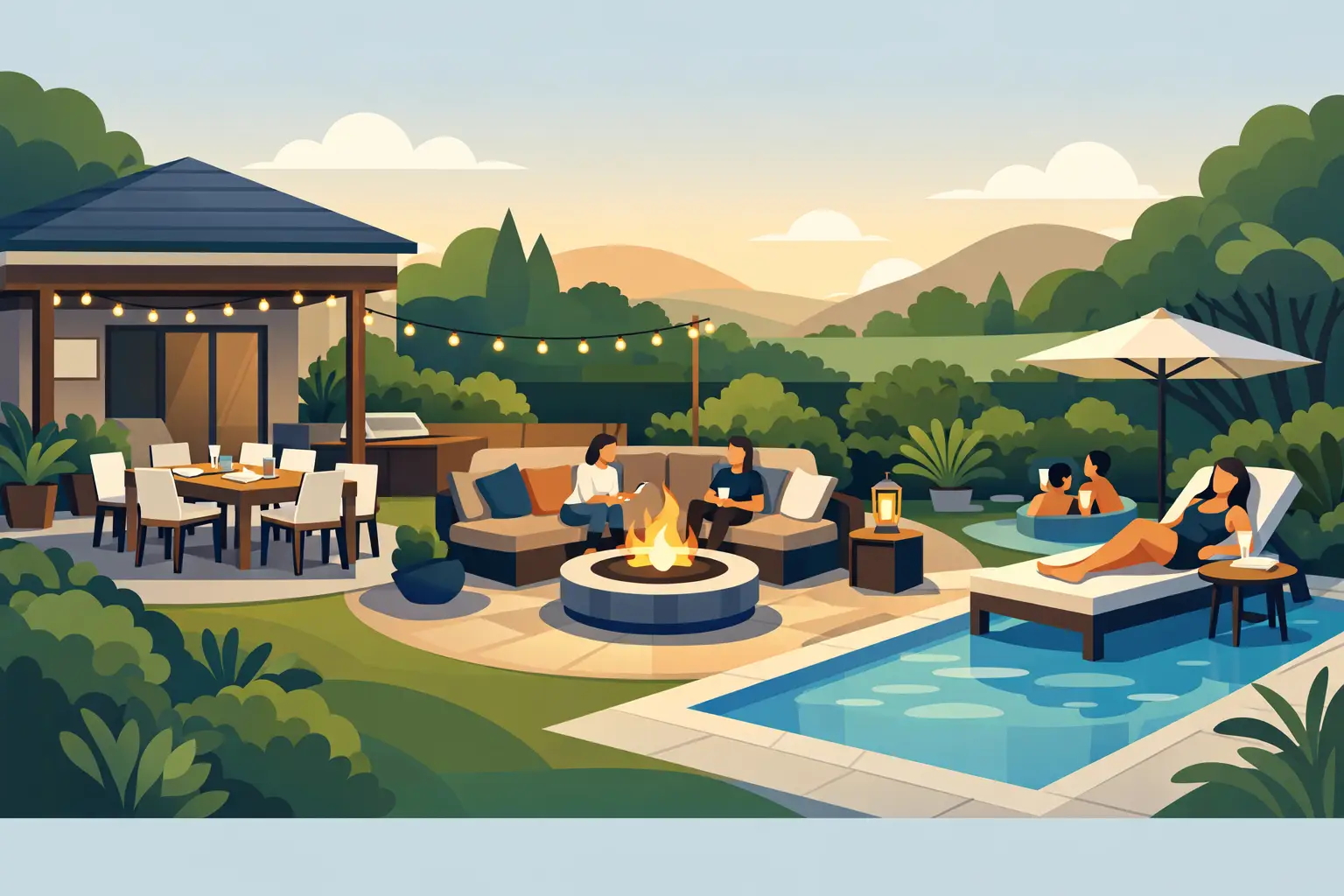
24 Jun Backyard Zoning for Entertaining That Works
A great backyard party rarely feels crowded because of square footage alone. It feels easy because the space has purpose. Backyard zoning for entertaining is what turns a patio and patch of lawn into an outdoor living environment that actually supports the way people gather, move, eat, and relax.
For homeowners investing in a custom landscape, that distinction matters. A beautiful yard can still underperform if the grill is too far from the dining table, the lounge area is exposed to full afternoon sun, or guests have to cross the main conversation space every time they head back inside. Good zoning solves those problems before construction begins.
What backyard zoning for entertaining really means
At its core, zoning is the deliberate arrangement of outdoor areas based on use. Instead of treating the yard as one open surface, you divide it into functional spaces that work together. In a well-designed backyard, cooking, dining, lounging, circulation, and visual focal points each have a place.
That does not mean every yard needs rigid boundaries or a long list of features. In fact, overbuilding is one of the fastest ways to lose comfort and cohesion. The goal is not to cram in an outdoor kitchen, fire feature, pergola, dining terrace, and sports area just because the yard can technically hold them. The goal is to create the right mix for how you live.
For some families, entertaining revolves around outdoor dinners and weekend grilling. For others, it means a quiet evening by the fire with another couple and room for kids to play nearby. The best zoning plan reflects those habits rather than forcing a generic layout onto the property.
Start with how you actually host
Before layout decisions happen, it helps to define what entertaining looks like at your home. Guest count matters, but so does the style of gathering. A household that hosts frequent casual cookouts needs different adjacencies than one that prefers formal outdoor dining.
If meals are the center of the experience, the cooking and dining zones should feel closely connected. If conversation is the priority, lounge seating needs the strongest placement, with warmth, shade, and privacy considered early. If children are usually part of the event, adults should be able to supervise play areas without sacrificing comfort.
This is where many DIY plans go off track. Homeowners often focus first on the features they want rather than the behavior they want to support. A successful plan starts with movement, use, and comfort, then chooses materials and amenities that strengthen those functions.
The five zones most entertaining spaces need
Not every project includes all five, but most highly functional backyards rely on some version of them.
Arrival and transition
The transition from the house into the yard sets the tone. If the back door opens into a cramped landing or an awkward step-down, the entire entertaining experience feels less polished. A well-resolved threshold creates breathing room and gives guests an immediate sense of direction.
This area often works best when it connects clearly to the main entertaining surface, whether that is a patio, terrace, or deck. It should feel intentional, not leftover.
Cooking and serving
The cooking zone needs convenience first. It should sit close enough to the house for easy access to prep, refrigeration, and cleanup, unless the outdoor kitchen is designed to handle those tasks independently. It also needs adequate clearance, so the person cooking is not constantly in the path of foot traffic.
Placement matters here. If the grill is isolated from the dining area, hosting becomes inefficient. If it is too tightly integrated into seating, smoke, heat, and congestion become an issue. The right solution is usually close, but not crowded.
Dining
Outdoor dining works best on a stable, level surface with enough room to pull out chairs and move comfortably around the table. It should feel connected to cooking and close enough to interior access that carrying food is simple.
Shade is often the factor that determines whether this zone gets used regularly or only occasionally. In warmer months, direct sun can make even the best dining patio uncomfortable by late afternoon. Pergolas, strategic planting, and built structures can all help, depending on the site.
Lounge and conversation
This is usually the emotional center of the yard. Lounge areas invite people to stay longer, which is why scale, proportion, and enclosure matter. A seating group that is too spread out feels cold. One that is too exposed feels temporary.
This zone often benefits from strong visual anchoring, such as a fireplace, fire pit, water feature, or statement planting. It should feel settled and comfortable, with a degree of privacy from neighbors and protection from wind where possible.
Open flex space
Many premium backyards need one area that is intentionally less programmed. That might be lawn for children, space for overflow seating, or simply visual openness that keeps the design from feeling overfilled.
The trade-off is straightforward. Adding more hardscape and more features can increase utility, but it can also reduce softness and make the yard feel busy. A flexible area often gives the overall design more balance.
Layout is about flow, not just placement
A backyard can include all the right zones and still feel awkward if circulation is poorly handled. Flow is what makes entertaining effortless. Guests should be able to move from the house to drinks, from dining to lounging, and from seating to the yard without cutting through every active area.
That usually means creating clear pathways and preserving comfortable spacing between zones. It also means thinking about sightlines. The host should be able to see the dining area from the grill, and parents often want visibility to a lawn or pool zone from main seating.
Elevation changes, retaining walls, and grade transitions can either improve this experience or complicate it. On some properties, level changes create natural separation between uses. On others, they interrupt movement and require careful detailing to remain safe and inviting after dark.
Materials help define zones without making them feel disconnected
One of the most effective ways to create backyard zoning for entertaining is through material changes that feel subtle but purposeful. A dining terrace might use large-format pavers for a refined, grounded feel, while a lounge area introduces a border detail, softer planting edge, or overhead structure to signal a different use.
The key is cohesion. Too many competing materials can make a custom landscape feel fragmented. A premium result comes from thoughtful variation within a consistent palette. Texture, pattern, and scale can shift from zone to zone while still reading as one unified outdoor environment.
Planting also plays a major role. Hedges, ornamental grasses, raised planters, and layered beds can create enclosure and privacy without building hard barriers everywhere. This is especially valuable in neighborhoods where homes sit close together and entertaining comfort depends on screening and softness.
Comfort is what makes a zone successful
A zone is only useful if people want to stay there. That is why the best entertaining spaces are designed around comfort as much as aesthetics.
Sun and shade should be studied carefully. In many backyards, the ideal location for dining at noon is not the ideal location at 6 p.m. Wind exposure, privacy, proximity to insects, and nighttime lighting all affect whether a space gets used as intended.
Lighting deserves particular attention. Entertaining rarely ends at sunset, and a backyard that looks dramatic in daytime can become flat or impractical after dark. Layered lighting helps each zone perform better, from path lights that guide movement to ambient illumination that supports dining and conversation without glare.
Furniture scale matters too. Oversized sectionals can dominate a moderate-size patio, while undersized pieces can leave a generous terrace feeling empty. Custom landscape planning should account for real furniture footprints early, not as an afterthought.
Why custom design matters more than copying inspiration
Online inspiration is useful, but backyard zoning is highly site-specific. Lot width, neighboring windows, sun orientation, grade, drainage, and access all shape what will work on a given property. What looks perfect in one image may be completely wrong for another home.
That is where experienced design-build planning brings real value. A tailored plan considers the architecture of the home, the lifestyle of the family, and the practical demands of construction from the start. The result is not just a prettier yard. It is a space that performs well over time because it was designed as a whole.
For homeowners who want the backyard to feel like a true extension of the home, that level of planning is worth it. Since 1986, Redleaf Landscape Inc has built its reputation on exactly that kind of thoughtful execution, where design, craftsmanship, and function are treated as inseparable.
When backyard zoning is done well, entertaining feels natural. Guests know where to gather. The host moves with ease. The space supports the occasion instead of fighting it. And that is what turns a backyard from something you look at into somewhere you genuinely want to live.