


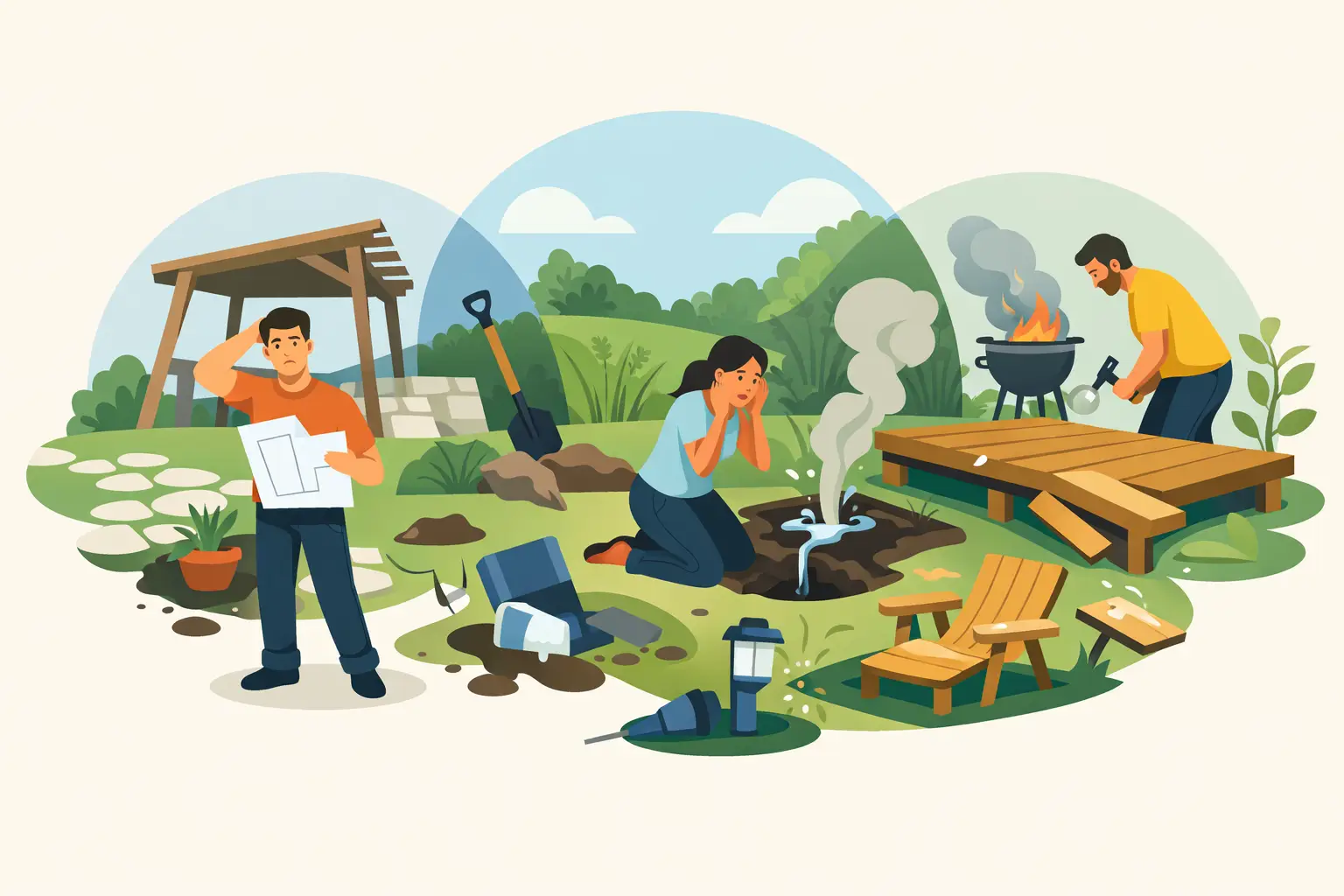
29 May 11 Backyard Renovation Mistakes to Avoid
A backyard can look expensive on paper and still fall short the moment you try to live in it. The most common backyard renovation mistakes to avoid are rarely about ambition. They usually come down to poor planning, mismatched materials, and decisions that prioritize appearance over how the space actually needs to perform.
For homeowners investing in a custom outdoor living space, that distinction matters. A well-designed backyard should feel like a natural extension of the home – comfortable, durable, easy to move through, and tailored to how you entertain, relax, and spend time outside. When the design and build process misses that mark, even premium features can feel underused.
Backyard renovation mistakes to avoid before construction starts
The earliest decisions shape everything that follows. If the layout, drainage, grading, and long-term use of the yard are not considered together, the project may look polished at first but age poorly or function awkwardly.
1. Designing for looks alone
A backyard should be visually cohesive, but beauty without function is where many projects start to unravel. An oversized patio with no shade may photograph well and sit empty in midsummer. A fire feature placed for symmetry rather than wind direction can become more frustrating than inviting.
Good design starts with use. Do you host large groups or keep gatherings small? Do children need room to play? Is privacy a priority? Should the yard support quiet mornings, outdoor dining, poolside lounging, or all of the above? The answers affect scale, circulation, lighting, plant choice, and where each feature belongs.
2. Underestimating drainage and grading
This is one of the most expensive mistakes to correct after installation. Water does not need much help to expose weak planning. Poor drainage can stain hardscapes, damage foundations, create soft lawn areas, and shorten the life of patios, retaining walls, and planting beds.
Every backyard has its own drainage behavior based on slope, soil, runoff, and surrounding structures. A thoughtful renovation accounts for all of it before any surface materials go in. That may mean regrading, adding drainage systems, adjusting elevations, or changing the layout altogether. It is not the glamorous part of a renovation, but it protects everything that comes after.
3. Ignoring how the yard connects to the home
One of the clearest signs of an average renovation is a backyard that feels separate from the house rather than connected to it. The transition should be intentional. Door locations, interior sightlines, finished floor height, and architectural style all influence the outdoor design.
A contemporary home paired with a rustic patio can feel disconnected. Steps that interrupt the flow from kitchen to dining terrace can make entertaining harder than it should be. When the backyard is planned as part of the property rather than an isolated project, the result feels more natural and more valuable.
Costly backyard renovation mistakes to avoid in layout and materials
Material selection and feature placement carry long-term consequences. What works in a showroom or on a mood board may not hold up the same way in a real backyard exposed to sun, moisture, freezing temperatures, and daily use.
4. Choosing materials based on price alone
Budget matters, but low upfront cost often leads to higher replacement and maintenance costs later. Some materials fade quickly, retain too much heat, stain easily, or struggle in freeze-thaw conditions. Others may simply look out of place next to the architecture of the home.
The better question is not what costs less today. It is what performs well over time in your climate, suits the style of the property, and delivers the finish you expect. Premium landscapes are built on material discipline, not impulse decisions.
5. Overbuilding the space
More features do not automatically create a better yard. Homeowners sometimes try to fit a full outdoor kitchen, oversized pergola, water feature, fire pit, multiple seating zones, and extensive planting into a yard that can only comfortably support half of that.
The result is often crowded, expensive, and difficult to navigate. Negative space matters. Room to move matters. Sightlines matter. A smaller number of well-proportioned features will almost always outperform a long wish list compressed into the wrong footprint.
6. Forgetting sun, wind, and seasonal comfort
Backyards are not static environments. They change by hour, by season, and by exposure. A lounge area that feels ideal in spring may become unusable in peak afternoon sun. A dining space positioned without wind protection can be uncomfortable more often than expected.
This is where experience makes a visible difference. Shade structures, tree placement, screening, lighting, and feature orientation should respond to the site. There is no universal formula. What works depends on the property, the surrounding homes, and how you want the space to feel from May through October and beyond.
7. Installing lighting as an afterthought
Landscape lighting is often treated as a finishing touch when it should be part of the design from the beginning. Without it, even a beautifully built backyard can disappear after sunset. With poorly planned lighting, the space can feel harsh, uneven, or overly theatrical.
Effective lighting supports safety, highlights architecture and planting, and extends the hours the yard can actually be enjoyed. It should feel intentional, not scattered. Wiring, fixture placement, beam spread, and control systems all benefit from early planning.
Mistakes that affect maintenance, longevity, and value
A polished installation is only successful if it continues to perform. Long-term value comes from details that are easy to overlook during the excitement of a renovation.
8. Selecting plants that do not fit the site
Planting design should do more than fill empty space. The right plant palette supports privacy, structure, seasonal interest, and manageable upkeep. The wrong one can create crowding, weak growth, constant replacement, or a yard that feels unfinished for much of the year.
Sun exposure, soil conditions, mature size, irrigation needs, and maintenance expectations all matter. So does the overall style of the landscape. Plant choices should reinforce the architecture and the intended mood of the space rather than compete with it.
9. Missing the maintenance reality
A backyard can be low maintenance, but no outdoor space is maintenance free. That is where expectations need to stay realistic. Natural stone, wood structures, lawns, pools, planting beds, and lighting systems all require a certain level of ongoing care.
The goal is not to avoid maintenance entirely. It is to design a yard that aligns with how much time and attention you actually want to give it. Busy homeowners often benefit from cleaner planting schemes, durable finishes, smart irrigation, and simpler material palettes that still look refined.
10. Hiring by price instead of process
Not all contractors approach outdoor construction the same way. A lower quote may reflect missing scope, weak project management, limited design coordination, or shortcuts in installation standards. That usually becomes clear only after the work is underway.
For a custom renovation, process matters as much as product. Homeowners should understand who is responsible for design, who manages site execution, how changes are handled, and whether the final build will truly reflect the original vision. A single accountable design-and-build team often reduces friction and protects quality because the plan and the installation are developed together.
11. Treating the backyard as a short-term project
The most successful renovations are planned with a longer view. Families grow. Entertaining habits change. Trees mature. Materials weather. Resale considerations may become more important than they seem today.
That does not mean every backyard needs to include every future possibility now. It means the foundation of the project should be adaptable. Leave room for phased additions if needed. Build core spaces well. Invest first in layout, grading, structure, and materials that support the property for years rather than just one season.
What better backyard planning looks like
A strong renovation begins with clarity. The design should respond to the home, the lot, and the lifestyle of the people using it. It should balance architecture with nature, comfort with durability, and visual impact with practical performance.
That is where professional planning earns its value. Experienced teams know where projects typically go wrong because they have seen the consequences – patios holding water, planting plans that outgrow their footprint, expensive features no one uses, and layouts that never quite feel right. Avoiding those outcomes is not about being conservative. It is about building with intention.
For homeowners who want more than a surface-level upgrade, the right backyard renovation is not simply attractive. It is composed, functional, and built with the kind of attention to detail that still shows years later. If you are investing in your property, make choices that support how you want to live outside, not just how you want the finished photos to look.