


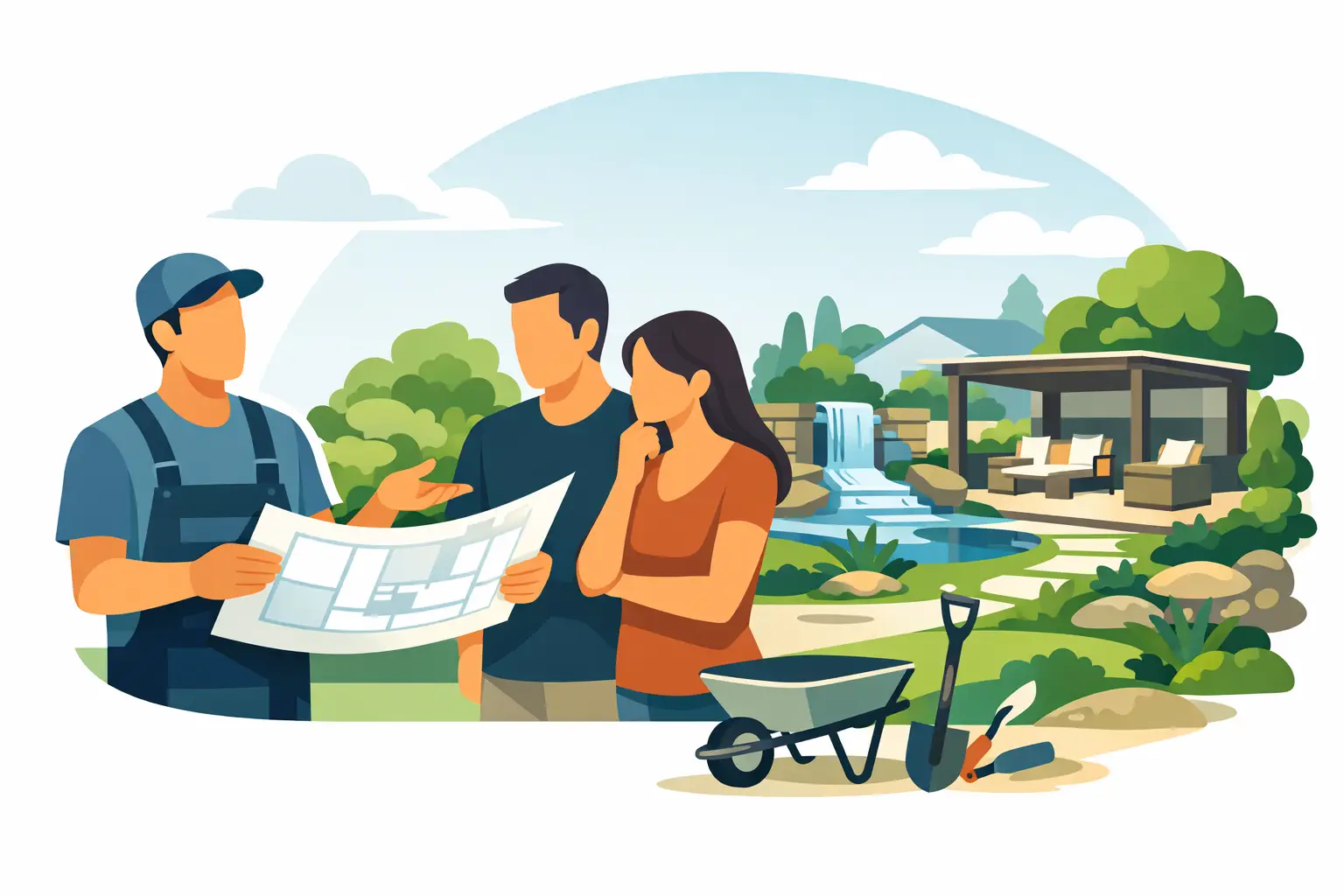
07 Aug Why Hire a Design-Build Landscaper for Your Yard?
A new patio, planting beds, or pool surround can look straightforward on paper. In practice, each choice affects the next: grading affects drainage, drainage affects hardscape, hardscape influences planting, and all of it shapes how you use the space. That is why hire a design-build landscaper is a question worth asking before work begins. When one experienced team guides both the plan and the installation, your outdoor space is more likely to feel intentional, perform well, and reflect the way you live.
For homeowners and property decision-makers, the real value is not simply having fewer people to call. It is having a single, accountable partner protect the vision from the first conversation through the final detail.
One Vision From Concept Through Construction
A landscape design is more than a collection of attractive features. It is a coordinated plan for circulation, scale, privacy, drainage, materials, seasonal interest, and daily use. A design-build landscaper approaches those decisions with construction knowledge already in mind.
That connection matters. A beautiful concept that cannot be built efficiently, maintained realistically, or integrated with the property can lead to compromises after the project is underway. With design-build, the team developing the plan understands how the patio base will be prepared, where utilities may run, how retaining walls will perform, and how planting areas will mature around the finished structure.
The result is a landscape that reads as one complete environment. The walkways relate to the entrance. The outdoor kitchen fits the entertaining area. Plantings soften hardscape without obscuring sightlines or creating unnecessary maintenance. Every element has a purpose beyond decoration.
Clear Accountability Protects Your Investment
When design and installation are managed by separate companies, questions can become difficult to resolve. Is a construction issue the installer’s responsibility, or was it created by the design? If a material is unavailable or site conditions require an adjustment, who decides how to preserve the original intent?
A design-build firm owns the entire process. The same team that understands the goals behind the plan is responsible for translating it into a finished space. That creates clearer communication, faster decisions, and fewer opportunities for details to be lost between designers, contractors, and subcontractors.
This does not mean every project will be free of change. Existing properties often reveal surprises once work begins, especially with drainage, buried services, soil conditions, or aging structures. The difference is that a design-build team can evaluate those conditions through both a design and construction lens, then present solutions that protect function, appearance, and budget.
For busy homeowners, that single point of responsibility can be as valuable as the finished patio or garden. You spend less time coordinating schedules and more time making meaningful decisions about how the space should feel and function.
Design-Build Landscapers Plan for Real Life
The strongest outdoor spaces are built around routines, not trends. A family may need an open lawn for play, a durable dining area, lighting for late evenings, and storage that does not interrupt the view. Another homeowner may want a quiet garden retreat with screening, layered planting, and a comfortable place for morning coffee. A commercial property may need an entrance that makes a polished first impression while standing up to heavy foot traffic and seasonal conditions.
A design-build landscaper begins with those realities. The initial planning process should consider how people arrive, move through the property, gather, relax, and maintain the space over time. It should also account for sun exposure, neighboring views, grade changes, existing architecture, and the property’s natural character.
This is where custom work earns its value. Rather than forcing a standard patio, planting package, or retaining wall into every yard, the design can respond to the property itself. A narrow side yard may become a purposeful garden passage. A sloped backyard may become a series of usable outdoor rooms. An exposed seating area may gain comfort through thoughtful screening and shade rather than an oversized structure.
Better Coordination Means Better Craftsmanship
Landscape construction relies on details that are easy to overlook when looking at a finished project. Proper excavation, compacted bases, drainage planning, edge restraint, wall footings, material transitions, and careful grading determine whether a space continues to look and perform as intended.
A design-build team is positioned to make those details part of the plan from the start. Instead of treating construction as a separate phase that begins after design is complete, the installation requirements inform the design itself. Material selections can be evaluated for durability and fit. Grades can be resolved before water has a chance to become a problem. Plant material can be selected for the conditions it will actually face.
This is particularly important in areas with freeze-thaw cycles, significant rainfall, and varied soil conditions. A patio that looks excellent on installation day still needs a properly prepared foundation. A planting bed needs more than attractive shrubs; it needs suitable soil, drainage, spacing, and a relationship to the hardscape around it.
Quality in craft is rarely accidental. It comes from planning well, building carefully, and maintaining a consistent standard across every phase of the project.
A More Predictable Process, Not a Rushed One
Design-build does not always mean the lowest initial price, and it should not be mistaken for a shortcut. Custom landscapes require discovery, thoughtful design, material planning, and skilled installation. The advantage is that the budget and buildability conversation happens early, when changes are easier to make.
An experienced team can help prioritize the features that will have the greatest impact. If the full vision is better completed in phases, the plan can be organized so today’s work supports tomorrow’s additions. For example, drainage, utilities, and structural preparation can be considered before a future outdoor kitchen, pavilion, or pool project is added.
That foresight helps avoid expensive rework. It also makes the project easier to manage because expectations are established before crews arrive. You should understand the intended scope, material direction, project sequence, and the decisions that may be needed along the way.
There are situations where hiring a separate landscape designer and installer makes sense, particularly if you have a highly specialized design need or already have a trusted construction partner. But for most residential and commercial projects, the added coordination can create more complexity than value. The larger the transformation, the more beneficial an integrated team becomes.
Sustainability Works Best When It Is Designed In
Sustainable landscaping is not limited to choosing a few native plants. It is a practical approach to building an outdoor space that uses resources wisely, supports healthy plant growth, and remains durable over time.
A design-build landscaper can integrate sustainable decisions throughout the project. That may include managing stormwater with appropriate grading and drainage, selecting plants suited to sun and soil conditions, reducing unnecessary turf, using permeable surfaces where appropriate, and designing irrigation around actual planting needs. Shade trees, screening, and plant placement can also improve comfort and reduce the need for constant intervention.
The right choices depend on the site. A low-maintenance landscape is not the same as a no-maintenance landscape, and native plants are not automatically right for every exposure or design goal. A thoughtful plan balances environmental considerations with the appearance, lifestyle, and level of care you want from the property.
Your Landscape Should Add Value Beyond Curb Appeal
Curb appeal matters, especially when a landscape frames the architecture of a home or establishes the tone for a commercial property. Yet the best projects deliver more than a strong first impression. They create a place you want to use.
A well-designed backyard can make entertaining easier, give children room to play, provide privacy from nearby properties, and make an ordinary evening outdoors feel more considered. At the front of a property, a coordinated landscape can improve arrival, reinforce architectural character, and create a sense of care before anyone reaches the door.
Redleaf Landscape Inc has served the GTA since 1986 with this kind of end-to-end perspective: creating custom outdoor environments where visual harmony, function, and lasting workmanship support one another.
Choose a Partner Who Asks Better Questions
Before hiring a design-build landscaper, look beyond photos of finished patios and gardens. Ask how the team approaches site conditions, drainage, material selection, scheduling, and long-term maintenance. Ask who manages the project, how changes are handled, and what steps ensure the installed work remains true to the approved design.
Most of all, pay attention to the questions you are asked. A capable landscape partner will want to know how you live, what frustrates you about the existing property, what you value, and how you want the space to serve you years from now. Those answers are the foundation of a landscape with lasting meaning.
Your property is not a blank canvas waiting for features. It is part of your everyday life. Give it a team that can see the full picture, build it with care, and turn the space outside your door into a genuine extension of home.