


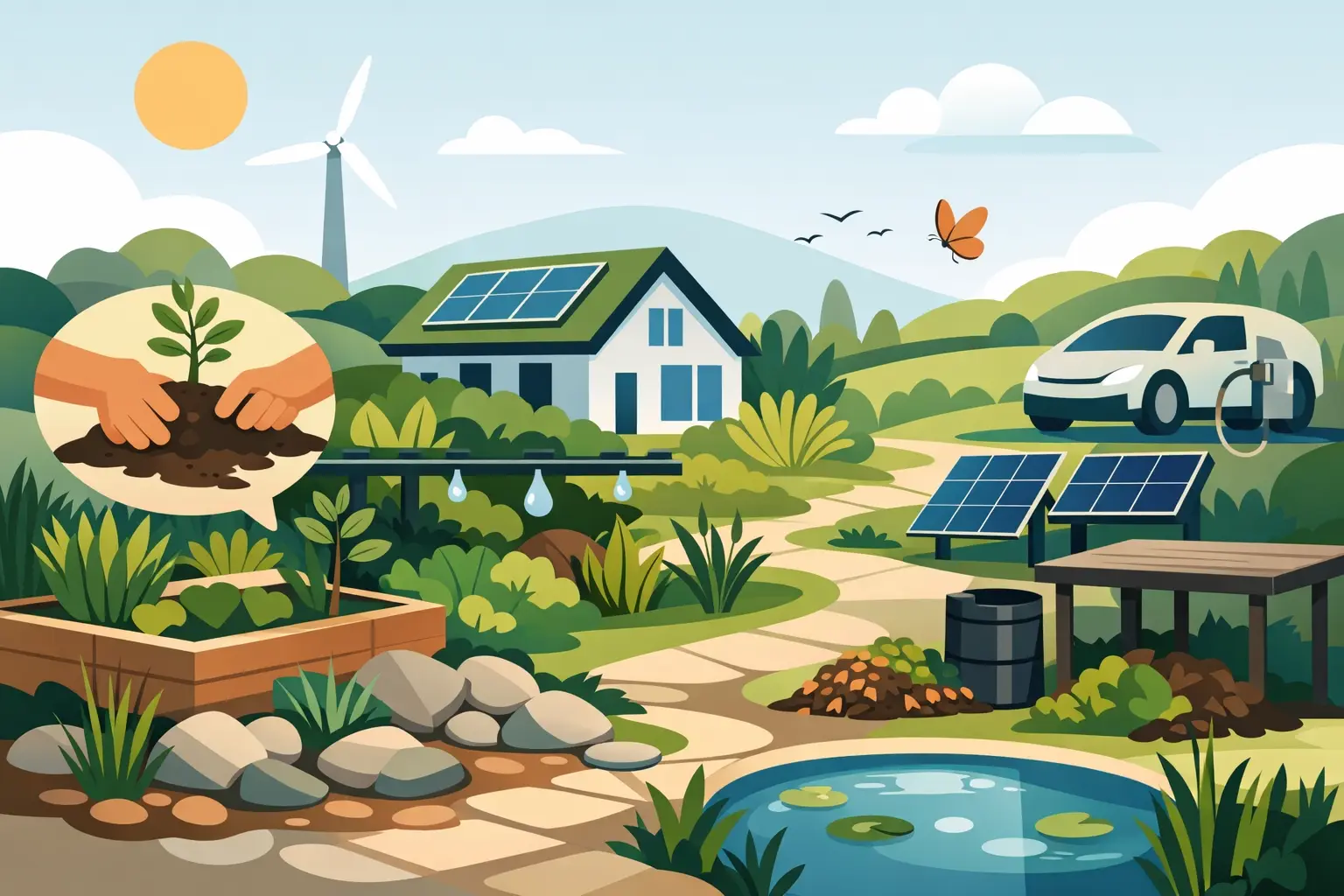
17 May 9 Sustainable Landscaping Trends That Last
A well-built landscape should do more than look finished on installation day. It should handle heat, heavy rain, seasonal swings, and everyday use without demanding constant correction. That is why sustainable landscaping trends are gaining ground with homeowners and property managers who want outdoor spaces that perform as beautifully as they present.
For premium properties, sustainability is not a separate style. It is a design standard. The best landscapes now balance visual clarity, comfort, and long-term durability with smarter material choices, better water management, and planting plans that suit the site instead of fighting it. Here is where that shift is showing up most clearly.
Sustainable Landscaping Trends Are Becoming More Functional
The biggest change is practical. Sustainable landscapes are no longer framed as soft, rustic, or purely eco-driven spaces. They are being designed as polished outdoor environments with cleaner layouts, stronger material performance, and lower long-term input.
That matters for clients who want an outdoor space to feel like an extension of the home. A front entry should strengthen curb appeal without becoming irrigation-heavy. A backyard entertaining area should feel refined and comfortable without relying on high-maintenance planting beds around every edge. On commercial properties, the same principle applies. The site needs to look established, organized, and professional while standing up to traffic and weather.
In other words, sustainability is moving from a nice extra to a core part of quality design.
Native and Climate-Adapted Planting
One of the most established sustainable landscaping trends is also one of the most effective – using plants that are suited to the local climate and soil conditions. This does not mean every project needs to look wild or unmanaged. In a custom landscape, native and climate-adapted species can still be arranged with strong lines, layered heights, and a deliberate architectural feel.
The advantage is performance. Plants that belong in the region generally need less supplemental water once established, show better resilience through weather swings, and often require fewer interventions to stay healthy. That translates into cleaner beds, fewer replacements, and a landscape that matures with greater consistency.
There is a trade-off, though. Some clients are drawn to exotic plant palettes because of a very specific look. In those cases, the right answer is often balance rather than purity. A design can incorporate select ornamental species while anchoring the broader planting plan in tougher, site-appropriate material.
Lawn Reduction With a More Purposeful Layout
Large, uninterrupted lawns are becoming less central in high-performing landscape design. They consume water, require frequent maintenance, and often take up space that could be serving a better function. Reducing lawn area is one of the clearest sustainable shifts, especially on properties where the yard is meant to support entertaining, dining, circulation, or family use.
That does not mean removing turf entirely. For many homes, a lawn still has a role, particularly where children or pets need open play space. The trend is toward intentional use. Keep turf where it earns its place, then replace underused square footage with planting beds, patios, walkways, gravel zones, or groundcover that delivers structure with less waste.
Done well, lawn reduction often improves the look of a property. The space feels designed, not just filled.
Smarter Water Management
Water is now a design issue, not simply a maintenance issue. More property owners are paying attention to how landscapes handle both drought periods and sudden downpours. That has pushed water-conscious planning to the forefront.
Permeable surfaces, properly graded hardscapes, rain gardens, and planting zones selected for lower water demand all support a more resilient site. Smart irrigation systems are part of this as well. Rather than watering every zone the same way on a fixed schedule, newer systems can respond to weather conditions, soil moisture, and sun exposure.
This is where experienced design-and-build execution matters. Water management is not solved by adding one sustainable feature after the fact. The grading, drainage, planting layout, and material choices need to work together. If they do not, the property may still suffer from pooling, runoff, or stressed planting despite the best intentions.
Hardscapes That Last Longer and Waste Less
A sustainable landscape is not only about what grows. It is also about what gets built and how long it holds up. Premium outdoor spaces increasingly favor hardscape materials that are durable, repairable, and appropriate for the climate. Longevity matters because replacement carries both financial and environmental cost.
This trend often shows up in better base preparation, more thoughtful material selection, and layouts that age gracefully. Natural stone, quality pavers, and well-built retaining elements can all support a sustainable approach when they are installed correctly and chosen for the site conditions. The opposite is also true. Cheap materials that shift, crack, or stain prematurely are rarely economical over time.
Reclaimed and locally sourced materials also appeal to many clients, though availability and consistency can vary. For some projects, they add character and reduce transport impacts. For others, a newer material with better performance and a cleaner finish may be the better fit. Sustainability is not about forcing one answer onto every site. It is about making informed decisions that respect both design intent and lifespan.
Outdoor Living With Lower Resource Demand
Another of the key sustainable landscaping trends is the move toward outdoor living spaces that feel luxurious without excessive resource use. Clients still want kitchens, dining areas, fire features, shade structures, and integrated lighting. What is changing is how those spaces are planned.
A more sustainable outdoor living area is typically more intentional in scale, material use, and energy consumption. It may use LED lighting, efficient appliances, durable furnishings, and planting to create natural cooling and privacy rather than relying on bigger built elements for every function. Shade trees, pergolas, and thoughtful orientation can reduce heat build-up and make the space more comfortable in summer.
This approach often leads to better design. Instead of adding features simply because the yard has room, each element is given a purpose. The result feels calmer, more refined, and easier to maintain.
Pollinator Support Without Losing a Finished Look
Pollinator-friendly planting continues to influence residential and commercial landscapes, but the look has evolved. Early versions of this trend were sometimes dismissed by premium property owners because they appeared too loose or informal. That is changing as designers integrate flowering perennials, layered shrubs, and seasonal plant interest into more structured compositions.
The goal is not to make every property look naturalistic. It is to support biodiversity while maintaining a polished presentation. Repetition, clean edging, and careful spacing make a difference. A bed can attract bees and butterflies while still reading as high-end and intentionally designed.
This is especially important for front-yard landscapes and commercial settings, where visual order matters. Sustainable planting should enhance presentation, not compromise it.
Low-Waste Maintenance Planning
A sustainable landscape can be undermined by an unsustainable maintenance routine. That is why more projects are being designed with long-term upkeep in mind from the start. Plant spacing, bed access, mulch use, edging details, and seasonal growth habits all influence how much labor and material the property will require over time.
This trend is less visible than a patio or planting plan, but it has real impact. When a landscape is designed for realistic maintenance, it stays attractive with fewer inputs. When it is not, owners often end up overwatering, overpruning, replacing plants too often, or paying for frequent corrections.
For busy homeowners and commercial decision-makers, this is a major value point. Good design should reduce friction, not create it.
Edible Elements in Select Spaces
Edible landscaping is becoming more refined. Instead of turning the yard into a full garden, many higher-end properties are incorporating herbs, fruiting shrubs, or compact raised beds into broader outdoor living plans. The appeal is obvious – beauty with practical return.
Still, this trend depends heavily on the client and the site. Edible elements need sun, access, and a genuine willingness to harvest and maintain them. If that commitment is not there, they can quickly look neglected. Used selectively, however, they bring personality and a sense of daily use to the landscape.
The Strongest Trend Is Integration
If there is one pattern tying these ideas together, it is integration. The most successful sustainable landscapes are not built around a checklist. They are designed as complete environments where planting, drainage, hardscape, and outdoor living work as one system.
That is where quality in craft becomes visible. A sustainable property should not feel compromised or overly technical. It should feel resolved. Materials should sit well in the setting. Planting should soften the structure without becoming unruly. Water should move where it should. The space should reflect the people who use it.
For clients investing in custom work, that is the real opportunity. Sustainable landscaping is no longer about doing less with your property. It is about building smarter, so the landscape gives more back over time. Redleaf Landscape Inc has seen that shift firsthand across outdoor spaces that are expected to look exceptional and function just as well years after completion.
The best trend to follow is the one that makes your property more livable, more resilient, and more distinctly your own.