


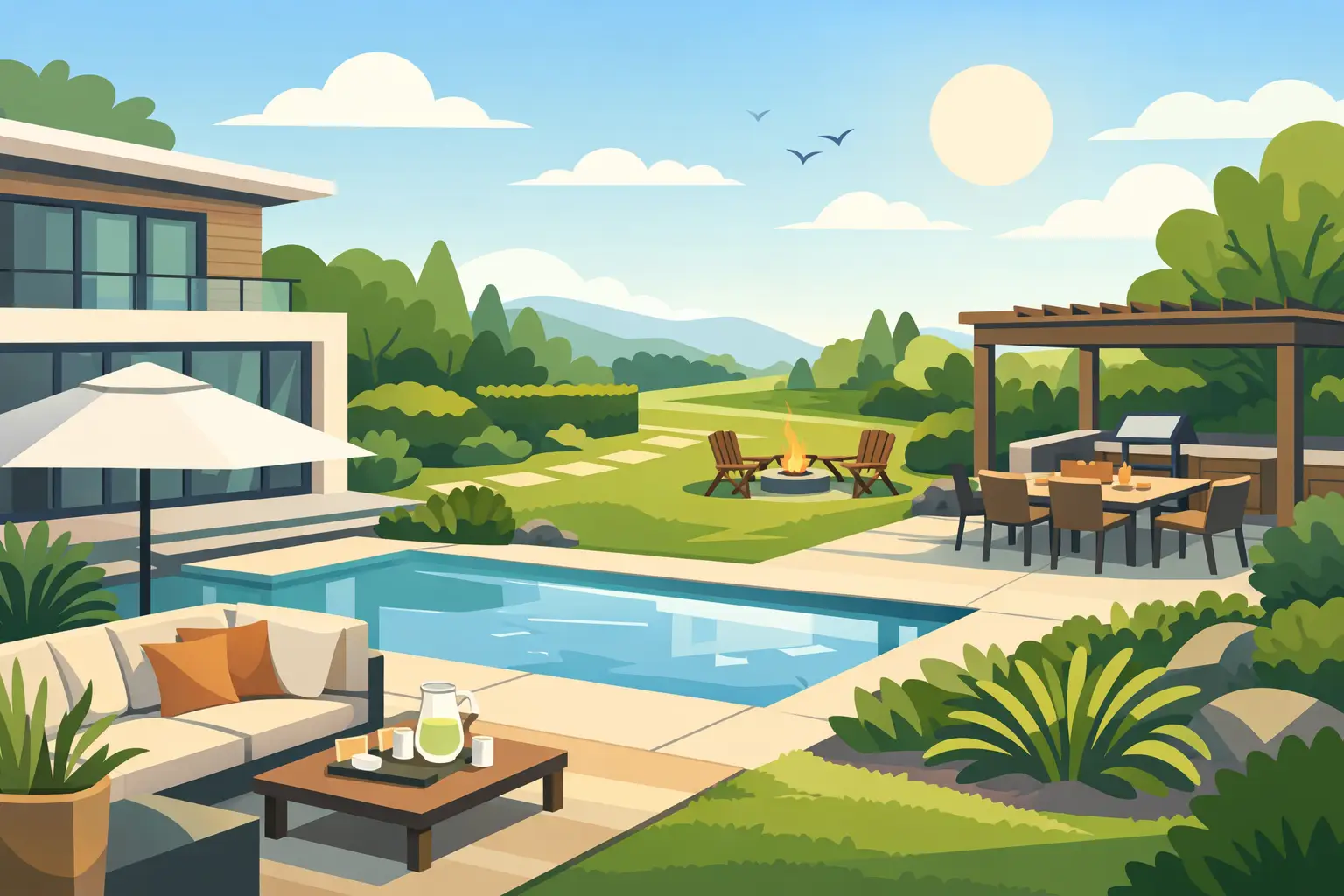
09 Aug Residential Outdoor Living Guide for Better Yards
A well-designed yard changes how a home is used. It gives a family room to gather without crowding the kitchen, creates a setting for relaxed evenings, and makes an ordinary property feel more considered from the moment guests arrive. This residential outdoor living guide is designed to help homeowners make thoughtful choices before construction begins, so the finished space feels personal, functional, and built to last.
Outdoor living is not simply a patio with furniture placed on it. The strongest projects are planned as an extension of the home, with clear purpose, durable materials, and details that support the way the household actually lives.
Start With How You Want to Live Outside
Before choosing stone, plants, or a pergola style, define the experiences the space needs to support. A couple who enjoys quiet morning coffee will plan differently than a family hosting weekend dinners, and both needs may differ from a homeowner who wants a low-maintenance retreat after a long workday.
Consider how many people you host most often, what time of day you use the yard, and where privacy matters most. Think about the traffic pattern from the house to the seating area, grill, pool, garden, or side gate. A beautiful outdoor space can still feel frustrating if guests must cross the cooking zone to reach their seats or if children have no clear route from the back door to the lawn.
It also helps to identify the priorities that deserve investment. For some properties, a generous dining terrace is the centerpiece. For others, the value lies in a sheltered lounge, an outdoor kitchen, or a fire feature that stretches the use of the yard into cooler evenings. Trying to fit every possible feature into a modest space can weaken the result. A smaller, more intentional plan often feels more luxurious than a crowded backyard.
Build the Residential Outdoor Living Plan Around Zones
A successful outdoor environment usually has distinct zones, even when the yard itself is compact. These areas do not need walls between them. Changes in paving, planting, elevation, lighting, or furniture arrangement can create definition while preserving an open, cohesive feel.
Dining, cooking, and gathering
Place the dining area close enough to the home that serving meals is easy, but avoid treating it as an afterthought squeezed beside the back door. It needs room for chairs to pull out, people to move around the table, and a comfortable route to the cooking area. If grilling is central to your entertaining, plan for proper counter space, storage, task lighting, and ventilation rather than relying on a freestanding barbecue in a corner.
A lounge area benefits from a different mindset. It should feel less like a passageway and more like a destination. A fire table, fireplace, or fire pit can create a natural focal point, but the seating layout matters just as much. Guests should be able to talk easily without smoke, heat, or glare becoming the focus of the evening.
Quiet spaces and family use
Not every part of the yard must be designed for entertaining. A bench beneath a tree, a small terrace off a primary bedroom, or a tucked-away reading corner can give the landscape a sense of refuge. Families may also need flexible lawn space for play, while gardeners may value sunny beds that are easy to access and maintain.
The key is to allow each use to have enough room. A lawn that is too small for play and too exposed for relaxing may serve neither purpose well. It depends on the household, but clear priorities will lead to a more satisfying layout than attempting to make one area do everything.
Respect the Site Before Selecting Features
Every property has conditions that shape the right design. Sun exposure determines where people will actually want to sit in July, while wind can make a beautiful patio uncomfortable during spring and fall. Existing grades, drainage patterns, mature trees, neighboring windows, and property access all influence what can be built and how it should be detailed.
Drainage deserves particular attention. Water should move away from the home and be managed intentionally across hardscape areas. Poor grading can undermine patios, create icy surfaces, damage plant material, and turn a premium investment into a recurring maintenance concern. The base preparation beneath stone or pavers is largely invisible when the job is complete, but it is one of the clearest markers of quality in craft.
Privacy should be handled with the same care. A solid fence may be appropriate in one location, while layered planting, decorative screens, or a pergola can provide a softer and more architectural solution elsewhere. The goal is not to close off the yard completely. It is to create comfort without sacrificing light, sightlines, or the sense of space.
Choose Materials for Performance, Not Just First Impressions
Materials establish the character of an outdoor living space, but they also determine how it performs through weather, foot traffic, and daily use. Natural stone can bring depth and permanence, while porcelain, concrete pavers, and composite products may offer different benefits in consistency, maintenance, cost, and slip resistance.
There is no universally best choice. Natural materials develop variation and patina that many homeowners value, but they require thoughtful installation and may carry a higher initial cost. Manufactured materials can provide a clean, tailored appearance and predictable sizing, although the finish should still feel appropriate for the home and surrounding landscape.
The most refined projects use a disciplined palette. Repeating complementary tones from the home exterior through the hardscape, woodwork, and planting creates visual harmony. Too many colors, paver shapes, and decorative accents can make a yard feel pieced together rather than designed as a complete environment.
Durability is also about the details. Proper edge restraints, frost-resistant materials, stable foundations, correctly pitched surfaces, and well-built steps are not optional extras. They protect the appearance and usability of the space for years to come.
Use Planting to Create Structure and Atmosphere
Planting should do more than fill open soil around a patio. It can frame views, soften hardscape, guide movement, create privacy, and connect the finished landscape to the natural character of the property. Well-composed planting also gives the yard dimension through changing heights, textures, and seasonal interest.
Start with structure. Trees, evergreen screening, and larger shrubs provide the framework that remains visible through much of the year. Perennials, ornamental grasses, flowering shrubs, and seasonal accents can then bring color and movement without carrying the full responsibility of the design.
A sustainable approach is practical as well as attractive. Group plants with similar water and sun requirements, select varieties suited to the local climate, and leave enough room for plants to reach their mature size. A tightly packed installation may look full immediately, but it often leads to crowding, poor air circulation, and costly replacement later.
Maintenance expectations should be honest from the beginning. A highly detailed garden can be rewarding, but it needs regular care. If time is limited, invest in strong bones, restrained plant selections, quality mulch or groundcover, and an irrigation plan that supports the landscape without adding unnecessary work.
Extend the Season With Comfort and Light
The right features can make an outdoor space useful well beyond a few summer months. Shade structures help manage intense sun and can define a dining or lounge area. Depending on orientation and desired flexibility, that might mean a pergola, pavilion, retractable shade solution, or strategically placed trees.
Lighting should be layered rather than overpowering. Path lights improve safety, subtle step lights make level changes visible, and soft illumination within planting brings depth after dark. Task lighting is valuable around cooking and serving areas, while a warmer ambient glow makes seating areas feel inviting. The objective is to see where you are going and enjoy the landscape, not flood the yard with brightness.
Heating features can extend use in cooler weather, but they should suit the scale of the area. A small fire feature may be perfect for an intimate courtyard, while a larger covered structure may call for a more substantial solution. Review local regulations, clearances, fuel options, and ventilation before treating fire as a simple decorative addition.
Plan the Project as One Connected Investment
Phasing can be sensible, particularly when a property requires extensive work. However, the full vision should be established before the first section is built. That allows for future utilities, drainage, lighting conduits, grading, and circulation to be planned correctly from the start. Building a patio now and discovering later that it must be removed for drainage or outdoor kitchen connections is an avoidable expense.
A professional design-and-build process brings accountability to the project. The design should respond to how you live, while installation must protect the intent through precise layout, material selection, site preparation, and finishing details. Redleaf Landscape Inc approaches outdoor environments with that connection in mind: natural beauty, function, and craftsmanship should support one another rather than compete.
Budget conversations should also include the work below the surface and around the edges. Site preparation, drainage, utilities, access, retaining conditions, and planting establishment all affect cost. Knowing where quality cannot be compromised makes it easier to adjust scope thoughtfully without reducing the project to a collection of shortcuts.
A finished outdoor space should feel effortless because the planning behind it was deliberate. Choose the first improvement that will change how you live at home most, then let that decision guide the rest of the landscape.