


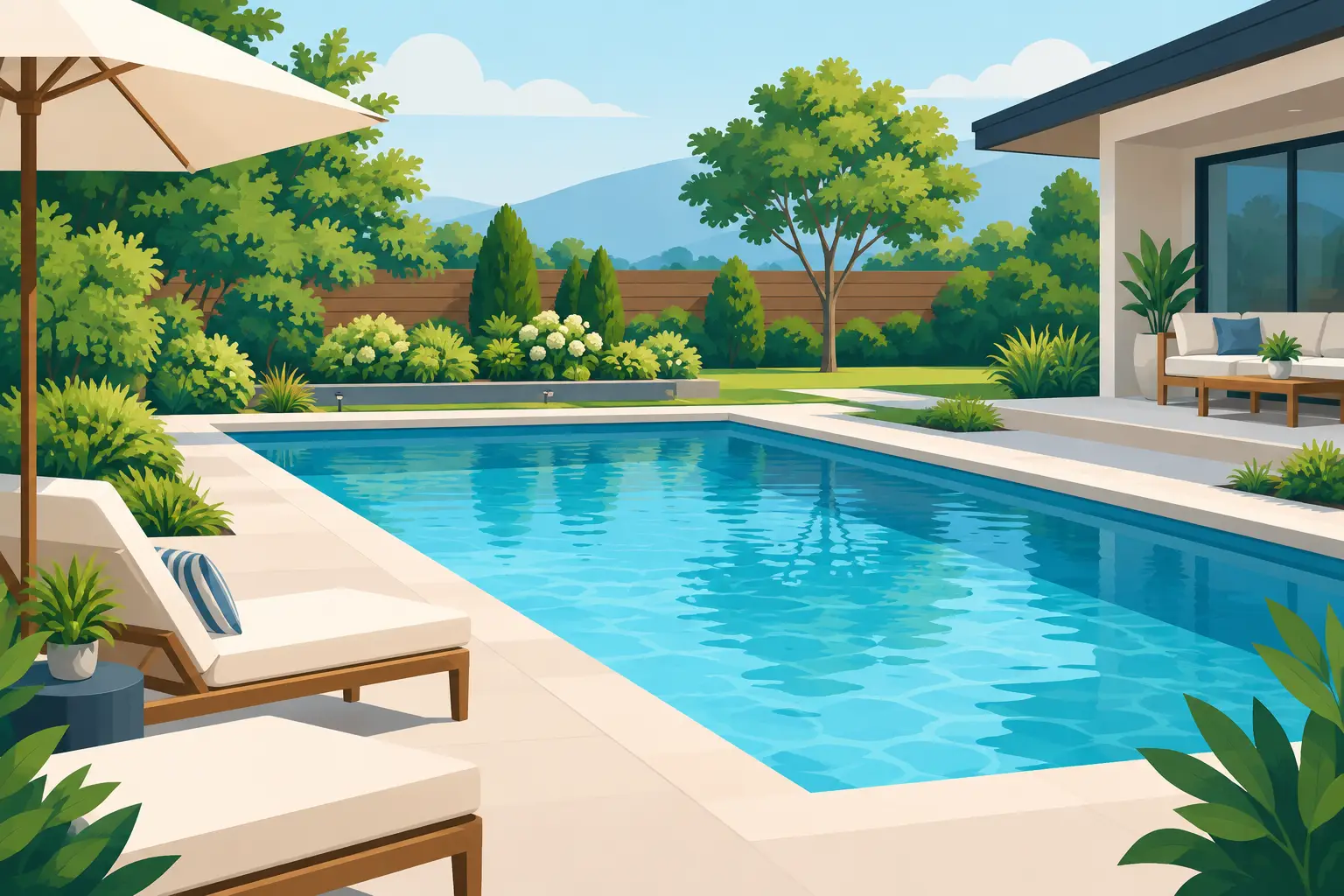
20 Sep Pool Landscaping That Makes the Whole Yard Work
A pool changes more than a backyard view. It changes how people move through the property, where they gather, what they see from inside the home, and how the yard performs through changing weather. The right pool landscaping treats the water as part of a complete outdoor living environment, not as an isolated feature surrounded by leftover space.
For homeowners who expect a polished, lasting result, the goal is not simply to add plantings around the pool. It is to create a setting that feels intentional from every angle: welcoming for guests, practical for family life, private when it needs to be, and built with materials that can handle real use.
Start With How the Pool Area Will Be Used
The most successful pool landscapes begin with lifestyle, not a plant list. A family with young children may need generous, unobstructed circulation and clear sightlines from the patio or kitchen. Homeowners who entertain often may prioritize a dining terrace, lounge seating, an outdoor kitchen, or a fire feature that extends the season beyond summer.
Consider how people will arrive at the pool, where towels and pool toys will go, and whether wet feet will regularly travel back into the house. These everyday details shape the right layout. A beautiful stone path that forces guests through a planting bed, for example, will not stay beautiful for long.
The pool should also relate naturally to the home. Sightlines from key windows, doors, and interior rooms matter. When the view from the kitchen or living room feels composed, the backyard becomes part of the home’s visual identity throughout the year, even when the pool is closed.
Build the Hardscape Framework First
Hardscape establishes the structure of the entire pool setting. Decking, patios, retaining walls, steps, and pathways define circulation while setting the visual tone for the landscape. They also represent a significant portion of the investment, so proportion and material selection deserve careful attention.
A pool deck needs enough room for the way it will actually be used. There should be comfortable space for loungers, side tables, and movement around furniture without creating a vast expanse of paving that feels exposed or impersonal. In many yards, the answer is not one oversized patio but a series of connected zones: a sun deck near the water, a dining area closer to the home, and a quieter seating area slightly apart from the activity.
Material choice is both aesthetic and practical. Natural stone offers character and a premium finish, while porcelain can provide a clean, contemporary appearance with consistent sizing and dependable performance. Textured concrete or quality pavers can also be excellent options when selected to complement the architecture of the home.
Heat retention, slip resistance, maintenance requirements, and winter durability all matter. Light finishes are generally more comfortable underfoot in direct sun, while very pale surfaces can create glare. Darker materials can feel richer and more grounded but may become hot during peak summer conditions. There is no universal best choice – the right surface depends on exposure, architecture, budget, and how the space will be used.
Drainage Is Part of the Design
Water should always be planned before finishes and planting are finalized. Pool landscaping needs proper grading to direct runoff away from the home, prevent puddling on patios, and protect planting areas from erosion. This is especially important where patios meet foundations, retaining walls, or lower sections of the property.
A well-designed drainage plan is rarely the feature people notice first, but it is often what protects the quality of the finished work over time. Catch basins, channel drains, permeable surfaces, and strategically graded planting beds can all play a role. The right approach depends on site conditions, soil, existing elevations, and the amount of hard surface being added.
Create Privacy Without Closing In the Yard
Privacy is one of the strongest reasons homeowners invest in a complete pool environment. The challenge is achieving it without making the space feel boxed in. A solid fence may satisfy a practical need, but it does not always provide the layered, inviting setting that a pool deserves.
Planting can soften property lines, frame views, and screen neighboring windows. Evergreens provide year-round coverage, while ornamental trees, flowering shrubs, and grasses add seasonal texture. The best designs use a mix of heights and forms rather than a single row of identical plants. That approach feels more natural and creates greater visual depth.
Placement matters as much as species selection. Tall screening should block undesirable views without casting unwanted shade across the pool or crowding the deck. Plantings near the water should leave enough open space for maintenance access and should not drop excessive leaves, fruit, or needles into the pool.
A privacy strategy can also include architectural elements. Decorative screens, pergolas, trellis panels, raised planters, and cabanas create definition while adding an element of shelter. These features work particularly well in compact urban yards, where every square foot needs to serve more than one purpose.
Choose Plants for Performance, Not Just First Impressions
Poolside plants need to look good in demanding conditions. Reflected heat, bright sun, splashing water, and wind can make the pool perimeter tougher than the rest of the garden. A plant that thrives beside a shaded front entry may struggle beside a bright, heat-retaining patio.
The strongest planting plans balance structure with softness. Evergreen material provides consistency through winter, while deciduous shrubs and perennials bring movement, color, and change across the growing season. Ornamental grasses can add a relaxed, resort-like quality, but they should be selected and placed carefully so they do not overwhelm paths or leave debris in the water.
Avoid relying heavily on plants that are messy, thorny, invasive, or attractive to swarms of stinging insects near seating areas. This does not mean a pool landscape must be sterile. It means each plant should earn its place through appearance, resilience, and ease of maintenance.
Mulch, decorative stone, and groundcovers can complete planting beds, though each has trade-offs. Loose stone may migrate onto the pool deck, while certain groundcovers need regular trimming to stay tidy. Clean bed edges and properly sized planting areas make a major difference in how refined the landscape looks over time.
Design for Evenings, Not Only Sunny Afternoons
A pool area that disappears after sunset is only doing half its job. Thoughtful lighting makes the space safer and more inviting while drawing attention to the details that define the design.
Low-level path lighting helps guide movement around the deck and through the yard. Gentle uplighting can reveal the form of a specimen tree or textured stone wall. Step lights, under-cap wall lighting, and carefully placed fixtures around seating areas create a warm atmosphere without turning the backyard into a brightly lit stage.
Restraint is essential. Too many fixtures can flatten the landscape and create glare on the water. The most effective lighting plans create layers, allowing homeowners to shift from practical illumination for guests to a quieter setting for a late swim or relaxed evening outdoors.
Plan the Project as One Connected Environment
A pool installation often involves several trades, from excavation and electrical work to fencing, decking, planting, and irrigation. When these elements are treated as separate projects, costly compromises can appear later: a path that conflicts with drainage, lighting added after hardscape is finished, or planting beds that are too narrow for the intended screening.
A unified design-and-build process helps prevent those gaps. It allows the pool, patio, landscape, and outdoor living features to be planned together, with clear sequencing from the first consultation through professional installation. That coordination is where craftsmanship becomes visible – in aligned materials, clean transitions, functional grades, and details that feel considered rather than added at the last minute.
For GTA properties, seasonal conditions deserve particular attention. Freeze-thaw cycles, snow storage, drainage, and the long-term behavior of materials should guide the design from the beginning. A space that looks exceptional on installation day should also be designed to perform through years of use.
A pool can be the centerpiece of a backyard, but the landscape is what gives it a sense of place. When every surface, planting bed, and gathering space is planned with purpose, the result is not merely a pool area. It is an outdoor environment that feels personal, composed, and ready to be enjoyed season after season.