


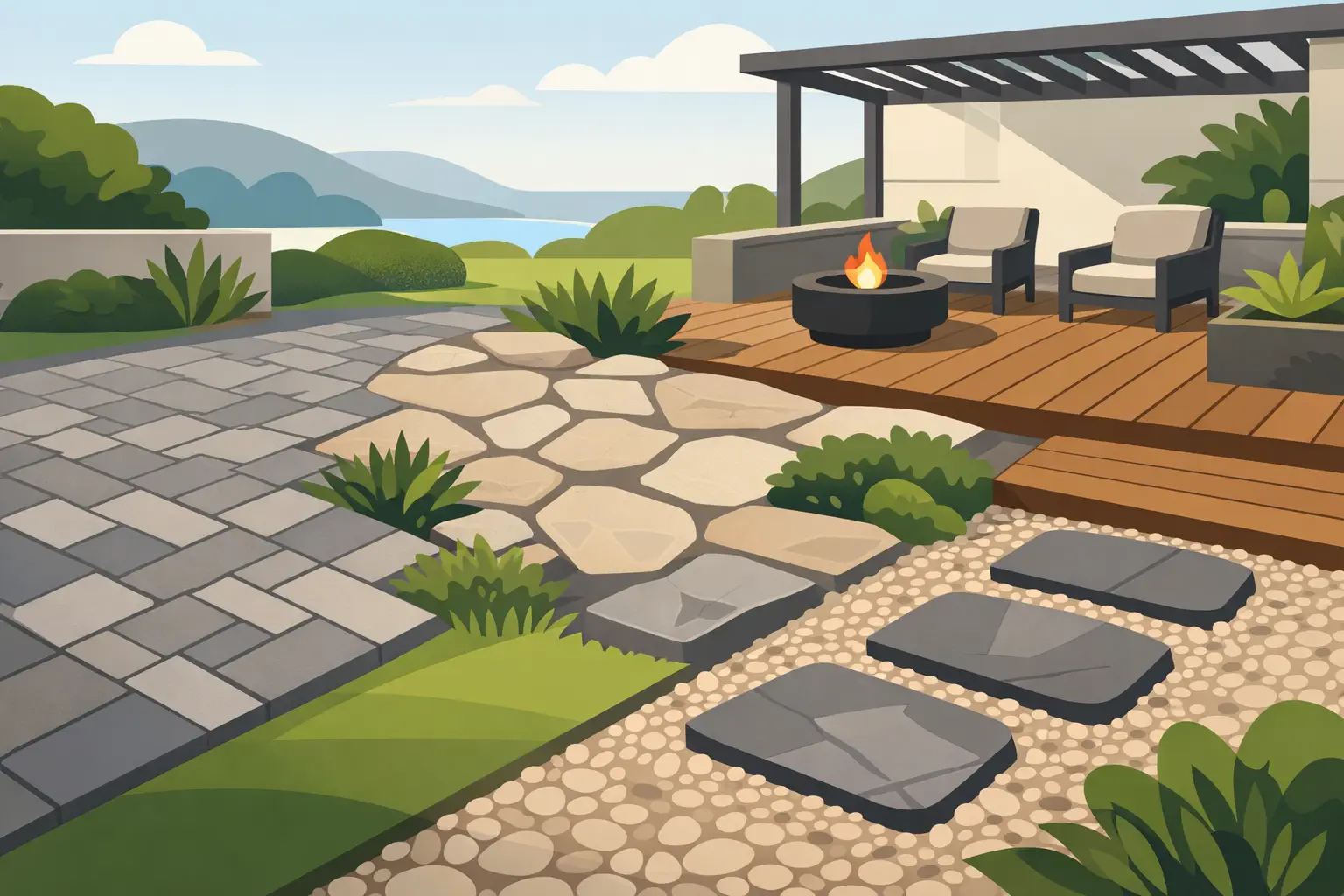
19 Aug Best Hardscaping Materials for Patios That Last
A patio has to do more than look impressive on the day it is installed. It needs to carry furniture, foot traffic, summer gatherings, freeze-thaw cycles, rain, and the everyday movement between home and garden. The best hardscaping materials for patios are the ones that suit the architecture of the property, the way the space will be used, and the realities of the local climate.
For homeowners who want an outdoor space that feels like a true extension of the home, material selection is one of the most consequential design decisions. Color, texture, joint lines, drainage, edge details, and installation quality all shape the finished result. A premium patio is rarely defined by one expensive material alone. It is defined by thoughtful choices working together.
Start With How the Patio Will Be Used
Before selecting stone, concrete, or pavers, consider the role the patio will play. A quiet courtyard outside a primary bedroom calls for a different surface than a poolside entertaining area, a family dining terrace, or a front entry designed to strengthen curb appeal.
Comfort underfoot matters. So does traction, especially around water or in shaded areas where moisture can linger. Large-format slabs can give a patio a clean, contemporary appearance, but their scale may be less forgiving on a site with complex grades. Smaller pavers create more joint lines, yet those joints can make repairs and subtle adjustments easier over time.
In the Greater Toronto Area, seasonal movement is a practical concern. The surface material is only one part of the equation. Proper excavation, a stable compacted base, drainage planning, and carefully finished edges determine whether a patio remains level and attractive through repeated winters.
Best Hardscaping Materials for Patios
Natural Stone: Timeless Character and Individuality
Natural stone remains a leading choice for custom patios because no two pieces are exactly alike. It brings depth, texture, and a sense of permanence that pairs naturally with planting, water features, timber structures, and traditional or contemporary architecture.
Flagstone is especially well suited to organic, garden-forward designs. Its irregular shapes create a relaxed, established feel, while its natural cleft texture offers visual interest and practical grip. A skilled installation is essential, since stone thickness and shape vary. The finished patio should feel intentional rather than pieced together.
Cut stone, including limestone and certain granite products, offers a more tailored appearance. Thermal-finished stone can provide a refined surface with good traction, making it a strong option for formal terraces, walkways, and outdoor kitchens. Natural stone typically carries a higher material and labor investment, but it offers enduring visual value when selected and installed with care.
The trade-off is maintenance and variation. Some stones are more porous than others and may benefit from sealing, especially near dining areas or outdoor kitchens. Color can also vary between shipments, which should be treated as part of the material’s natural character rather than a defect.
Porcelain Pavers: Clean Lines With Low Maintenance
Porcelain pavers have become a preferred choice for homeowners seeking a crisp, architectural patio with minimal ongoing upkeep. They are available in stone-look, concrete-look, and wood-look finishes, allowing a designer to create a highly controlled palette without sacrificing outdoor performance.
Quality exterior porcelain is dense, nonporous, stain-resistant, and resistant to fading. It does not require the regular sealing associated with many natural stone surfaces, and its consistent sizing supports narrow, precise joint lines. These qualities make porcelain especially appealing around pools, modern homes, and entertaining spaces where easy cleanup is a priority.
Not every porcelain product is suitable for every project. Outdoor-rated pavers need a textured, slip-resistant finish, and their installation method must match the site conditions. Because porcelain is rigid and relatively thin, base preparation and handling require precision. It is not a material to treat as a simple surface swap.
Concrete Pavers: Flexible, Durable, and Design-Forward
Concrete pavers offer one of the broadest ranges of colors, sizes, textures, and laying patterns. They can complement almost any property style, from a warm, traditional backyard to a sharply detailed modern outdoor room. They also offer practical advantages in climates where freeze-thaw movement is expected.
Unlike a poured slab, individual pavers can be lifted and reset if a localized repair is required. This makes them a sensible long-term option for patios with utility access, evolving landscape plans, or active family use. Modern paver collections can closely resemble natural stone while delivering consistent dimensions and a more predictable installation process.
The most successful paver patios avoid a flat, repetitive appearance. Blending complementary sizes, selecting a restrained color palette, and coordinating the patio with steps, retaining walls, and borders produces a more custom result. Joint sand and routine cleaning may be needed over time, particularly in shaded locations, but the material is highly serviceable when installed on a proper base.
Poured Concrete: Minimalist and Highly Customizable
Poured concrete is often selected for its uninterrupted appearance and design flexibility. It can be broom-finished for traction, exposed to reveal aggregate, colored, or formed into clean geometric shapes. For contemporary properties, a well-detailed concrete terrace can provide a calm foundation for sculptural planting and modern furnishings.
Its primary advantage is continuity. A concrete patio can be shaped around curves, steps, fire features, and built-in seating without the pattern changes created by modular materials. It is also a strong choice where a simple, restrained surface is central to the overall design.
However, concrete can crack as the ground moves, particularly where drainage or base preparation is inadequate. Control joints help manage cracking, but they do not eliminate it. Repairs are also more visible than they are with pavers. A concrete patio should be planned with realistic expectations and executed by professionals who understand grading, reinforcement, joint placement, and finishing.
Brick: Warmth That Suits Traditional Homes
Brick patios offer a level of warmth and heritage that few other materials can match. Their smaller scale and rich variation work beautifully with classic architecture, mature gardens, and homes where a sense of age and permanence is part of the appeal.
Patterns such as herringbone add visual structure and improve interlock under foot traffic. Brick also pairs naturally with stone borders, garden walls, and planted edges. It is an excellent choice when the goal is a patio that feels collected over time rather than newly manufactured.
Brick requires attention to installation and drainage, as individual units can shift if the base is not properly built. Moss and organic growth may also develop in shaded areas. For the right property, those signs of age can be charming. For homeowners seeking a more uniform, low-maintenance finish, porcelain or concrete pavers may be the better fit.
Material Details That Change the Finished Patio
The surface material receives most of the attention, but the details around it determine whether a patio feels complete. Borders can frame a space and create a deliberate transition to lawn or garden beds. Steps should use materials and proportions that feel connected to the patio, not added as an afterthought. A coordinated retaining wall, fire feature, or outdoor kitchen can turn a paved area into a fully functional outdoor living environment.
Drainage deserves equal attention. Water should move away from the home and avoid settling at doors, steps, or low points. On many sites, subtle changes in elevation, permeable jointing, or integrated drainage solutions are needed to protect both the patio and the surrounding landscape.
Color selection is equally practical. Very dark surfaces can become hot in direct sun, while pale materials may show food spills, leaf stains, or tracked soil more readily. The ideal choice is not simply the color that looks best in a sample. It is the color and texture that will continue to suit the property after years of use.
Choosing a Patio Material With Confidence
There is no universal winner among patio materials. Natural stone offers unmatched character. Porcelain delivers a clean, low-maintenance finish. Concrete pavers balance durability, repairability, and design versatility. Poured concrete creates a minimal, continuous surface, while brick brings warmth and traditional appeal.
The strongest choice comes from viewing the patio as part of a larger landscape, not as an isolated paved rectangle. At Redleaf Landscape Inc, that means considering the home’s architecture, the site’s grades, how the family entertains, and how every material will perform through the seasons. A well-designed patio should make stepping outside feel effortless, personal, and worth returning to every day.