


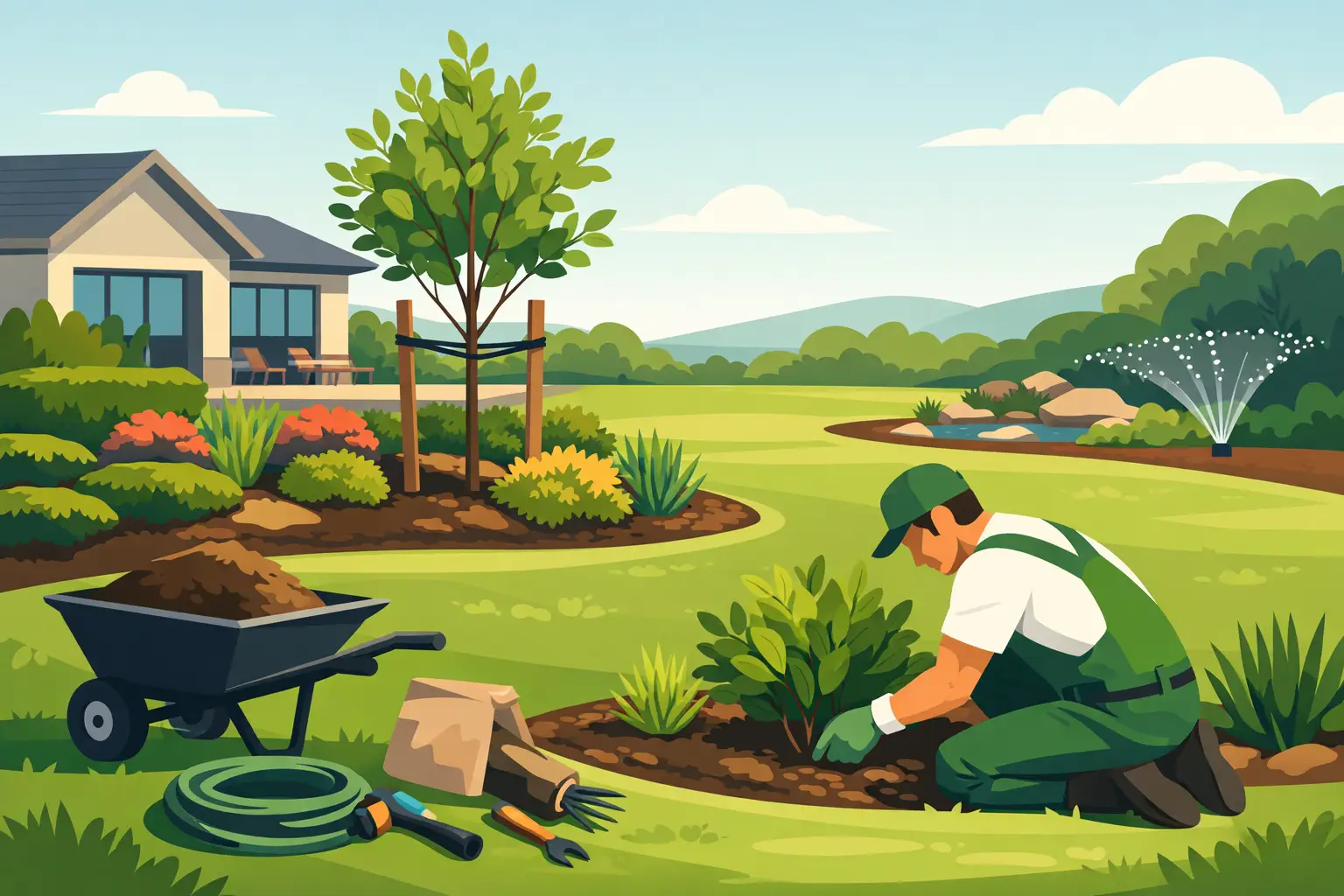
13 Aug Landscape Maintenance After New Installation
A newly completed landscape should feel finished from the first day you step outside. Fresh stonework, precisely placed plantings, new sod, and defined outdoor living areas create an immediate transformation. But landscape maintenance after new installation is what protects that transformation while the materials, soil, and plants settle into their new environment.
The first growing season is especially important. Trees and shrubs are establishing roots, sod is developing its hold on the soil, mulch is moderating moisture, and drainage patterns are revealing how the property performs during real weather. A thoughtful maintenance plan preserves the design intent and gives every element the best chance to mature as intended.
Landscape Maintenance After New Installation: The First 90 Days
The first 90 days are when attentive care makes the greatest difference. New landscapes do not need constant intervention, but they do need consistent observation. A plant that appears healthy in the first week may begin to show stress after a stretch of heat, wind, or heavy rain. Catching small issues early is far easier than replacing damaged material later.
Watering is the central priority. New trees, shrubs, perennials, and sod have not yet developed the deeper root systems that help established landscapes withstand dry periods. Water should soak into the root zone rather than simply wet the surface. Frequent, shallow watering can encourage roots to remain close to the surface, where they are more vulnerable to heat and drought.
The right schedule depends on plant type, soil composition, sun exposure, rainfall, and the season of installation. A sunny property with sandy soil will dry faster than a partially shaded yard with heavier soil. Rather than following a rigid calendar, check soil moisture several inches below the surface. If it is dry at root depth, the landscape needs water.
New sod requires particularly close attention. During establishment, it should remain consistently moist without becoming saturated. As roots knit into the soil below, watering can gradually become deeper and less frequent. Avoid heavy foot traffic until the sod has rooted firmly. Even a well-installed lawn can develop thin or uneven areas if it is compacted before it is ready.
Protect the Root Zone
Mulch is more than a finishing detail. A properly maintained mulch layer helps retain soil moisture, suppress weeds, reduce temperature swings, and give planting beds a refined appearance. Over time, mulch settles and decomposes, so it may need to be refreshed. Keep it away from the trunks of trees and the stems of shrubs. Piling mulch against plant material can trap moisture and invite disease or pest activity.
Weeds should be removed before they become established. In a new bed, even a small amount of weed growth can compete with young plants for water and nutrients. Hand weeding is often the safest approach around fresh plantings, especially while roots are still settling. Broad chemical applications can create unnecessary risk when used without a clear need or professional direction.
Watering Is Not the Same as Irrigation Management
An irrigation system is a valuable tool, but it is not a set-it-and-forget-it solution. Controllers need seasonal adjustments, and each zone should be checked regularly for clogged heads, overspray, leaks, or areas receiving too much or too little water. A system that runs perfectly in spring may not suit the hotter, drier conditions of midsummer.
Pay attention to rainfall before adding supplemental water. Overwatering can be as damaging as underwatering, particularly in clay-heavy soils where drainage is slower. Saturated roots cannot access oxygen efficiently, which can lead to decline even when the landscape looks well cared for on the surface.
Plant groupings should also influence how irrigation is managed. Turf, annual containers, young shrubs, and established native or drought-tolerant plants do not all require the same amount of water. A custom landscape performs best when its care reflects those differences rather than treating the entire property as one zone.
Preserve the Details That Define the Design
Premium outdoor spaces rely on more than healthy plants. Clean edges, stable pavers, functional drainage, and well-kept finishes are all part of the overall experience. Maintenance protects the craftsmanship that makes a landscape feel intentional.
Paver patios, walkways, and driveways should be swept regularly to prevent organic debris from collecting in joints. Leaves, soil, and standing water can encourage weeds or moss, especially in shaded areas. If polymeric sand was used between pavers, inspect the joints after heavy rainfall and seasonal freeze-thaw cycles. Areas of loss may need repair to help maintain stability and discourage weed growth.
Natural stone, retaining walls, and steps benefit from regular visual inspections. Look for shifting, settlement, cracking, or water collecting where it should not. Some minor settling can occur as the ground adjusts after construction, but noticeable movement should be assessed before it affects drainage or safety.
Drainage is one of the least visible and most valuable parts of a well-executed landscape. After substantial rain, walk the property and observe where water travels. Check swales, catch basins, downspout connections, and grading transitions. The goal is not to eliminate all surface water immediately after a storm. It is to make sure water moves away from structures and does not remain where it can damage turf, planting beds, or hardscape foundations.
Outdoor lighting also deserves routine attention. Clear debris from fixtures, check that lenses are clean, and replace failing bulbs promptly so paths, steps, and gathering spaces remain safe and welcoming after dark. Low-voltage systems may require occasional adjustments as plants grow and alter the original light pattern.
Seasonal Care Keeps the Landscape Balanced
A landscape changes with every season, and the maintenance plan should change with it. Spring is the time to clear winter debris, inspect hardscape and drainage, edge beds, and evaluate any plants affected by winter conditions. It is also an ideal time to confirm that irrigation is functioning correctly before summer demand begins.
Summer care centers on moisture management, mowing, pruning with restraint, and monitoring for pests or disease. Avoid aggressive pruning during periods of heat stress. Removing too much growth can expose plants to more sun and reduce their ability to recover. Lawn mowing should also be adjusted for conditions. Cutting grass too short creates stress and allows soil to dry more quickly.
In fall, remove accumulated leaves from lawns, beds, patios, and drainage areas. Continue watering trees and shrubs as needed until the ground freezes, particularly for evergreens and plants installed that year. Fall is also the right time to prepare sensitive plantings for winter exposure where necessary.
Winter maintenance is primarily about protection and prevention. Avoid piling snow containing road salt onto planting beds or near sensitive shrubs. Use de-icing products carefully around stone, concrete, and plant material, as some products can cause surface damage or soil stress. Mark the edges of walkways, beds, and hardscape features before snow arrives so plowing and shoveling do not disturb the landscape underneath.
Know When Professional Care Is Worth It
Homeowners can handle many routine tasks, particularly watering, light weeding, and basic cleanup. Professional maintenance becomes valuable when the landscape includes extensive planting areas, mature trees, irrigation, drainage infrastructure, natural stone, or detailed outdoor living features. It is also the right choice for owners who want the finished space to remain aligned with the original design without spending weekends managing seasonal work.
A professional eye can identify subtle issues that are easy to miss: a tree planted too deeply, irrigation coverage that has changed, early signs of disease, paver joint erosion, or drainage that is beginning to affect a planting bed. Addressing those conditions early protects both appearance and long-term property value.
For properties built with a high level of detail, maintenance should be treated as a continuation of the installation, not a separate afterthought. Redleaf Landscape Inc approaches outdoor spaces as lasting extensions of the home, where every material and planting choice should continue to serve the way you live.
The best time to care for a new landscape is before anything looks wrong. A few consistent checks, seasonal adjustments, and informed decisions will allow the space to become fuller, stronger, and more personal with every passing year.