


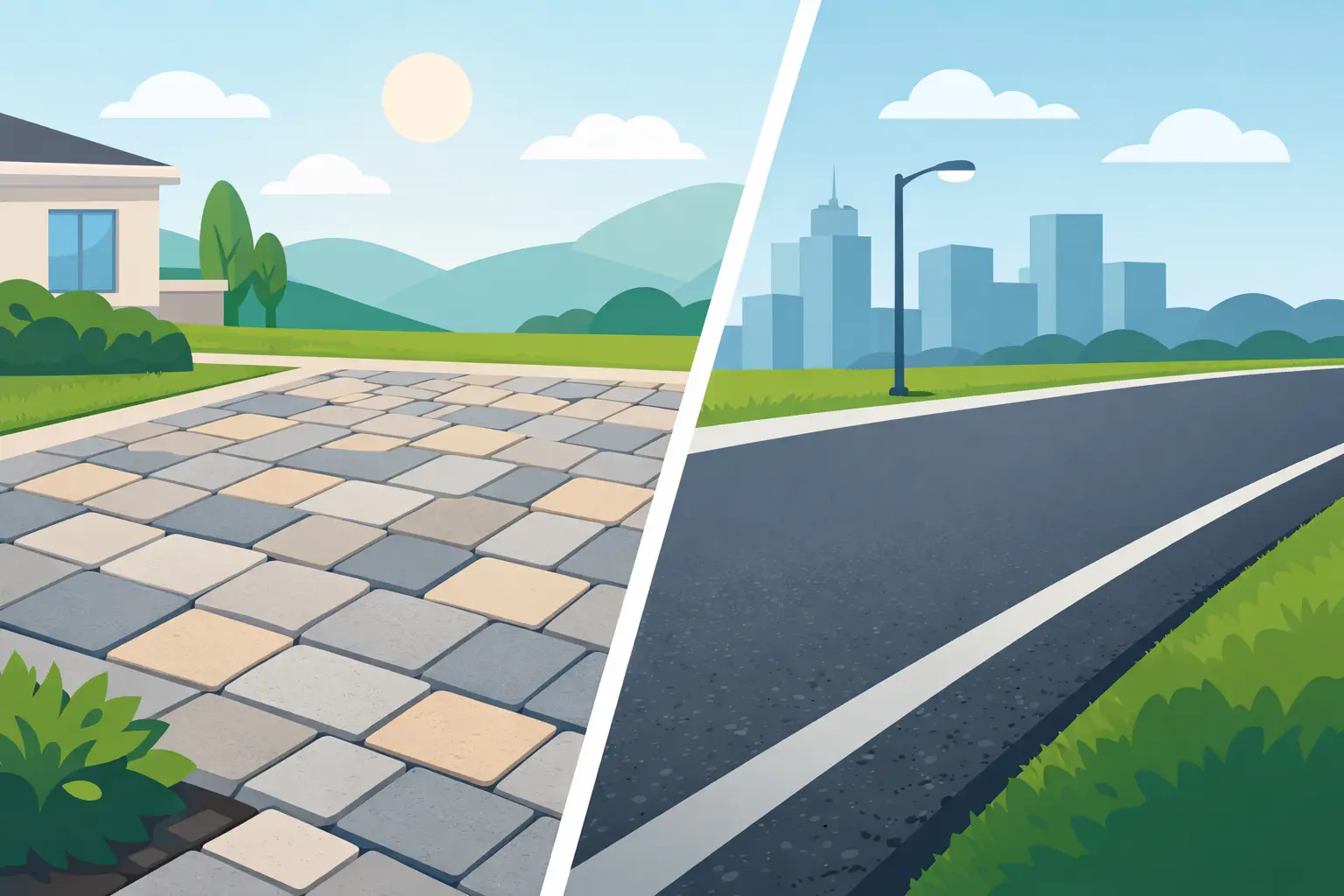
07 May Is Interlock Better Than Asphalt?
If you are planning a new driveway, front walk, or backyard hardscape, the question usually comes down to more than price. Homeowners often ask, is interlock better than asphalt, but the real answer depends on how you want the space to perform, how long you plan to stay, and how much value you place on appearance, longevity, and repair flexibility.
For some properties, asphalt is a practical fit. For others, interlock delivers a level of finish and long-term performance that better matches the home and the way the space is used. When the goal is a polished outdoor environment that feels like a true extension of the property, the difference becomes much more noticeable.
Is interlock better than asphalt for your property?
Interlock is not automatically better in every situation. Asphalt is less expensive upfront, installs quickly, and works well when the priority is a functional driving surface with a lower initial investment. That is why it remains common for straightforward driveways and larger paved areas where budget leads the decision.
Interlock, however, offers far more in terms of design, finish, and long-term adaptability. It is made from individual pavers laid over a carefully prepared base, which creates a surface that can handle movement better than many people expect when the installation is done properly. It also gives you much more control over pattern, border detailing, shape, and overall visual impact.
If your priority is basic function at the lowest entry cost, asphalt may be enough. If your priority is a refined result that supports curb appeal, complements the architecture of the home, and can be repaired without replacing the entire surface, interlock is often the stronger investment.
Appearance and curb appeal
This is where interlock clearly separates itself.
Asphalt has a clean, simple look, but it is limited. It gives you a flat black surface and little opportunity to shape the space into something custom. That can be perfectly acceptable on a modest driveway where the surrounding landscape is not doing much visual work.
Interlock creates a finished landscape feature rather than just a paved area. The surface can be tailored to suit traditional, contemporary, or transitional homes. Borders can define the driveway. Patterns can add movement. Color selection can connect the paving to the masonry, siding, or front entrance. On a backyard project, interlock helps a patio feel intentional and integrated instead of purely utilitarian.
For homeowners investing in a premium outdoor living space, this matters. The driveway is often the first thing people see. The patio is where people gather. Materials that elevate the setting tend to elevate the overall impression of the property.
Durability in a climate with freeze-thaw cycles
Climate plays a major role in this decision. In regions with cold winters and repeated freeze-thaw movement, surface performance depends heavily on base preparation and drainage.
Asphalt is flexible, which can be an advantage. It handles some movement without immediate failure, and a well-installed asphalt driveway can last for years. But over time, it is still prone to cracking, edge breakdown, fading, and softening in extreme heat. Water infiltration and poor drainage can shorten its life quickly.
Interlock performs differently. Because it is made of individual pavers rather than one continuous sheet, it can accommodate movement in a more localized way. If the base is properly excavated, compacted, and graded, interlock can be exceptionally durable. The key is craftsmanship. Poor installation will show up in settling, shifting, and uneven areas. High-quality installation creates a surface that remains stable, attractive, and serviceable for the long term.
That is an important distinction. Interlock is not better simply because it is interlock. It is better when the design, base preparation, edge restraint, and drainage are handled with precision.
Maintenance and repairs
Maintenance is one of the biggest practical differences between the two surfaces.
Asphalt requires periodic sealing if you want to preserve its appearance and protect the surface. Cracks often need patching. Once wear becomes widespread, repairs can look uneven, and full resurfacing may eventually be the most practical option. It is functional maintenance, but rarely invisible.
Interlock has its own maintenance needs. Joint sand may need replenishing over time, and occasional re-leveling may be needed in isolated areas if movement occurs. Weeds can become an issue if the surface is neglected. That said, one of interlock’s strongest advantages is repairability. If a section settles or gets damaged, the affected pavers can typically be lifted, the base corrected, and the same or matching units reinstalled.
You are not forced to tear out the entire area just to address one problem spot. For busy homeowners who value long-term flexibility, that matters.
Cost now versus value later
When people ask, is interlock better than asphalt, they are often really asking whether the extra cost is worth it.
Interlock usually costs more upfront. The materials are more premium, the installation is more labor-intensive, and the design possibilities add complexity. Asphalt is more budget-friendly at the start, which makes it attractive when the project scope is large or immediate cost control is the main concern.
But initial price is only one part of value.
Interlock often delivers stronger long-term visual value, better repair flexibility, and a more custom finish that can support resale appeal. On higher-end homes especially, asphalt can sometimes look like a compromise rather than a completed design decision. Interlock tends to feel more aligned with a property where detail, architecture, and outdoor use all matter.
That does not mean every homeowner should choose interlock. It means the decision should be based on total value, not just the first number on the estimate.
Where asphalt still makes sense
There are cases where asphalt is the right answer.
If you need a simple driveway replacement, want to minimize upfront spend, and are comfortable with a more basic appearance, asphalt can be a smart choice. It is also practical for long rural-style driveways or large paved areas where interlock may not make financial sense.
It can also work well when the surrounding property improvements are modest and the paving does not need to carry the visual weight of the landscape. In that context, asphalt does the job and keeps the project efficient.
The mistake is assuming asphalt and interlock are interchangeable. They are not. They serve different goals.
Where interlock is usually the better choice
Interlock tends to be the better fit when the paved area is part of a broader outdoor design vision.
That includes front entrances where curb appeal matters, driveways attached to custom or upgraded homes, walkways that should feel integrated with planting and lighting, and patios designed for entertaining. In those settings, the surface is doing more than carrying vehicles or foot traffic. It is helping define the experience of the property.
This is especially true when homeowners want consistency across the landscape. An interlock driveway can connect visually to front steps, side paths, backyard patios, retaining features, and outdoor living areas in a way asphalt cannot. The result feels more complete.
For property owners looking for a premium finish with lasting character, interlock usually offers more design return on the investment.
Is interlock better than asphalt when resale matters?
In many cases, yes.
Buyers respond to properties that feel well considered and well maintained. A professionally designed interlock driveway or patio can strengthen that impression because it signals permanence, quality, and attention to detail. It suggests the exterior has been invested in, not just maintained at the minimum level.
Asphalt does not necessarily hurt resale, especially if it is in good condition. But it rarely adds distinction. Interlock can.
That said, resale value is influenced by context. On a modest home in a price-sensitive market, the return may be more limited. On a home where architecture, landscape design, and outdoor entertaining space are central to buyer interest, interlock often supports the property more effectively.
The better question to ask
Instead of asking only whether interlock is better than asphalt, ask what you want the paved space to do for the property.
If you want a straightforward surface at a lower upfront cost, asphalt may be the right fit. If you want a custom finish, stronger visual impact, and a hardscape that feels like part of a complete outdoor environment, interlock usually gives you more.
At Redleaf Landscape Inc, we see this choice through the lens of design, function, and execution quality. The best result is not about choosing the more expensive material by default. It is about selecting the surface that fits the home, the lifestyle, and the standard you want the finished space to reflect.
A driveway or patio should not feel like an afterthought. It should feel like it belongs there, and when it does, the whole property reads differently.