


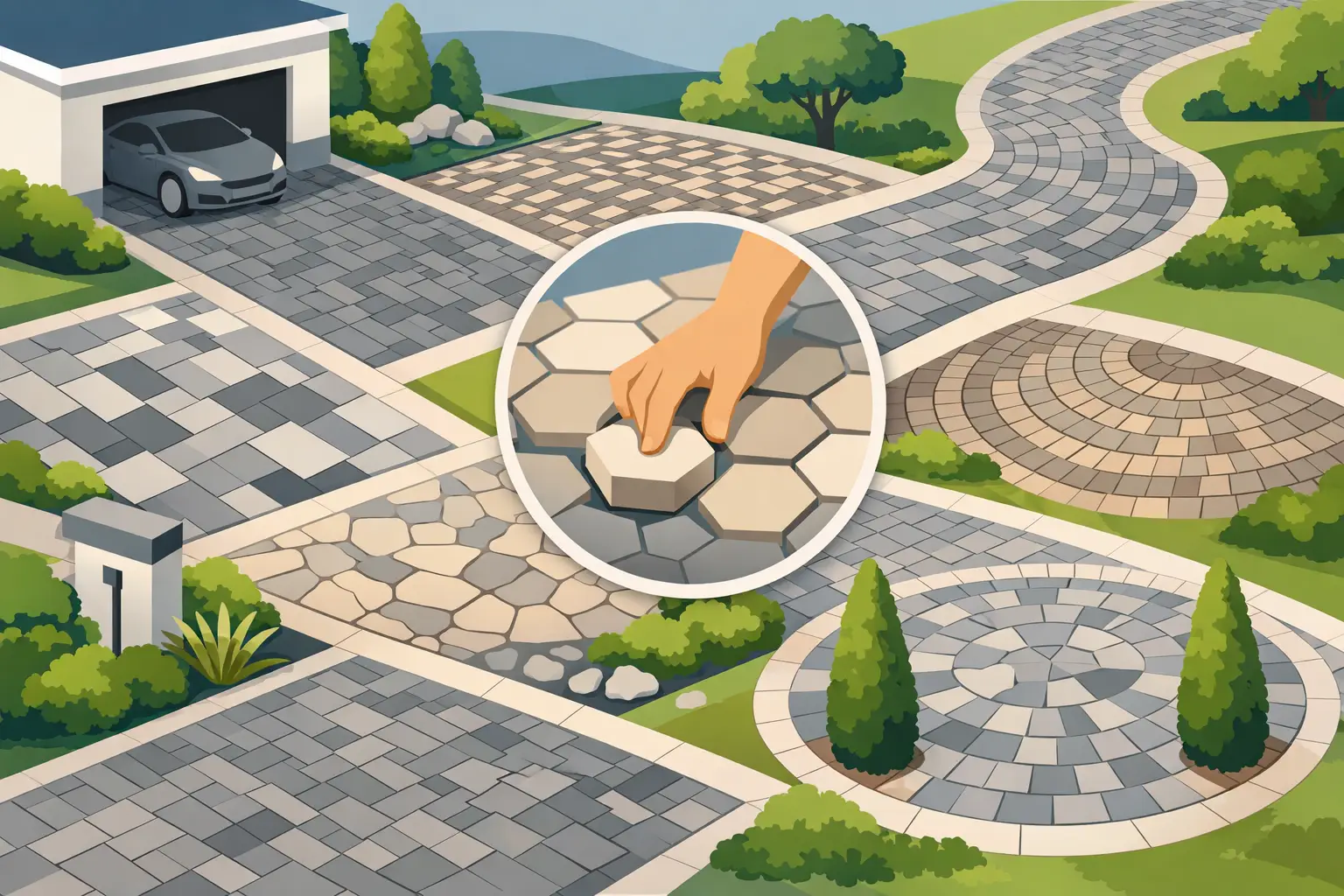
25 Apr 11 Interlocking Driveway Design Patterns Ideas
The right driveway does more than give you a place to park. It sets the tone for the entire front yard, frames the architecture of the home, and quietly signals the level of care behind the property. That is why interlocking driveway design patterns ideas matter so much – the pattern you choose affects not only appearance, but also scale, durability, maintenance, and how the space feels every time you arrive home.
For homeowners investing in a custom exterior, the best results come from treating the driveway as part of the full landscape composition, not as an isolated surface. Pattern, border, color blend, and laying direction all work together. When those details are handled with intention, the driveway looks established, refined, and built to last.
How interlocking driveway design patterns ideas shape the final result
Interlocking pavers offer a level of design control that poured concrete and standard asphalt simply do not. You can introduce movement, structure, contrast, and texture without compromising function. A pattern can make a narrow driveway feel wider, help a large frontage feel more balanced, or create a cleaner transition to walkways, steps, and planting beds.
That said, the strongest pattern is not always the most decorative one. On some homes, a quiet layout with a crisp border delivers the most premium result. On others, a more detailed pattern can add character and reinforce the style of the architecture. It depends on the scale of the property, the shape of the driveway, and how the front entrance is designed.
11 interlocking driveway design patterns ideas worth considering
1. Herringbone for strength and structure
Herringbone remains one of the most dependable choices for driveways because it is visually strong and structurally practical. The interlocking arrangement helps resist shifting under vehicle traffic, which makes it especially well suited for active family homes and larger driveways.
It also has a timeless look. A 45-degree herringbone feels more dynamic and formal, while a 90-degree herringbone feels slightly more orderly and contemporary. If you want pattern without excess ornament, this is often the safest high-end choice.
2. Running bond for a cleaner, more modern look
Running bond uses straight, offset lines that create a simpler visual rhythm. It works well on modern and transitional homes where restraint matters. This pattern can also make a long driveway feel more streamlined, especially when paired with a contrasting soldier course border.
The trade-off is that it typically reads as quieter than herringbone. If the rest of the front landscape is minimal and architectural, that is a benefit. If you want the driveway to carry more visual interest on its own, you may want a stronger pattern.
3. Basket weave for traditional character
Basket weave introduces a more classic, heritage-inspired feel. It can suit older homes, formal front yards, and properties where the goal is charm rather than sharp modern geometry. Done well, it gives the driveway a sense of age and craftsmanship.
This pattern requires discipline in the layout and usually looks best when the surrounding architecture supports it. On a sleek contemporary home, it can feel out of place. On a traditional property, it can feel perfectly resolved.
4. Modular random pattern for a natural, custom finish
A modular or random pattern uses pavers of varying sizes arranged in a controlled layout. This creates movement without looking repetitive, which is one reason it remains popular for custom landscapes. It feels relaxed, upscale, and adaptable across many home styles.
The key is balance. Too much variation can make a driveway appear busy, especially on a smaller front yard. With the right paver sizes and color blend, though, this pattern can look sophisticated and integrated with surrounding stonework.
5. Large-format linear pattern for contemporary homes
If the house has clean lines, expansive windows, and a modern facade, large-format pavers laid in a linear pattern can create a strong architectural effect. This approach emphasizes simplicity, proportion, and alignment.
It is particularly effective when the driveway connects to modern front steps or a sleek entry walk. Precision matters here. Any inconsistency in grade, spacing, or edge restraint becomes more visible in a minimalist design.
6. Circular or radial feature at the center
For wide driveways or properties with generous frontage, a circular inset or radial design can create a focal point. This is often used near a motor court, turning area, or central apron where there is enough room for the pattern to breathe.
Used sparingly, it adds distinction. Overused, it can feel forced. The best applications pair a decorative center feature with a simpler field pattern so the overall composition remains elegant.
7. Contrasting border bands
Sometimes the most effective design move is not changing the entire field pattern, but framing it properly. A contrasting border band can define the edges of the driveway, sharpen the geometry, and tie in complementary tones from the home exterior.
Dark charcoal borders around a lighter field are a common choice because they create clear definition and hide tire marking better along the edges. Border width matters. Too narrow and it disappears. Too thick and it starts to dominate.
8. Soldier course edging for a finished outline
A soldier course uses pavers set in a straight line, often perpendicular to the field pattern, to create a clean perimeter. It is one of the most useful details in interlocking driveway design patterns ideas because it adds visual control without making the layout feel busy.
This detail works across traditional and modern homes. It is often combined with herringbone or running bond to give the installation a more tailored appearance.
9. Mixed tone pavers for depth and realism
Pattern is not only about layout direction. Color variation also changes how a driveway reads. Mixed tone pavers in grays, taupes, browns, or muted charcoal blends add depth and help the surface feel more natural and less flat.
This can be especially valuable on large driveways where a single uniform color might feel stark. The goal is subtle variation, not visual noise. The best blends support the home and landscape rather than compete with them.
10. Apron accents at the street or garage
An accent band at the street entry or in front of the garage can break up a large paved surface and create a more intentional transition. It also helps organize the driveway visually, especially on wider suburban lots.
This approach is useful when you want a custom look without committing to an intricate full-field pattern. It brings in detail exactly where the eye naturally lands.
11. Integrated driveway and walkway pattern
One of the most overlooked opportunities is coordinating the driveway with the front walk. When both surfaces share a common material language but use slightly different patterns, the property feels cohesive rather than repetitive.
For example, a driveway might use herringbone while the front walk uses a running bond or modular pattern in the same color family. This creates hierarchy while keeping the whole entrance composition connected.
Choosing the right pattern for your home
A pattern should respond to the house first. A stately traditional home often benefits from structure, symmetry, and defined borders. A more contemporary residence usually looks better with larger units, cleaner lines, and restrained contrast. The wrong pattern can make a premium material look ordinary.
Driveway size matters too. Busy patterns can overwhelm small spaces, while very simple layouts may feel under-scaled on expansive properties. This is where custom design makes a difference. The pattern has to work with the width of the lot, the slope, the garage placement, and the front entry sequence.
Practical use should guide the decision as much as style. Driveways handle weight, turning tires, snow clearing, and seasonal freeze-thaw cycles. Some patterns are better at distributing movement and maintaining a tight surface over time. Beauty matters, but performance matters just as much.
Design details that elevate the installation
The difference between a standard paver driveway and one that looks truly custom often comes down to execution. Edge restraints, base preparation, drainage planning, spacing consistency, and clean cuts around curves all influence the final appearance. A beautiful pattern installed poorly will not stay beautiful for long.
Transitions also deserve attention. The way the driveway meets the garage, front walk, curb, planting edge, or entry steps should feel deliberate. When those lines are awkward or unresolved, the entire front landscape loses clarity.
This is also why material selection should happen alongside the broader landscape design. Driveway pavers should work with retaining walls, porch steps, lighting, and planting. At Redleaf Landscape Inc, that full-picture thinking is what turns a driveway from a paved surface into part of a cohesive outdoor environment.
What homeowners often get wrong
One common mistake is choosing a pattern from a sample board without considering the scale of the actual property. Another is focusing only on the paver color and ignoring border treatment, laying direction, and how the driveway will look next to the house in different light.
There is also a tendency to over-design. More contrast, more accents, and more pattern changes do not always create a better result. In many cases, restraint creates the more premium look. A strong field pattern, one border, and carefully chosen tones can outperform a much busier design.
The best driveway patterns feel easy when you see them. That sense of ease usually comes from careful planning, experienced installation, and a clear understanding of how function and aesthetics should work together.
A well-designed interlocking driveway should look right from the street, feel right as you pull in, and continue to perform through years of daily use. If the pattern supports the home, the property, and the way you live, it will never feel like a trend piece – it will feel like it belonged there all along.