


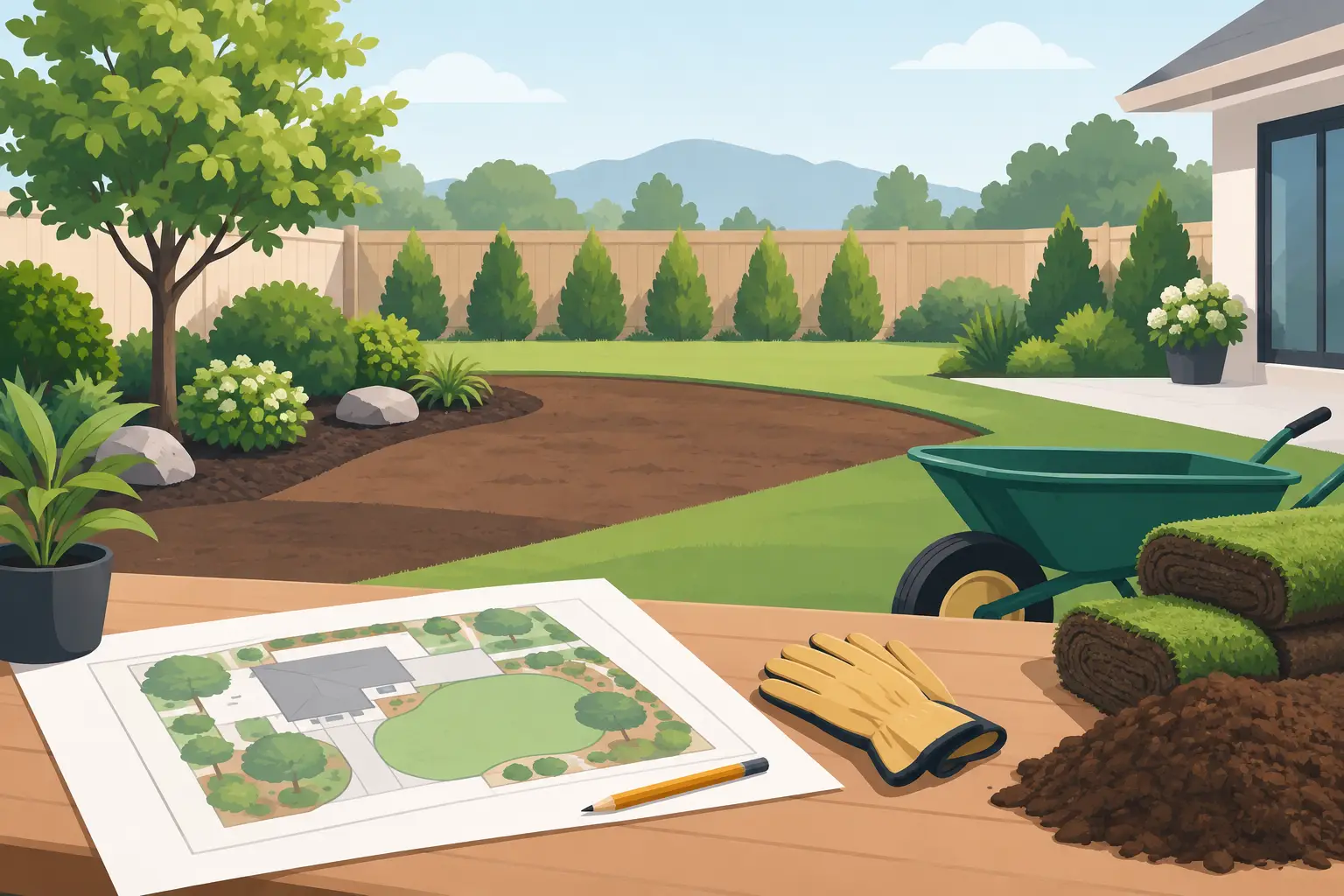
30 Sep How to Prepare for Landscaping the Right Way
A new landscape should feel intentional from the first step outside, not like a collection of features added over time. Knowing how to prepare for landscaping helps protect your investment, clarify your priorities, and create an outdoor space that works beautifully for the way you live.
For homeowners, that may mean a private retreat for quiet evenings, a patio designed for effortless entertaining, or a safer, more usable yard for children and pets. For commercial properties, it may mean an exterior that presents the right image from the curb while standing up to daily use. The preparation is different for every property, but the goal is the same: make informed decisions before construction begins.
Start With How You Want to Use the Space
The strongest landscapes are built around daily life, not around a single trend or a photo saved online. Before choosing stone, plants, or outdoor furniture, consider how the space needs to perform.
Think about the moments you want your property to support. Perhaps you need a larger dining area, a route from the driveway that stays clear and safe, a pool surround with room to lounge, or planting that improves privacy from neighboring homes. A front yard may need to strengthen curb appeal and provide a welcoming arrival. A backyard may need separate areas for cooking, gathering, play, and relaxation without feeling divided.
Be realistic about frequency of use. A full outdoor kitchen can be a remarkable addition for people who entertain often, but it may not be the right allocation of space or budget for a household that prefers a simple dining terrace. Likewise, a large lawn offers flexibility, yet it requires ongoing care and may not serve a low-maintenance lifestyle as well as layered planting, pathways, and defined gathering areas.
Assess the Property Before Planning the Design
Every landscape begins with site conditions. A beautiful concept still has to respond to drainage, grade, soil, sun exposure, access, and existing structures. Understanding these realities early prevents costly changes after installation is underway.
Walk your property at different times of day and notice where the sun falls, where water collects after rain, and which views you want to highlight or screen. Pay attention to practical details as well: the location of utilities, the width of side-yard access, mature trees worth preserving, and the relationship between finished grades and your home’s foundation.
A professional site review can identify limitations that are not always visible to the property owner. Grading concerns, drainage routes, soil conditions, and the need for retaining structures all affect the construction approach. In many cases, the work beneath the surface is what allows a patio, driveway, planting bed, or lawn to perform well for years.
When gathering information, document these four areas:
- Existing drainage patterns and low points
- Sun, shade, wind, and privacy conditions
- Features to preserve, remove, or relocate
- Access constraints for crews, equipment, and materials
Photographs, rough measurements, and inspiration images are useful, but they should support the conversation rather than dictate a solution. A custom landscape should fit your property, not force your property to imitate another one.
Set a Budget That Reflects the Full Scope
Landscaping budgets often go off course when the focus stays only on visible finishes. Natural stone, pavers, lighting, trees, and furnishings all matter, but site preparation, base construction, drainage, demolition, and labor are equally essential to a quality result.
Begin by identifying the project elements that matter most. If a long-lasting patio is central to your outdoor living plans, prioritize the excavation, base, edging, and drainage needed to build it correctly. If privacy is the immediate need, mature screening and a thoughtful planting plan may deserve more attention than decorative accessories.
It is also wise to include a contingency for site discoveries or changes in scope. Older properties may have buried materials, unexpected soil conditions, or grades that require more work than anticipated. A clear budget does not mean every number is fixed from day one. It means you understand the priorities, the project sequence, and where informed trade-offs can be made.
Phasing can be a smart strategy when the full vision is larger than the current budget. The key is to create a master plan first. Installations completed in phases should still account for future drainage, electrical needs, pathways, and material continuity. Building a patio now and planning for a future pergola, lighting system, or garden expansion is far more efficient when those decisions are considered together.
Prepare for Landscaping With a Cohesive Design Plan
A cohesive plan connects the house, the hardscape, the planting, and the way people move through the site. It considers proportion, materials, sightlines, and the transition from indoors to outdoors. Without that framework, even high-quality individual features can feel disconnected.
Start with the architectural character of your home. A modern property may call for clean lines, structured planting, and restrained material choices. A traditional home may suit natural stone, layered gardens, and softer edges. This does not mean every detail must match exactly. It means the finished landscape should feel like a natural extension of the property.
Material selection deserves careful attention. A surface may look excellent in a showroom but behave differently in a shaded yard, around a pool, or through freeze-thaw cycles. Consider traction, maintenance, durability, color variation, and how the materials will age. For properties in climates with changing seasons, correct installation methods are just as important as the product itself.
Planting should be planned for more than first-season color. The right mix accounts for mature size, maintenance expectations, seasonal interest, water needs, and the amount of sun each area receives. Thoughtful planting can soften hardscape, direct views, support privacy, and bring movement and texture to the landscape throughout the year.
Handle Permits, Utilities, and Property Logistics Early
Certain projects require approvals, utility locates, or coordination with local regulations. Pools, fences, decks, retaining walls, drainage changes, and structures can all involve requirements that affect timing and design. Do not treat these items as an afterthought.
A professional design-and-build partner can help determine what applies to your project and sequence the work appropriately. This is particularly valuable when a project includes multiple elements, such as a patio, grading work, planting, lighting, and a structure. One accountable team helps keep the original vision aligned with the work happening on site.
You can also prepare your household for the construction period. Discuss where materials may be staged, whether vehicles need to be moved, how pets will be kept safe, and which entrances will remain accessible. Landscape construction is temporary, but setting expectations early makes the process much easier to manage.
Choose the Right Time and the Right Team
The best installation window depends on the project scope, material availability, weather, and site conditions. Spring and summer are popular for obvious reasons, but early planning should begin well before the desired construction date. A considered design process takes time, especially when permits, custom features, or phased work are involved.
Do not choose a contractor based solely on the lowest initial figure. Ask how the project will be managed, what preparation is included, who is responsible for design decisions, and how changes are handled. Review completed work that reflects the level of finish you expect. The value of an experienced team is not only in the final appearance. It is in the planning, technical judgment, and craftsmanship that make the landscape endure.
Redleaf Landscape brings that end-to-end perspective to custom outdoor environments, from the first consultation through professional installation. For a property that should reflect your lifestyle and hold its value over time, careful preparation is where the transformation truly begins.
The most rewarding landscapes do more than improve a view. They give your property a stronger sense of place, making every arrival, gathering, and quiet moment outside feel considered.