


17 Aug How to Plan Front Yard Landscaping That Lasts
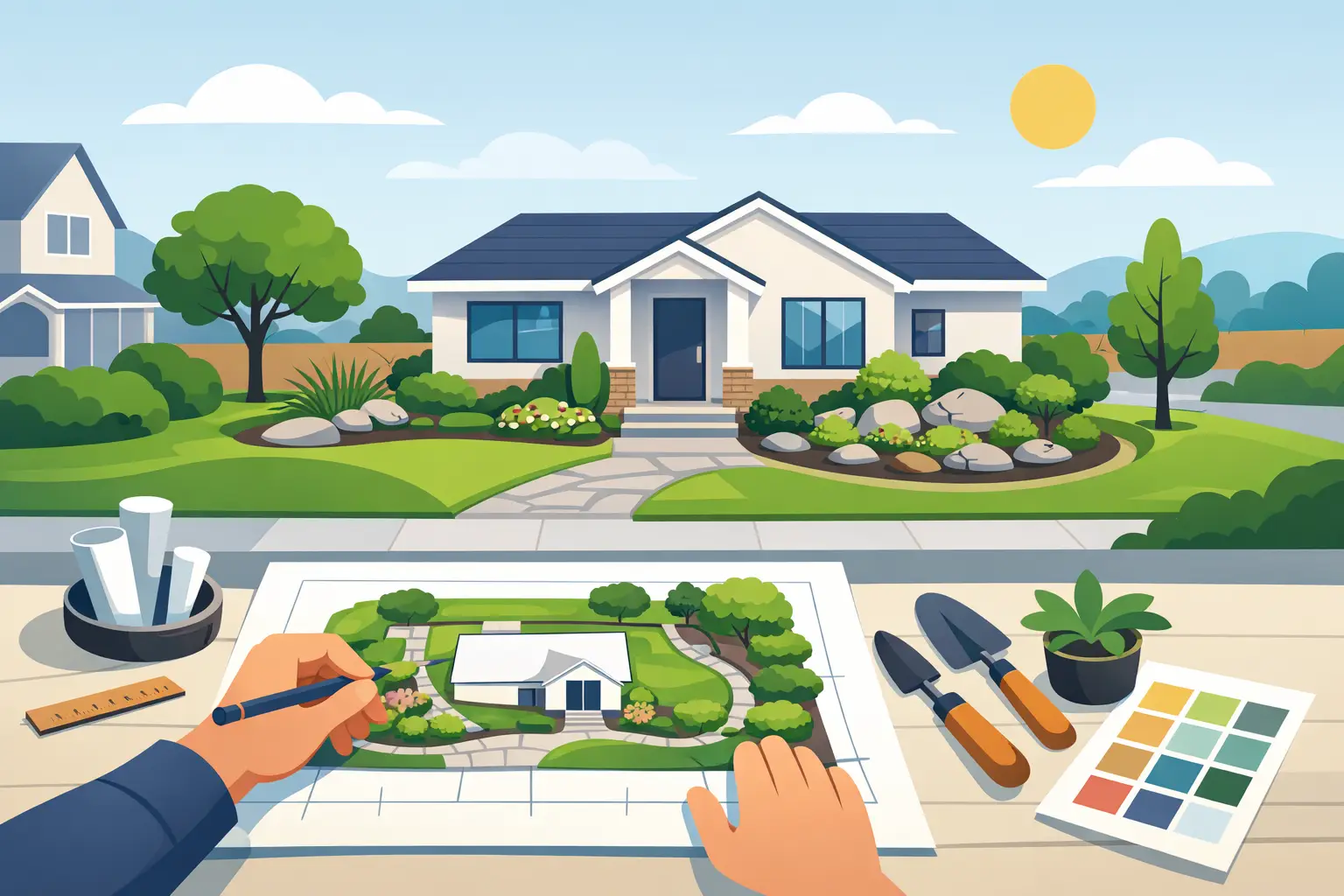
A front yard has to do more than look attractive from the street. It should welcome guests, frame the architecture of your home, make daily arrivals easier, and hold its appearance through changing seasons. Knowing how to plan front yard landscaping starts with treating the space as a complete composition, not a collection of plants and pavers chosen one at a time.
The strongest landscapes balance curb appeal with the practical realities of the property: sun exposure, grading, drainage, snow storage, maintenance expectations, and how people actually move from the sidewalk to the front door. When those elements are considered early, the result feels intentional and continues to perform long after installation.
Start With the Home, Not the Plant List
Your home provides the visual language for the landscape. A formal brick facade may suit clean-lined walkways, symmetrical planting beds, and structured evergreen forms. A contemporary home often benefits from restrained plant groupings, larger-format paving, and architectural textures. A more relaxed home can carry softer curves and layered, naturalistic planting.
Stand across the street and study the property as a whole. Notice the roofline, exterior colors, window placement, porch depth, and the scale of the front elevation. The landscape should support these features rather than compete for attention. A small bungalow can be overwhelmed by oversized trees or elaborate stonework, while a larger home may need stronger plant massing and wider pathways to feel properly grounded.
This is also the right time to identify what should remain. A mature shade tree, a well-built porch, or an established hedge can become an anchor for the new design. Preserving a healthy mature tree may reduce the visual impact of construction, but its root zone will limit where excavation, retaining walls, and new planting can occur. Good planning recognizes those trade-offs before materials are selected.
How to Plan Front Yard Landscaping Around Function
A beautiful front yard that creates awkward access will never feel complete. Begin by mapping the daily routes people take: from the driveway to the entry, from the street to the porch, and from the side gate to the backyard. These routes reveal where a walkway should be direct, where a landing is needed, and where low planting must preserve clear sightlines.
The front walk deserves particular attention. It should be wide enough for two people to walk comfortably when the scale of the property allows, with a clear, natural route to the entrance. Narrow paths may save space and budget, but they can make an otherwise refined property feel constrained. Curves are useful when they respond to the shape of planting beds or create a gradual approach, not when they simply add movement without purpose.
Consider seasonal use as well. In regions with winter weather, determine where snow will be piled and how it will affect planting beds, pathways, and lighting. Salt spray from driveways and sidewalks can damage sensitive plants. Choose tougher species near these areas, maintain sufficient bed depth, and avoid placing delicate evergreens where they will be buried under snow or exposed to de-icing products.
Drainage is another non-negotiable. Water should move away from the foundation and avoid collecting on walks, driveways, or lawn areas. A yard that appears flat may still require thoughtful grading, catch basins, or other drainage measures. Decorative improvements cannot compensate for poor water management. Addressing it during the design phase protects both the investment in the landscape and the property itself.
Build a Clear Visual Hierarchy
The most polished front yards have a focal point. It may be a distinctive entry, a specimen tree, an elegant address feature, a front garden wall, or a carefully composed arrangement of planting. The focal point gives the eye somewhere to land, while the rest of the design guides attention toward it.
Use hardscape to establish the structure. Walkways, steps, retaining walls, edging, and driveway borders should share a material palette that relates to the home. Natural stone offers richness and variation, while concrete pavers can provide crisp geometry and consistent dimensions. Neither is automatically the better choice. The right material depends on architectural style, intended use, budget, and the level of texture and maintenance you prefer.
Limit the number of materials. Too many colors, patterns, and edging styles can make a front yard feel fragmented. A restrained palette often looks more premium because each element has room to contribute. Details matter here: aligned joints, well-proportioned steps, clean transitions at the driveway, and carefully finished edges are what make a design feel built to last.
Lighting should be planned alongside the hardscape rather than added as an afterthought. Soft path lighting improves safety, while subtle uplighting can reveal the texture of a tree canopy, stone wall, or architectural feature after dark. Avoid over-lighting. The goal is a welcoming approach and a composed evening presence, not a yard that feels brightly staged.
Choose Plants for Structure, Not Just Seasonal Color
Planting is where many front yard plans lose their cohesion. A nursery display may make every plant look appealing, but a successful landscape depends on how plants perform together over time. Start with the structural layer: trees, evergreen forms, shrubs, and ornamental grasses that give the yard shape in every season.
Then add perennials and flowering plants for color, texture, and seasonal change. Repeating a smaller number of plant varieties creates a calmer, more intentional look than using one of everything. Group plants in meaningful drifts, allowing them enough room to reach mature size. Crowding may create an instant full effect, but it often leads to pruning problems, poor air circulation, and costly replacements later.
Match plant choices to real site conditions. Observe where the sun falls in morning and afternoon, where water naturally collects, and which areas are exposed to wind. A plant that thrives in a sunny, well-drained bed may struggle beside a shaded entry or beneath a mature tree. Soil conditions and deer pressure may also influence the final palette.
Maintenance should be part of the design conversation, not an afterthought. A highly layered garden can be striking, but it requires regular pruning, deadheading, dividing, and weeding. Busy homeowners may prefer a refined combination of evergreens, durable shrubs, ornamental grasses, and limited perennial accents. The objective is not to eliminate maintenance. It is to create a level of care that fits the life you intend to live.
Plan in Phases Without Losing the Vision
Not every front yard needs to be completed at once. Phasing can be a sensible way to prioritize drainage corrections, access improvements, or major hardscape work before adding finishing details. The key is to begin with a complete plan, even when installation happens in stages.
For example, installing a new front walk before building adjacent planting beds can make sense, but the walk should already account for the future bed lines, lighting routes, irrigation needs, and mature plant sizes. Otherwise, later additions can feel improvised or require rework. Investing in a cohesive design at the outset gives each phase a clear role in the finished property.
Set priorities based on permanence. Grading, drainage, retaining walls, walkways, and trees are difficult to change later, so they should receive the most careful planning. Smaller shrubs, perennials, containers, and seasonal color are easier to adjust as your preferences evolve.
Know When Professional Design Adds Value
A straightforward planting refresh may be manageable on your own. But when a project involves changes in elevation, drainage concerns, new walkways, driveway integration, lighting, or a substantial investment in materials, professional design and installation can prevent expensive mistakes.
A design-and-build team brings accountability from concept through construction. It can coordinate grades, materials, planting, and details so the finished work reflects the original vision rather than becoming a series of disconnected decisions. For homeowners seeking a custom result, that continuity is often where the greatest value lies.
Your front yard is the first expression of your property and the first welcome home at the end of the day. Plan it with enough care that every path, planting bed, and material feels like it belongs there – not just for this season, but for years to come.