


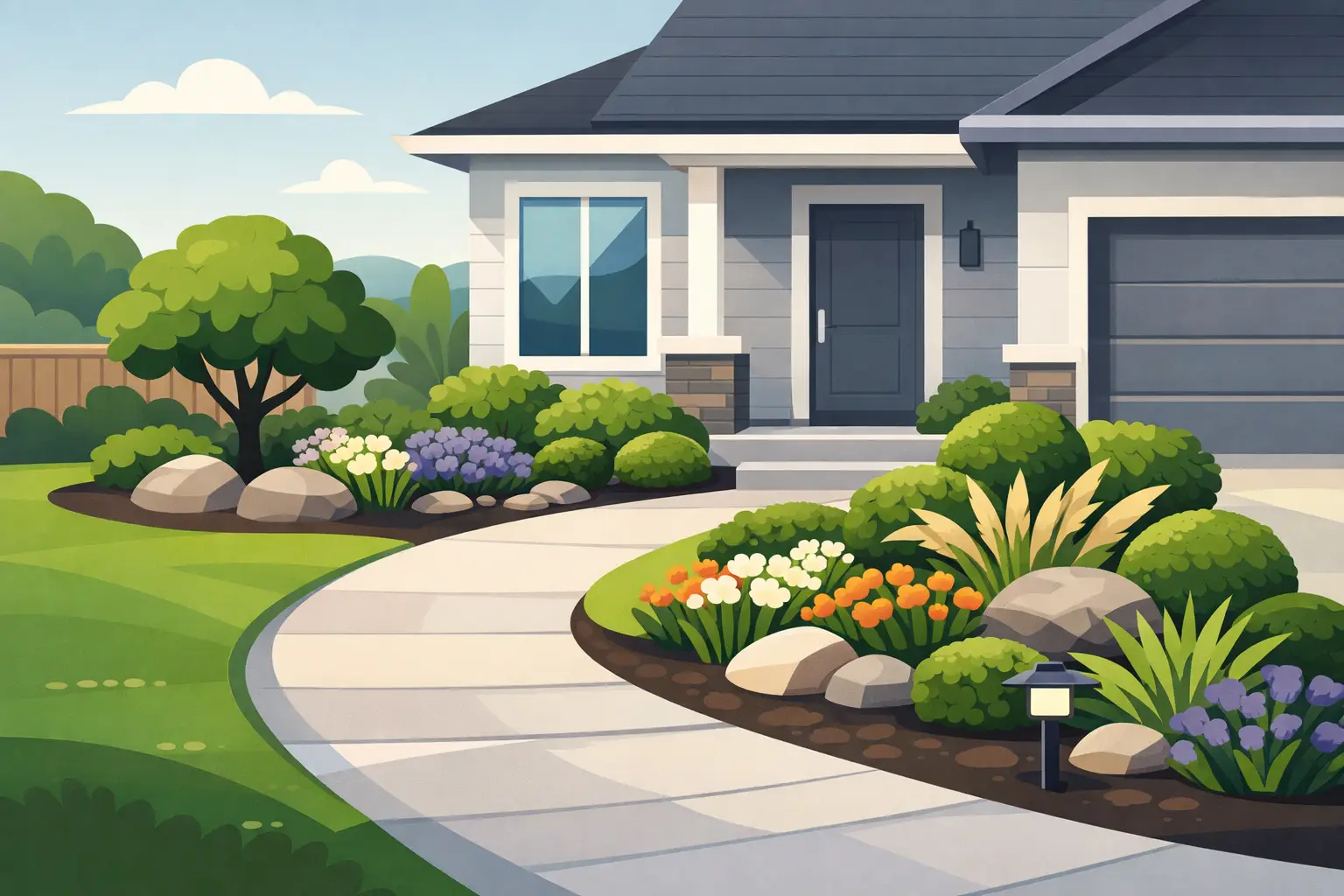
12 Jul Front Yard Curb Appeal Landscaping That Lasts
Your front yard introduces your home before the front door ever opens. Well-planned front yard curb appeal landscaping does more than add flowers along a walkway. It creates a composed arrival, frames the architecture, and makes the property feel cared for in every season.
For homeowners, the strongest results rarely come from adding more. They come from making deliberate choices about scale, materials, planting, drainage, and how the space will mature over time. A front landscape should feel connected to the home, not placed in front of it.
Start With the Home, Not the Plant List
A successful front-yard design takes cues from the property itself. The roofline, facade materials, window placement, driveway width, and front entry all influence what belongs in the landscape. A modern home may suit strong linear beds, restrained plant groupings, and clean stone edging. A traditional home may call for layered planting, softer curves, and more formal balance around the entry.
This is where many curb appeal projects lose direction. A collection of attractive plants can still look disconnected when it ignores the home’s proportions. Instead, think of the landscape as an extension of the architecture. Repeating a color found in the brick, siding, or front door can create cohesion. Echoing the shape of a curved porch or angular facade through bed lines can make the entire property feel more intentional.
Scale matters just as much. Low plantings against a tall, two-story facade can make the house appear larger but unfinished. Oversized shrubs may hide windows, crowd walkways, and eventually make the entry feel dark. The right balance creates presence without obscuring the home’s best features.
Define the Arrival Experience
The path from curb to front door should be clear, comfortable, and inviting. It is one of the most practical places to invest because it affects daily use as well as first impressions.
Walkways should be wide enough for two people to move comfortably and designed with a logical route. If visitors routinely cut across the lawn because the existing path feels indirect, the layout is working against the property. Upgrading a front walk with natural stone, premium pavers, or architectural concrete can give the home an immediate sense of permanence, but the material should suit the house and be installed on a proper base for long-term performance.
A front landing deserves equal attention. It should provide enough space to pause, greet guests, and safely manage deliveries without feeling cramped. Steps, retaining walls, and grade changes must be carefully resolved. In the Greater Toronto Area, freeze-thaw cycles make proper excavation, drainage, and installation quality essential. Beautiful materials cannot compensate for a foundation that shifts or drains poorly.
Build Layers Into Front Yard Curb Appeal Landscaping
Layering gives a front yard depth, texture, and visual order. Rather than treating the planting bed as a flat strip along the house, design it in tiers. Lower perennials and groundcovers belong near edges and walks, medium-sized shrubs establish body through the middle, and taller shrubs or ornamental trees can create structure near corners or broad sections of facade.
Evergreens are often the backbone of this composition. They provide form when deciduous plants are bare and help the property retain a finished appearance through winter. They should not, however, become a solid wall of identical shrubs. Combining evergreen structure with flowering shrubs, ornamental grasses, perennials, and small trees creates a more refined and seasonally expressive result.
Plant selection should reflect the conditions of the site. Sun exposure, soil quality, wind, salt near driveways, and moisture patterns all affect performance. A plant that looks exceptional at installation may struggle if it is placed in the wrong environment. Choosing durable, site-appropriate varieties usually leads to a fuller landscape, fewer replacements, and a better return on the investment.
There is also a maintenance trade-off. A highly varied garden can offer remarkable seasonal interest, but it may require more pruning, deadheading, and division. A simpler planting palette is easier to maintain and can look more sophisticated when repeated thoughtfully. The best approach depends on how much ongoing care the homeowner wants to take on or arrange for.
Create Interest Beyond the Growing Season
The Canadian winter is a useful test of a front landscape. When flowers are gone and deciduous branches are bare, the design should still have shape and intention. Evergreens, ornamental grasses left standing through winter, textured bark, stone elements, and carefully positioned lighting all contribute to a landscape that remains appealing after the first snowfall.
Spring bulbs and flowering shrubs can bring an early lift, while summer perennials provide color and movement. Fall foliage, seed heads, and ornamental grasses extend the display. This sequence is more valuable than relying on one brief burst of color. A front yard should evolve through the year without ever looking empty.
Use Hardscape Details to Create a Finished Look
Hardscape gives front yard landscaping its framework. Edging defines planting beds. Retaining walls manage elevation changes. Driveway borders can reduce the visual dominance of paving. A well-placed boulder, specimen tree, or raised planter can create a focal point where a broad lawn once felt featureless.
The key is restraint. Too many competing materials can make a front yard feel busy, particularly on a smaller lot. Select a limited palette that relates to the home. For example, warm-toned natural stone may complement brick, while charcoal pavers and crisp concrete details can reinforce a more contemporary exterior.
Lighting is another detail with outsized impact. Low-voltage fixtures can illuminate the path, front steps, feature trees, and architectural textures without washing the entire yard in harsh light. The goal is safe navigation and subtle drama. Fixtures should be positioned to avoid glare into windows, neighboring properties, or the eyes of arriving guests.
Address Drainage Before It Becomes Visible
Drainage is not always the most glamorous part of a front-yard transformation, but it is often the most important. Standing water, heaving pavers, mulch that washes onto walks, and stressed plants can all signal that water has not been properly considered.
A professional design evaluates existing grades, downspout discharge, driveway runoff, and the relationship between planting beds and the foundation. In some cases, regrading, catch basins, drainage swales, or permeable materials are necessary to move water responsibly. These measures protect both the landscape investment and the property itself.
Sustainability and beauty are not competing priorities. Native or adapted plantings can support pollinators and require less intervention once established. Permeable surfaces can help manage runoff. Thoughtful irrigation, applied only where it is truly needed, supports healthy planting without unnecessary waste. A sustainable design is one that continues to perform well, not simply one that looks good on installation day.
Prioritize the Changes That Matter Most
A complete front-yard renovation can be transformative, but not every property needs every element at once. If the entry lacks presence, focus first on the walkway, steps, lighting, and foundation planting. If the driveway overwhelms the home, a defined planting border and a strong focal point may make the largest visual difference. If the yard feels sparse, layered planting and one well-selected ornamental tree can establish the structure it is missing.
Phasing can be sensible when the long-term design is established first. It prevents the common problem of completing attractive individual upgrades that later conflict with a larger plan. The first phase should always support the final vision, whether that means installing drainage and hardscape before planting or reserving space for future lighting and irrigation.
Redleaf Landscape approaches this work as a complete design-and-build process, because the strongest front yards depend on the relationship between each detail. From material selection to planting placement and installation, quality in craft is what allows the finished space to feel effortless.
Your front yard does not need to be louder to make a stronger impression. Give it a clear structure, materials that belong, and planting designed to grow into its role. The result is an arrival that feels distinctly yours every time you come home.