


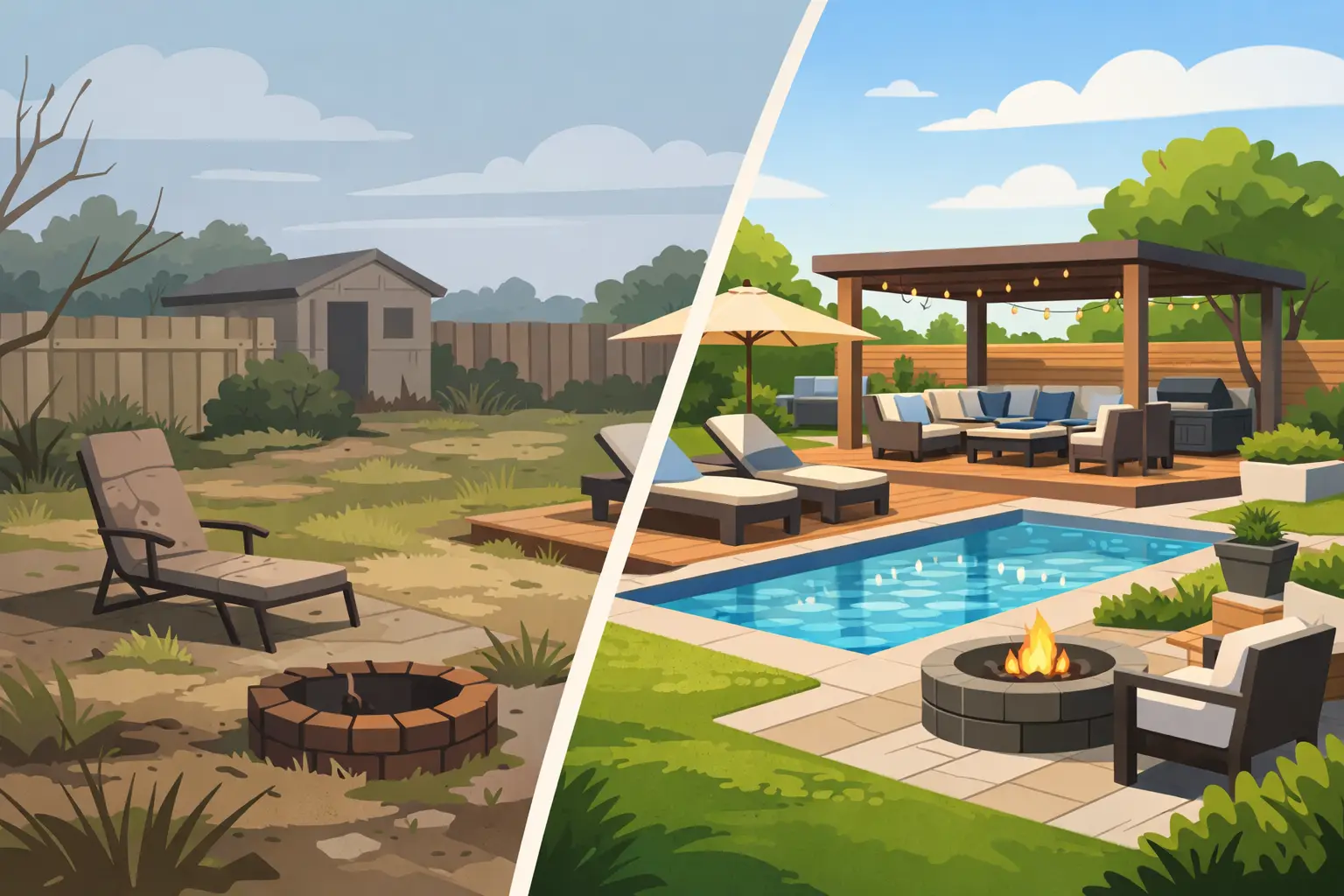
19 Apr Backyard Transformation Before and After
A true backyard transformation before and after is rarely about adding a few attractive features and hoping the space comes together. The real change happens when the yard is rethought as part of the property itself – how you move through it, how you gather, how it looks from inside the house, and how it performs year after year.
That is why the most successful projects do not start with a patio or a planting list. They start with a better question: what should this space do for you? For some homeowners, the answer is outdoor dining and entertaining. For others, it is privacy, lower maintenance, safer circulation, or a more refined setting around a pool. The before and after is not just visual. It is functional, practical, and tied directly to how the property is lived in.
What a backyard transformation before and after really shows
Before-and-after photos can be striking, but they often flatten the story. They show the visual result without showing the problems that made the transformation necessary in the first place. In many yards, the “before” includes more than an outdated surface or tired planting. It may involve poor grading, awkward transitions, underused lawn, drainage issues, lack of shade, or a layout that never matched the home.
The “after” works because those problems were addressed with intention. A well-designed backyard feels calmer and more coherent because each element belongs where it is. The patio aligns with the house. The steps feel natural. The planting softens the hardscape instead of fighting it. Lighting extends the use of the space into the evening. Privacy is created without making the yard feel closed in.
This is where custom design matters. Premium outdoor spaces are not assembled piece by piece. They are composed. That difference is easy to see once a project is complete, but it is shaped long before installation begins.
The difference between cosmetic updates and real transformation
Some yards improve with selective upgrades. Fresh sod, a new garden bed, or replacing worn pavers can make a noticeable difference. But a full backyard transformation before and after usually involves a more complete shift in structure.
A cosmetic update changes surfaces. A real transformation changes how the space works.
That can mean replacing a cramped deck with a larger entertaining patio connected to the kitchen. It can mean turning a sloped, difficult yard into a series of purposeful levels. It can mean integrating retaining walls, planting, lighting, and drainage into one coordinated plan. In larger projects, it may also involve outdoor kitchens, fire features, covered structures, water elements, or poolside environments designed for comfort as much as appearance.
The trade-off is straightforward. Cosmetic improvements can be less disruptive and less expensive, but they may leave the underlying issues in place. Full redesign requires more planning and investment, yet it typically delivers a stronger result and better long-term value.
Where the best transformations begin
The first step is not choosing materials. It is understanding the site and the people using it.
Every property has conditions that shape the outcome. Sun exposure, drainage, lot shape, sightlines, elevation, and existing architecture all matter. So do the practical details of daily life. A family with young children needs different circulation and surface choices than homeowners focused on entertaining. A commercial property may prioritize durability, presentation, and ease of maintenance over softness and seasonal variation.
This is also where budget should be discussed honestly. A strong design team can help prioritize what creates the greatest impact, but there is no value in designing beyond the reality of the project. In some cases, phased work makes sense. In others, completing the space in one cohesive build is the better move because it avoids rework and preserves design integrity.
Design choices that create the biggest before-and-after impact
The most dramatic changes usually come from a handful of decisions made well.
Layout and circulation
If the yard feels awkward before the project, the issue is often layout. Spaces may be too small, disconnected, or placed without regard to how people actually move. Reworking circulation can immediately change the experience of the yard. Wider access points, better transitions, and clearly defined zones make the property feel larger and more comfortable without increasing square footage.
Hardscape that gives the yard structure
Patios, walkways, steps, walls, and edging do more than provide surface area. They create order. High-quality hardscape anchors the design and establishes permanence. Material choice matters here, but proportion and placement matter just as much. The right stone in the wrong layout still feels wrong.
Planting that supports the architecture
Planting should never feel like an afterthought. In a refined backyard, it frames views, softens edges, and adds seasonality without overwhelming the space. It can also improve privacy, define boundaries, and reduce the starkness that sometimes comes with too much hardscape.
There is always a balance to strike. Lush planting brings richness and character, but it may require more care. A more restrained planting plan can feel clean and architectural, though it may rely heavily on material quality and form to avoid looking sparse.
Lighting and finishing details
Lighting often makes the after feel complete. It extends use into the evening, improves safety, and highlights key features with subtlety. The same is true of finishing details such as built-in seating, clean edging, concealed drainage solutions, and thoughtful material transitions. These are not small extras. They are often what separate a standard yard from one that feels custom.
Why execution matters as much as design
A polished rendering or strong concept is only half the story. The quality of installation determines whether the finished landscape actually delivers what was promised.
Grade tolerances, base preparation, drainage planning, joint alignment, planting technique, and finish consistency all affect the final result. These are not details homeowners always notice at first glance, but they notice them over time. Poor execution shows up in settling surfaces, water issues, inconsistent lines, and a project that ages faster than it should.
That is why experienced design-and-build delivery is so valuable. When one accountable team carries the project from consultation through installation, the handoff is tighter, the intent is clearer, and the result is typically more cohesive. For homeowners who want less coordination stress and a higher level of finish, that matters.
The value behind a backyard transformation before and after
A successful transformation can absolutely improve curb appeal and perceived property value, but the immediate return is often more personal. The yard becomes usable. It feels finished. It supports the kind of lifestyle the home should have supported all along.
That might mean weeknight dinners outside instead of an empty patch of grass. It might mean hosting without apologizing for the condition of the backyard. It might mean a commercial frontage that reflects the standard of the business behind it. The visual upgrade is important, but the daily experience is what makes the investment worthwhile.
There is also the question of longevity. A thoughtfully built landscape tends to hold up better both functionally and stylistically. Trend-driven choices can date quickly, while balanced, site-appropriate design usually remains relevant for years. This is one reason premium clients often prioritize craftsmanship over quick fixes.
What homeowners often underestimate
Many people underestimate how much the house itself should influence the backyard. The most convincing after does not feel detached from the architecture. It feels like an outdoor extension of it. Materials, lines, scale, and mood should all relate back to the home.
They also underestimate drainage. It is not glamorous, and it rarely appears in before-and-after captions, but it plays a central role in whether a landscape performs properly. The same goes for grading, retaining solutions, and subsurface preparation. These are the quiet systems that support the visible beauty.
Finally, people often assume the largest feature creates the biggest impact. Sometimes it does. Just as often, the most meaningful change comes from a better overall composition. A modest patio in the right place, paired with layered planting, clean lighting, and proper access, can outperform a larger but poorly integrated build.
For property owners who want a premium result, the goal is not simply to make the backyard look newer. It is to make the entire outdoor environment feel resolved, purposeful, and true to the way the property should be lived in. When that happens, the before and after speaks for itself – not because it is dramatic, but because it finally feels right.