


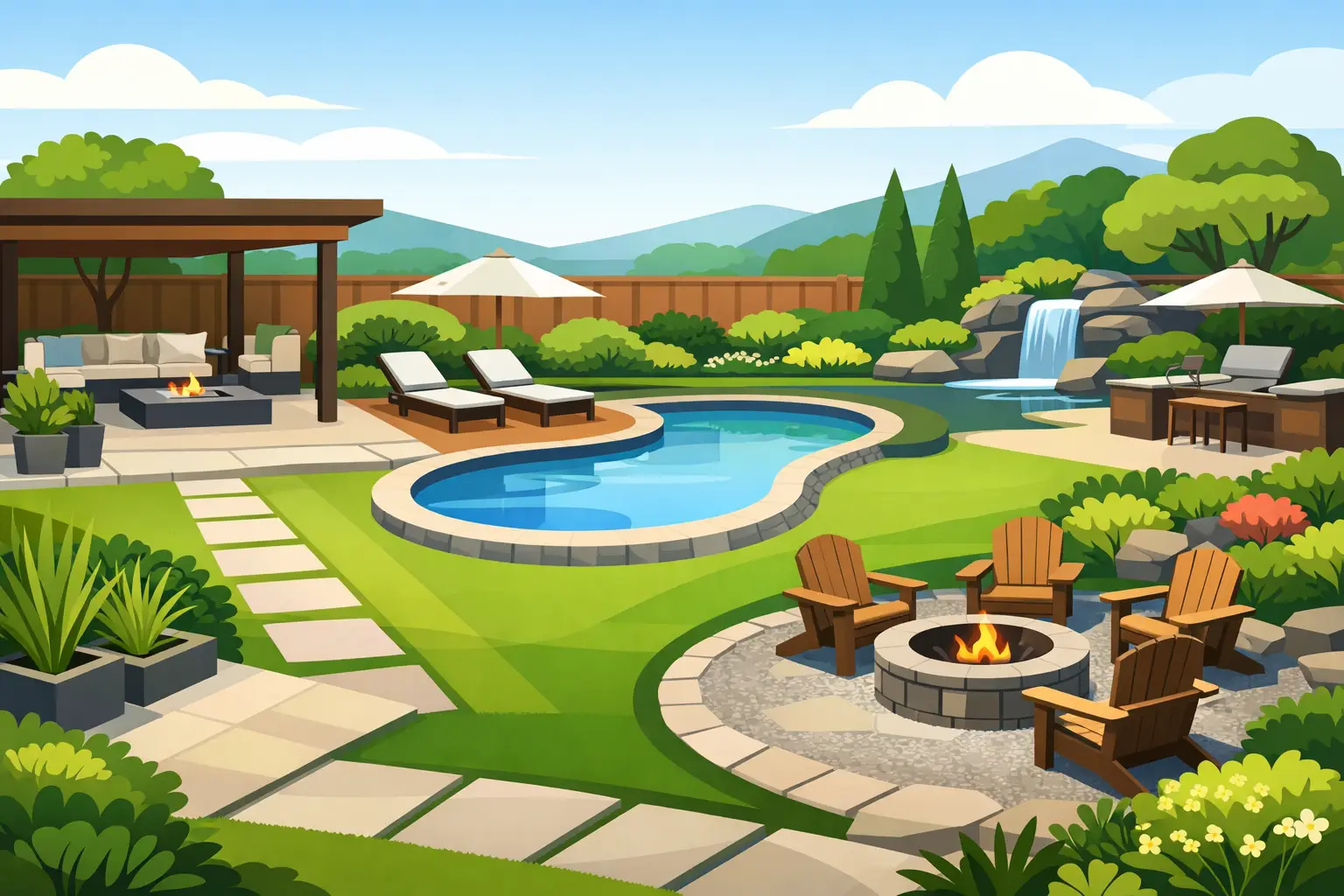
10 Jul Backyard Landscaping That Adds Real Value
A backyard with a patchy lawn, a tired patio, and no clear purpose usually gets used exactly that way – barely at all. The difference between an ordinary yard and a space people actually want to spend time in is not more decoration. It is better planning. Thoughtful backyard landscaping turns unused square footage into an outdoor environment that supports how you live, entertain, and relax.
For homeowners investing in a premium property, that matters. The backyard should feel connected to the architecture of the home, tailored to the routines of the household, and built to last. A beautiful result is expected. The real value comes from function, flow, and craftsmanship that hold up season after season.
What backyard landscaping should accomplish
The best landscapes do more than fill space. They solve problems while making the property feel more complete. In practical terms, that may mean creating a dedicated dining area, improving drainage, introducing privacy, or replacing a high-maintenance lawn with a more intentional layout. In lifestyle terms, it means your yard starts working like an extension of the home instead of an afterthought.
That shift is where many projects either succeed or fall short. If the goal is only to make the yard look nicer, the result can feel flat. If the goal is to support real use, the design becomes sharper. Seating goes where people naturally gather. Walkways connect spaces logically. Planting softens the build without overwhelming it. Lighting extends the evening. Materials are selected for both appearance and performance.
For families, that might mean balancing open play space with adult entertaining areas. For busy professionals, it may mean low-maintenance design with a strong visual finish. For commercial properties, it often means durable landscaping that presents well and stays consistent under heavier use. Good design responds to the property, but great design responds to the people using it.
Start backyard landscaping with function, not features
It is easy to get attached to individual ideas – a fire feature, a pergola, a water element, an outdoor kitchen. Those can all be excellent additions, but they should come after the layout is resolved. When features are added without an overall plan, the space can feel crowded, disconnected, or expensive without being especially useful.
A stronger starting point is to ask how the yard needs to perform. Do you host large gatherings or prefer quiet evenings outdoors? Do you want room for children and pets, or a more refined entertainment setting? Is privacy a priority? Are there drainage issues, grading challenges, or awkward transitions from the house to the yard? These questions shape the foundation of the project.
This is where experienced design-and-build work makes a difference. A backyard is rarely just a surface-level project. Elevation changes, retaining needs, drainage patterns, sun exposure, traffic flow, and material compatibility all affect the final result. When those elements are addressed early, the finished space feels effortless because the hard decisions were handled properly behind the scenes.
The elements that define a well-built backyard
Hardscape sets the structure
Patios, walkways, steps, retaining walls, and built features create order. They establish the bones of the landscape and determine how the space is used. This is also where quality shows quickly. Poor alignment, uneven surfaces, weak base preparation, and mismatched materials can undermine the entire project.
Well-executed hardscape should look clean and feel intentional. The scale should suit the home. The material palette should feel cohesive. Transitions should be comfortable and natural. A premium backyard does not need to be oversized, but it does need to be resolved in the details.
Planting brings balance and softness
Planting is often what makes a new landscape feel finished rather than newly built. Trees, shrubs, ornamental grasses, and perennials introduce texture, seasonal interest, movement, and privacy. They also help architecture and stonework feel grounded in the site.
The right planting plan depends on maintenance expectations as much as aesthetics. Some homeowners want a layered garden with changing color and texture through the seasons. Others want a polished, lower-maintenance look that stays clean with minimal upkeep. Neither approach is better in every case. The right answer depends on the property and the owner’s priorities.
Lighting extends the experience
Lighting is one of the most underestimated parts of backyard landscaping. It affects safety, mood, visibility, and how the space reads after dark. Path lights, step lights, accent lighting on trees or architectural elements, and subtle illumination around seating areas can completely change how often a backyard gets used.
Done well, landscape lighting is restrained. It highlights rather than overwhelms. The goal is not glare. The goal is atmosphere, comfort, and a finished look that carries into the evening.
Why custom design matters more than trend-driven choices
Backyard trends come and go. One year it is oversized outdoor kitchens. Another year it is minimalist paving with sparse planting. Trends can be useful as inspiration, but they are a poor substitute for a site-specific design.
A custom landscape takes cues from the home, the lot, and the way the client wants to live. A narrow urban yard needs a different strategy than a wide suburban property. A contemporary home may call for cleaner lines and a tighter material palette, while a more traditional property may benefit from softer transitions and richer planting. The point is not to force a style. It is to create visual harmony and daily usability.
That is especially important for higher-value properties, where disconnected upgrades stand out. A yard should feel like it belongs to the home. When the layout, materials, and planting all support the same vision, the space gains a sense of permanence. It feels considered, not assembled.
Backyard landscaping and long-term property value
There is a reason well-designed outdoor spaces consistently influence buyer perception. They improve first impressions, expand usable living area, and signal that the property has been thoughtfully maintained. But value should not be measured only by resale.
A landscape also earns its value through everyday use. If a redesigned backyard gives your family a comfortable place to dine outdoors, host friends, enjoy privacy, or spend more time outside without constant upkeep, that return is immediate. The best projects do both – they enrich daily living now and strengthen the property’s appeal over time.
Of course, not every investment delivers equally. Spending heavily on features that do not match the lot or your lifestyle can limit the payoff. A balanced approach usually performs best: strong hardscape, appropriate planting, durable materials, and features that support how the space will actually be used.
Sustainability without sacrificing style
Sustainable landscaping is often misunderstood as a purely ecological exercise. In reality, it is also practical. It means choosing materials and plantings that make sense for the environment, reducing wasteful water use, improving drainage performance, and building spaces that age well rather than requiring frequent replacement.
That does not mean every backyard needs to look naturalistic or informal. A refined, premium landscape can still be sustainable. Smart grading, efficient irrigation, durable surfaces, and regionally appropriate plant choices all contribute to a landscape that performs better over the long term.
This is one of the clearest examples of why execution matters. A design can look impressive on paper, but if the installation quality is poor, the landscape will reveal those weaknesses quickly. Settling, pooling water, failing plant material, and premature wear are not design features. They are signs that the work beneath the surface was not handled with enough care.
Choosing the right partner for backyard landscaping
For most property owners, the challenge is not generating ideas. It is turning those ideas into a coherent, buildable plan and then executing it to a high standard. That is where a single accountable partner becomes valuable. Design, materials, site conditions, scheduling, and installation quality all need to align.
An experienced firm brings more than labor. It brings judgment. It knows when a feature improves the project and when it distracts from it. It understands how to balance ambition with practicality. It recognizes that craftsmanship is not an upgrade. It is the baseline for work that is meant to last.
For clients who want a backyard to feel personal, polished, and professionally resolved, that level of guidance matters. Redleaf Landscape Inc has built its reputation on exactly that kind of outcome – custom outdoor spaces shaped by attention to detail, quality in craft, and a clear understanding that a property should reflect the people who own it.
The right backyard landscaping does not chase attention. It creates a place that feels right every time you step outside.