


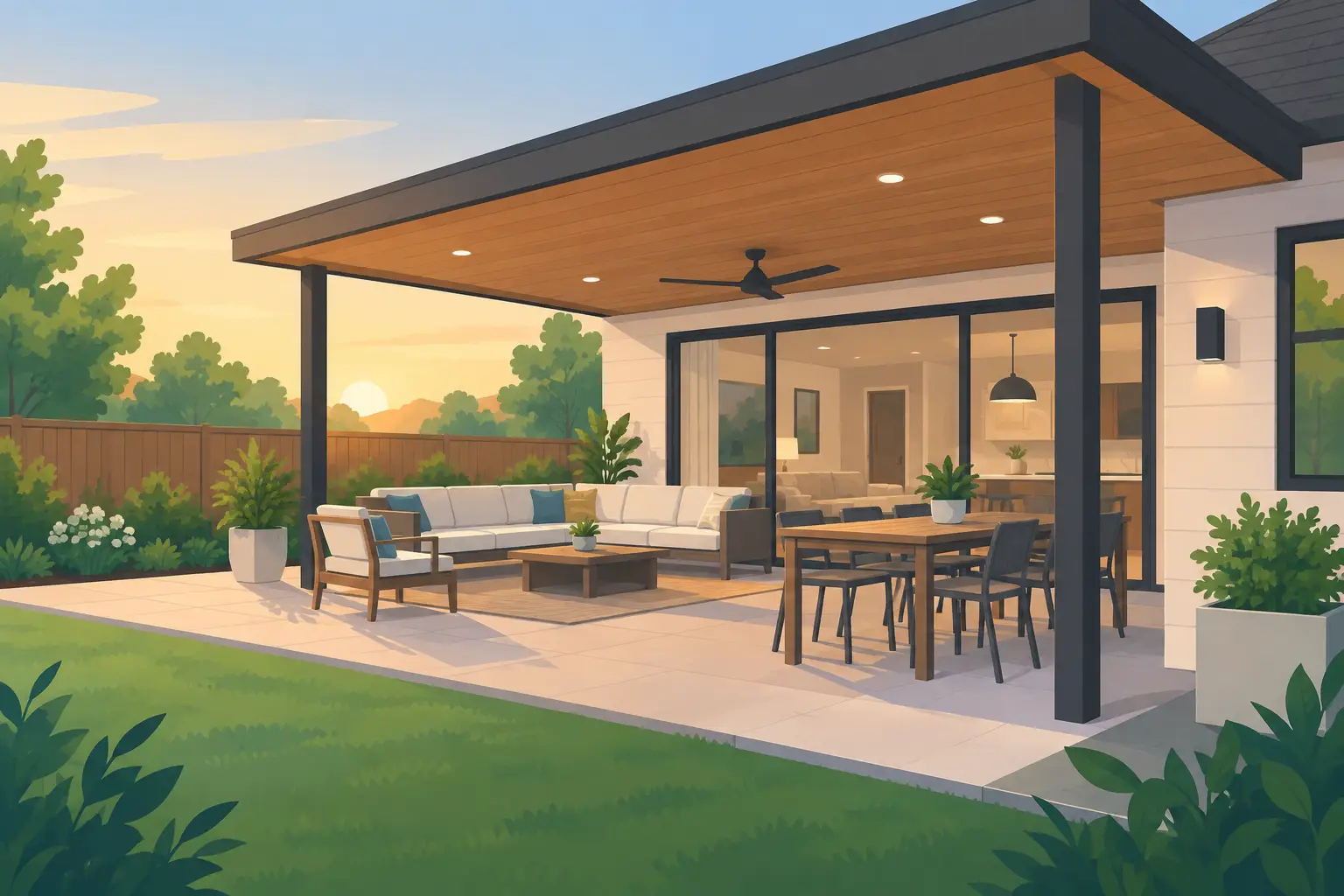
04 Oct Patio Construction That Extends Your Home
A patio is tested long before the first dinner party. It is tested by spring thaw, heavy rain, shifting soil, patio furniture, children at play, and the daily walk from the kitchen to the yard. Thoughtful patio construction accounts for all of it, creating an outdoor surface that feels like a natural extension of the home rather than an addition placed in the yard.
For homeowners who expect more from their property, the goal is not simply to install pavers or pour concrete. It is to create a setting for how you live: relaxed weekend mornings, larger gatherings, quiet evenings, and a more usable landscape in every season.
Begin With the Way You Want to Use the Space
The best patio designs start with purpose. A compact bistro patio outside a back door has different requirements than a dining area for ten, a poolside lounge, or an outdoor kitchen with a fire feature. Size, circulation, sun exposure, privacy, and the relationship to the house all shape the right plan.
A patio that is too small can make even a beautiful yard feel constrained. One that is oversized may overwhelm the home, leave little room for planting, or create a hardscape-heavy appearance. The right footprint gives furniture room to function while preserving balance with lawns, gardens, trees, and other outdoor features.
Think beyond the patio surface itself. Consider where guests will enter, where food will be served, how people will move around seating, and what view they will see when they sit down. A well-designed route from the interior of the home to the patio makes the entire property feel more intentional.
Design for Sun, Shade, and Privacy
Sun patterns can change the experience of a patio dramatically. A west-facing space may be ideal for evening entertaining but uncomfortable on bright summer afternoons. A shaded area can offer relief in July while staying damp longer in spring and fall. Neither condition is automatically a problem, but each calls for a different design response.
Pergolas, shade structures, carefully placed trees, privacy screens, and planting beds can make a patio more comfortable without closing it in. On urban and suburban properties, strategic screening can also soften neighboring views while retaining light and airflow. The strongest designs create privacy with layers, not with a single imposing wall of material.
Patio Construction Starts Below the Surface
The visible finish matters, but the base determines how well a patio performs over time. In regions with freeze-thaw cycles, a poorly prepared base can lead to settling, heaving, uneven joints, and water collecting where it should not. These are not cosmetic concerns. They affect safety, longevity, and the appearance of the entire landscape.
Professional patio construction begins with proper excavation and a stable, compacted granular base suited to the site conditions and selected material. Edge restraints, bedding layers, and precise leveling all contribute to a finished surface that remains secure under regular use.
Drainage deserves the same attention. A patio should direct water away from the home and avoid sending runoff toward neighboring properties or vulnerable planting areas. The needed slope is subtle enough that it should not be noticed while walking or placing furniture, yet deliberate enough to prevent standing water. Depending on the property, drainage solutions may include grading adjustments, channel drains, permeable materials, or integration with the broader landscape drainage plan.
Cutting corners below grade is often what turns a promising outdoor project into a repair issue. Quality work is less about what can be seen on installation day and more about the preparation that protects the finished space for years to come.
Choose Materials for Performance and Character
There is no single best patio material. The right choice depends on the home’s architecture, the intended use of the space, maintenance expectations, budget, and the surrounding landscape.
Natural stone offers depth, texture, and a distinctive character that works especially well in custom gardens and refined outdoor living areas. Its variation is part of its appeal, though it requires thoughtful selection and installation to achieve a consistent, secure surface. Concrete pavers provide exceptional flexibility in color, size, pattern, and replacement options. They can support both traditional and contemporary designs while delivering a clean, durable finish.
Porcelain pavers are often selected for their crisp appearance and low porosity. They can be an excellent fit for modern spaces, although the installation approach must be appropriate for the product and local conditions. Poured concrete can provide a streamlined look and may suit larger, simpler spaces, but it requires careful joint placement and finishing to manage cracking and maintain visual quality.
Material should never be chosen from a sample alone. Look at it beside the home’s exterior, in natural light, and alongside planned planting. A warm stone can make brick feel richer, while a cool gray paver may complement contemporary siding and black window frames. The color and texture should belong to the whole property.
Details That Separate a Finished Patio From a Basic One
The most memorable patios are rarely defined by one expensive feature. They are defined by proportion and detail. Clean edge lines, thoughtful transitions, properly aligned joints, coordinated steps, and well-placed planting give the space a composed feel.
Border courses can frame a field of pavers and echo colors found elsewhere on the property. Steps should be sized for a comfortable stride and integrated with the patio rather than treated as an afterthought. If the grade changes, retaining walls or seat walls may create useful structure while adding places to gather.
Lighting also deserves early consideration. Low-voltage lighting can improve evening use, highlight paths and steps, and add a welcoming atmosphere without overpowering the landscape. Planning it before construction avoids the compromises of adding fixtures after the patio is complete.
Integrate the Patio Into a Complete Landscape
A patio is stronger when it works with the full outdoor environment. Planting beds soften hardscape edges. Trees provide scale and shade. A walkway can connect the patio to a garden, pool, driveway, or side entrance. Water, fire, and cooking features can add function when they are designed around the space rather than inserted into it later.
This is where an end-to-end design-and-build approach has real value. The patio is considered alongside grading, drainage, planting, lighting, and the home’s architecture, so each decision supports the next. It also gives homeowners one accountable team from the first concept through professional installation.
For commercial properties, the same principle applies. A well-built patio, courtyard, or outdoor seating area can improve arrival experience, support tenant and customer use, and reinforce a polished exterior presentation. Durability, accessibility, drainage, and maintenance planning become especially important in high-traffic settings.
Plan for Long-Term Care
Even the best patio benefits from regular attention. Sweep away leaves and debris, address spills promptly, and keep joints and drainage paths clear. Paver patios may occasionally need joint sand refreshed, while natural stone and concrete may benefit from product-specific cleaning or sealing practices.
Avoid assuming that sealing is always necessary or that one cleaning product suits every surface. Some materials perform better without a glossy sealer, and harsh cleaners can alter color or damage finishes. The right maintenance plan should follow the installed material, its exposure, and the manufacturer’s recommendations.
A quality patio is an investment in daily life as much as property value. Since 1986, Redleaf Landscape Inc has approached outdoor spaces with that standard in mind: careful design, quality in craft, and a finished environment that feels personal to the people who use it.
The most rewarding patio is not the one with the most features. It is the one that makes you want to step outside, stay a little longer, and enjoy the property you have worked hard to call home.