


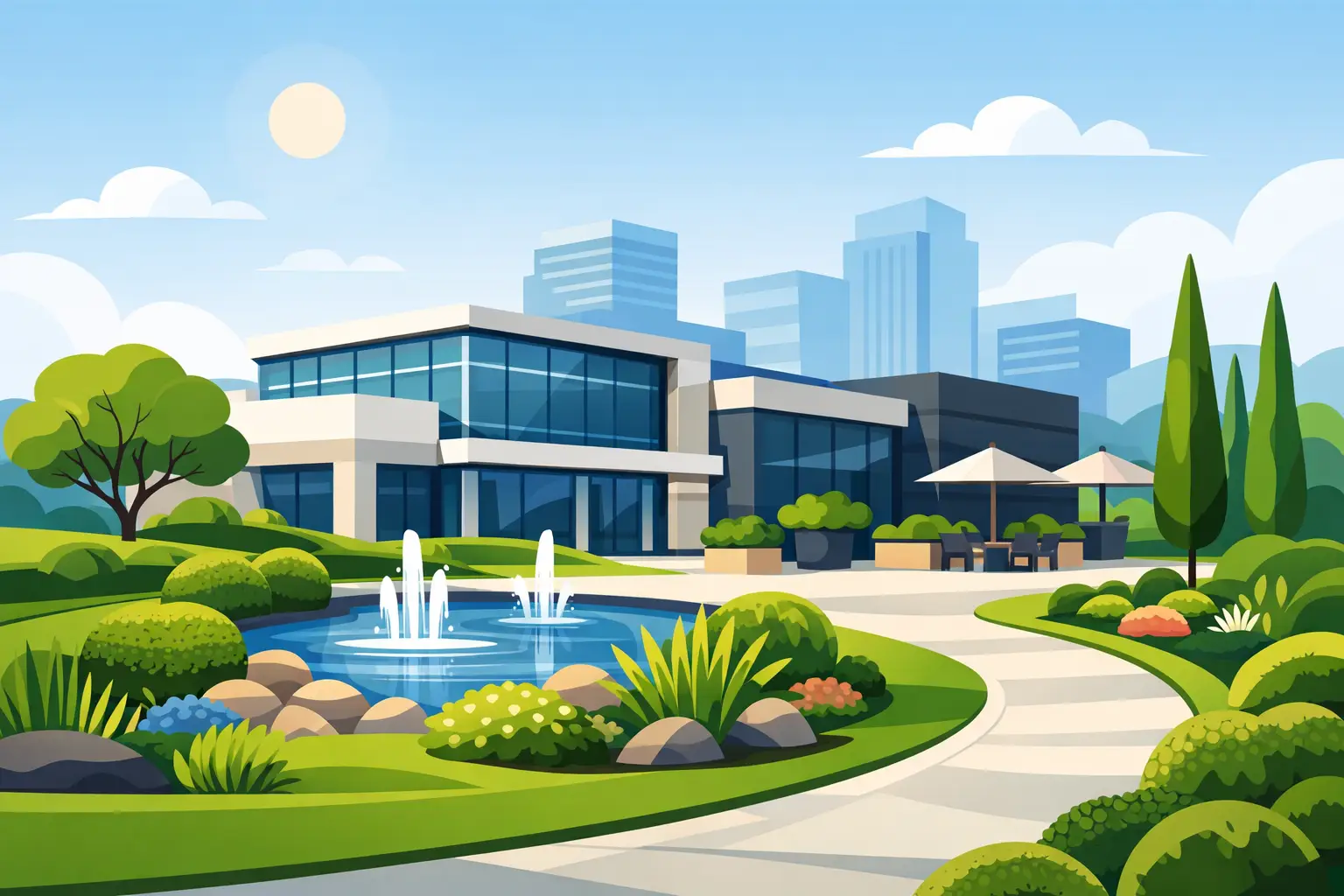
30 Jul Commercial Property Landscaping Guide for Lasting Value
A commercial landscape is often judged before a visitor reaches the front door. The condition of the entry, walkways, planting beds, and gathering areas communicates how a business, residential community, or managed property operates. This commercial property landscaping guide outlines how to make exterior improvements that look polished on opening day and continue to perform through weather, traffic, and changing seasons.
For property managers and business owners, the goal is not simply to add more plants. It is to create an outdoor environment that supports the property’s identity, makes movement easier, and protects the long-term value of the investment. The strongest projects bring design, construction, drainage, materials, and maintenance expectations into one clear plan.
Start With the Property’s Real Needs
Every commercial site has a different set of pressures. A medical office needs clear, accessible arrival routes and a calm, reassuring appearance. A restaurant may need attractive patio space, privacy, and lighting that extends usable hours. A multifamily property needs durable common areas that feel welcoming without becoming difficult to maintain. An industrial site may prioritize circulation, screening, stormwater management, and a professional street presence.
Before selecting materials or plants, assess how people actually use the property. Watch where visitors enter, where employees gather, how delivery vehicles move, and where water collects after rainfall. A landscape should respond to those patterns rather than force people into an impractical layout.
A well-defined project brief typically addresses four connected priorities:
- Arrival and curb appeal, including signage, entry planting, and a clear first impression
- Safety and access, including walkways, lighting, grades, and barrier-free movement
- Function, including seating, circulation, screening, loading areas, and outdoor amenities
- Long-term performance, including drainage, material durability, irrigation, and realistic upkeep
These priorities will not always carry equal weight. A high-traffic retail plaza may justify more investment at the entrance and pedestrian zones, while a corporate campus may benefit most from outdoor spaces that support employee well-being. Good planning assigns the budget where it has the greatest operational and visual impact.
Build a Commercial Landscape Plan Before Construction
A cohesive design begins with site conditions, not a catalog of features. Existing grades, sun exposure, mature trees, utilities, soil quality, traffic flow, municipal requirements, and snow storage all influence what can be built successfully. Ignoring any one of them can lead to costly revisions or a finished landscape that struggles to perform.
Define the Experience From the Street to the Door
Think of the site as a sequence. From the street, the property should be easy to identify and visually maintained. At the parking area, routes should be intuitive. At the entrance, planting, paving, and lighting should guide visitors naturally toward the door.
This sequence matters because commercial properties are experienced quickly. Too many competing materials, oversized planting beds that obstruct sightlines, or unclear pedestrian paths can make an otherwise expensive project feel disorganized. A limited, well-chosen material palette creates a more confident result and is often easier to maintain over time.
Design for Climate, Drainage, and Wear
In four-season climates, commercial landscapes must handle freeze-thaw cycles, heavy rain, snow clearing, salt exposure, and long periods of pedestrian use. These are not details to solve after installation. They should direct choices from the start.
Hardscape materials need appropriate base preparation, proper edge restraint, and drainage that moves water away from buildings and high-use areas. Planting selections should tolerate the site’s actual light, soil, and exposure conditions. A plant that looks impressive in a protected display garden may fail beside a wind-exposed parking lot or a salted sidewalk.
Drainage deserves particular attention. Standing water damages turf, weakens paving systems, creates slippery conditions, and makes a property look neglected. Depending on the site, solutions may include regrading, catch basins, permeable paving, bioswales, or carefully designed planting areas that slow and absorb runoff. The right approach depends on the existing conditions and local requirements, but water should always have a deliberate path.
Balance Visual Impact With Maintenance Reality
Seasonal color can create a strong first impression, but annual displays require regular care and replacement. Ornamental grasses, flowering shrubs, evergreens, and hardy perennials can offer texture and interest with a more measured maintenance commitment. Neither approach is automatically better.
The right balance depends on the property’s brand, foot traffic, and maintenance budget. A premium hospitality or retail property may benefit from highly curated seasonal displays. A large office or multifamily site may achieve better value through layered perennial beds, resilient shrubs, and strong evergreen structure that look composed throughout the year.
Choose Features That Improve the Property
Commercial landscaping earns its place when it solves a problem or enhances the way people use the site. Decorative elements without a functional role can become expensive distractions. A purposeful feature, however, can improve comfort, safety, and the perceived quality of the property at the same time.
Shade structures, trees, and seating areas can make outdoor breaks more comfortable. Low walls can define gathering spaces while also providing informal seating. Attractive screening can hide service areas, mechanical equipment, or parking views without making the site feel closed off. Retaining walls can manage grades and create usable level areas when they are engineered and finished with care.
Lighting is another high-value component. It should support safe movement at entrances, stairs, ramps, pathways, and parking edges while reinforcing the landscape after dark. The best lighting feels intentional rather than overdone. It highlights key architectural and landscape elements, avoids glare, and makes users feel secure.
Accessibility should be integrated into every decision. Appropriate slopes, stable surfaces, curb ramps, handrails where required, and clear paths are essential. They also make the property easier to navigate for everyone, from clients carrying packages to parents with strollers and employees moving between buildings.
Select Materials for Commercial-Grade Performance
Commercial projects receive more wear than residential landscapes. Materials must be selected for strength, serviceability, and consistency, not appearance alone. Pavers, natural stone, concrete, wood, metal, and composite products each have a role, but each requires the correct application and installation method.
For example, natural stone can bring distinction to an entry plaza, but it needs a suitable base and detailing to withstand local weather. Concrete can be economical and durable for broad walkways, though joints, finishing, and drainage must be handled correctly. Pavers can simplify future repairs because individual units may be replaced, but only when the base is properly built and the surface is designed for expected loads.
This is where craftsmanship has a direct effect on lifecycle value. Straight lines, clean transitions, consistent grades, properly set edges, and thoughtful finishing details may appear subtle, yet they determine whether a landscape continues to look refined years later. Quality installation protects the original design intent.
Coordinate One Accountable Team
Commercial exterior work often involves multiple moving parts: landscape design, demolition, grading, drainage, irrigation, planting, hardscape construction, electrical coordination, and site access. When these scopes are disconnected, the property owner or manager can end up resolving gaps between contractors.
A design-and-build approach reduces that friction by connecting the design vision to field execution. The team responsible for planning understands the intended materials, elevations, and details, while the installation team can identify constructability issues before they become expensive changes. It also creates clearer accountability for scheduling, quality control, and the final result.
Ask prospective partners how they handle site review, design revisions, permits where applicable, material specifications, construction sequencing, and closeout. A professional contractor should be able to explain not only what will be installed, but why each recommendation suits the property.
Plan for the Landscape After Handover
A finished project needs a realistic care plan. Irrigation inspections, pruning, mulch renewal, seasonal cleanup, fertilization, lighting checks, and hardscape inspections preserve the investment. The first year is especially important because new plants are establishing roots and drainage patterns are being tested in real conditions.
Maintenance should not mean constant intervention. A thoughtful design makes care more efficient by providing adequate planting spacing, durable edging, accessible irrigation components, and plant varieties suited to the environment. It also leaves room for seasonal adjustments without disrupting the overall composition.
A commercial landscape should feel like a natural extension of the property: polished at arrival, practical under daily use, and built with enough care to retain its character over time. When design decisions are grounded in how the site works, the exterior becomes more than an amenity. It becomes a lasting statement about the standard of the property within.