


20 Jul Outdoor Fireplace vs Fire Pit for Your Yard
A fire feature can change how a backyard is used after sunset. It creates a destination for quiet evenings, family gatherings, and entertaining that does not end when the temperature drops. But the outdoor fireplace vs fire pit decision is more than a question of appearance. Each creates a different experience, requires a different site strategy, and shapes the rest of the landscape around it.
For a custom outdoor living space, the right choice should feel connected to the home, the architecture, and the way your household actually spends time outside. A well-designed fire feature is not simply an accessory. It is an anchor point that gives patios, seating areas, planting, and pathways a clear purpose.
Outdoor Fireplace vs Fire Pit: The Core Difference
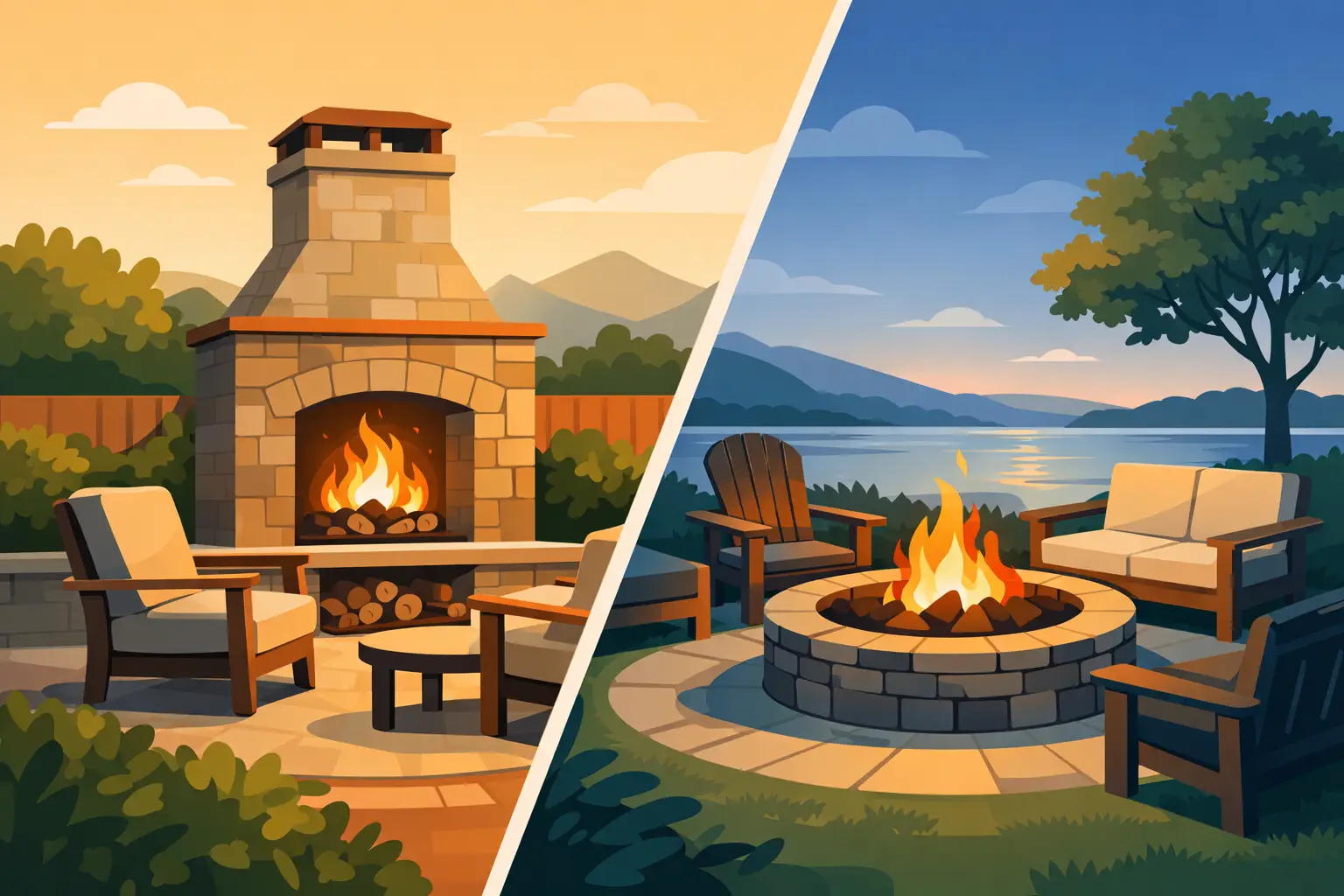
An outdoor fireplace is vertical, architectural, and directional. Its firebox, chimney, and surrounding structure create a strong visual backdrop, much like an indoor fireplace. It naturally faces a seating area and establishes a sense of enclosure, making an open yard feel more intimate and defined.
A fire pit is lower, more open, and typically more social. People can gather around all sides, which makes it especially well suited to larger groups, casual conversations, and family use. It can be built into a patio, placed at the center of a dedicated lounge area, or designed as a refined focal point within a garden setting.
Neither option is automatically better. The stronger choice depends on whether your priority is architectural presence, group interaction, heat performance, sightlines, maintenance, or the overall layout of your property.
When an Outdoor Fireplace Is the Better Choice
A fireplace brings a level of permanence that can make a patio feel like a true outdoor room. For homeowners who want the backyard to function as an extension of the house, this is often its greatest advantage. The chimney creates height, the hearth provides a natural gathering point, and the wall behind the fire can become a defining architectural feature.
It creates a polished focal point
Outdoor fireplaces work particularly well beside covered patios, pool houses, dining terraces, and structured entertaining spaces. Stone, brick, stucco, porcelain, or natural cladding can be selected to complement the home and hardscape. When the materials are carried through retaining walls, kitchen islands, steps, or planters, the entire yard feels intentional rather than assembled in pieces.
The visual impact remains even when the fire is not lit. That matters in a landscape designed for daily enjoyment and curb appeal, not only occasional events.
It directs heat where people sit
Because an outdoor fireplace projects heat forward, it can be more comfortable for a seating arrangement positioned directly in front of it. It also provides a degree of shelter from a breeze when thoughtfully located. This can make a fireplace a practical choice for a narrower patio or a lounge space designed for smaller gatherings.
That said, the heat does not circulate equally around the feature. Guests seated off to the sides may feel less warmth than those directly in front. A fireplace is ideal when you prefer a composed, living-room-style arrangement over a fully circular conversation area.
It adds privacy and definition
A fireplace structure can help screen an unwanted view, establish a visual boundary, or separate a lounge zone from a dining area. On properties where neighboring homes are close, this added vertical presence can make the outdoor space feel more private without relying entirely on fencing or dense planting.
Its scale needs careful consideration. In a small yard, an oversized fireplace can dominate the space, interrupt views, and reduce useful patio area. Proper proportions are the difference between an elegant centerpiece and a feature that feels crowded.
When a Fire Pit Is the Better Choice
A fire pit is often the more flexible and communal option. It invites people to pull up a chair, face one another, and stay awhile. For families, hosts, and homeowners who want a relaxed gathering place, that open format is difficult to match.
It supports conversation from every angle
Unlike a fireplace, a fire pit does not create a front and back. Everyone can share the flame, see one another, and choose a comfortable seat. This makes it a natural fit for circular or curved patios, built-in seat walls, Adirondack chairs, and informal lounge furniture.
The arrangement is especially effective for entertaining because people can enter and exit the group without disrupting a formal seating plan. It feels welcoming in a way that encourages spontaneous use.
It preserves open views
A low-profile fire pit keeps sightlines open toward a pool, garden, mature trees, or the rest of the property. This is valuable in a landscape with a strong view or a small yard where a tall structure would feel visually heavy.
A custom masonry fire pit can still feel refined and substantial. The key is to use materials, proportions, and surrounding paving that belong to the broader design. A basic metal bowl may be portable, but a built-in fire pit integrated into premium stonework creates a more lasting impression.
It can serve more than one purpose
Some fire pits are designed with a cover so the surface can function as a table when the feature is not in use. Others are paired with broad coping or seat walls that add usable space for drinks and serving trays. This versatility makes a fire pit an attractive option when every square foot of a patio needs to work hard.
Its open flame also demands appropriate clearances and disciplined furniture placement. The seating should be close enough to feel connected, yet far enough away for comfort and safety. A professional plan accounts for circulation, surface materials, drainage, and the distance from structures, trees, and overhead elements before construction begins.
Consider Fuel, Maintenance, and Local Requirements
The fuel source affects both the atmosphere and the daily experience. Wood-burning fire features offer the familiar crackle, scent, and ritual that many homeowners enjoy. They also require wood storage, ash removal, and more attention to smoke direction. Depending on municipal rules and neighborhood conditions, a wood-burning option may have limitations that need to be confirmed early.
Natural gas and propane offer convenience. They ignite quickly, produce consistent flames, and eliminate ash cleanup. Natural gas is especially appealing for a permanent installation because it can be connected to an existing supply line, while propane may suit locations where a gas line is not practical. Both require properly installed components and access for maintenance.
Permits, fire codes, utility locates, and setback requirements can influence the design of either feature. A fireplace may involve more structural planning because of its height, foundation needs, chimney, and material weight. A fire pit may be simpler, but it still requires a stable base, appropriate noncombustible finishes, and a layout that respects local regulations.
Design the Fire Feature as Part of the Whole Yard
The most successful fire features are planned alongside the patio, not added after the rest of the project is complete. This allows the design to consider how people move through the yard, where smoke and wind will travel, what views should remain open, and how the feature will look from inside the home.
For example, a fireplace can terminate the view from a set of patio doors and create a strong visual destination. A fire pit can sit one level below a dining terrace, creating a distinct lounge zone without closing off the landscape. Lighting, planting, and grade changes can then reinforce that hierarchy.
Material selection should also be deliberate. The feature does not need to match every surface exactly, but it should relate to the home and surrounding hardscape. Warm natural stone can soften contemporary architecture, while clean masonry lines can bring structure to a more traditional property. Quality in craft shows in the details: capstone alignment, joint consistency, proper drainage, durable foundations, and finishes that age well through seasonal changes.
Choose for the Way You Gather
Choose an outdoor fireplace when you want a statement feature, a defined outdoor room, privacy, and forward-facing warmth for a more structured seating area. Choose a fire pit when you value flexible gathering, open views, and a relaxed setting where guests can circle the flame.
If your property has room, both can also have a place. A fireplace near the house can support intimate evenings on the main patio, while a fire pit farther into the landscape can create a separate destination for larger gatherings. The investment is justified when each feature has a clear role rather than competing for the same space.
Before choosing a style from a photo, stand in your yard at dusk and consider where people naturally gather, what you want to see from indoors, and how the space should feel on a cool fall evening. Those answers will lead to a fire feature that does more than look impressive – it will give your landscape a reason to be enjoyed long after the sun goes down.