


01 Apr Natural Stone Patio vs Concrete: Which Fits?
A patio sets the tone for how your outdoor space feels and functions. When homeowners weigh a natural stone patio vs concrete, they are usually deciding between two very different experiences – one rooted in timeless character, the other in efficiency and clean simplicity. The right choice depends on how you want the space to look, how you plan to use it, and how long you expect it to perform.
At first glance, the question can seem mostly about price. In reality, it is also about design cohesion, maintenance expectations, climate performance, and the level of finish you want your property to express. A patio is not just a surface. It is the foundation for outdoor dining, entertaining, circulation, and the overall visual balance of the landscape.
Natural stone patio vs concrete: the core difference
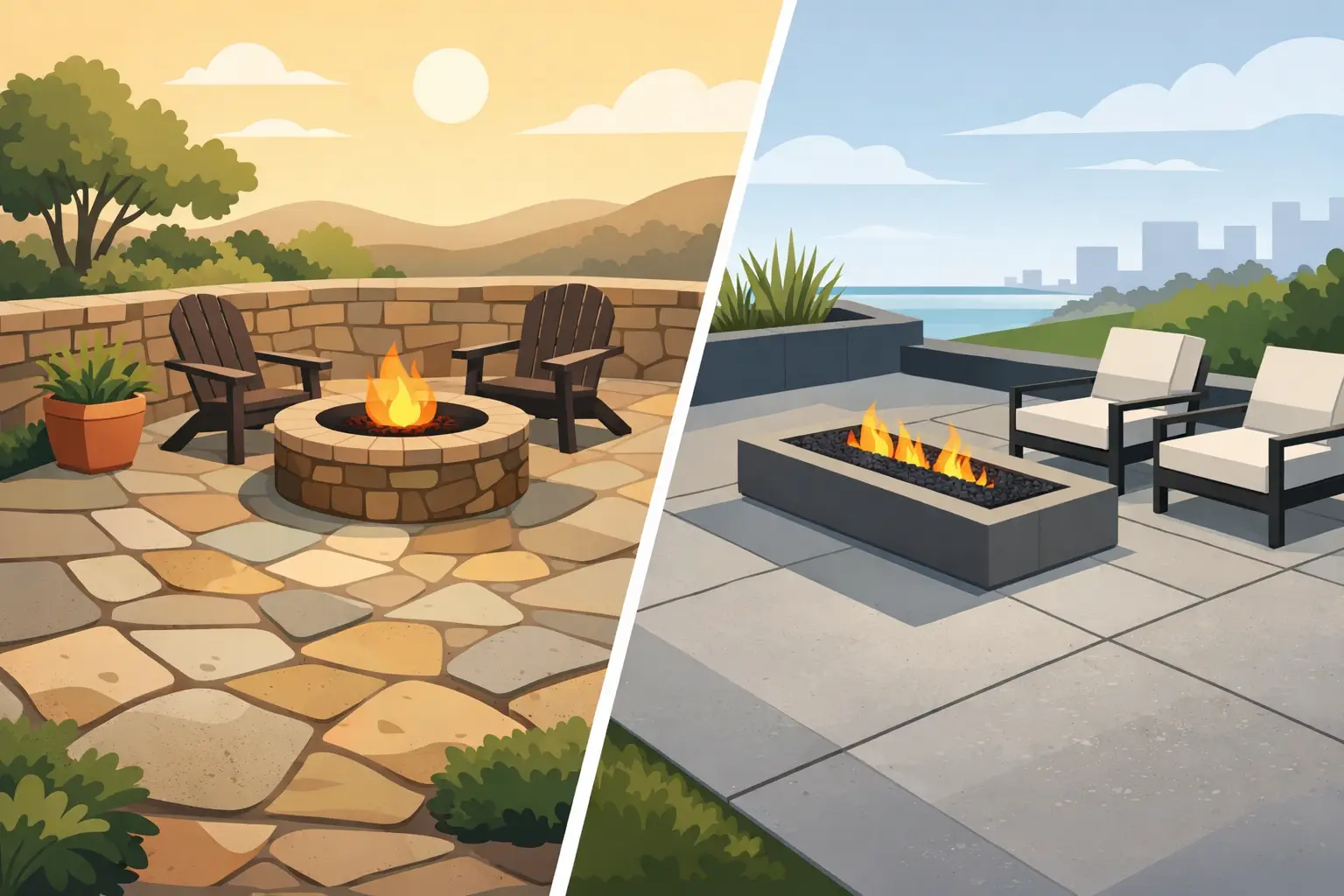
Natural stone brings variation, texture, and an unmistakable sense of permanence. No two pieces are exactly alike, which gives the finished patio depth and authenticity. Bluestone, flagstone, limestone, and similar materials tend to feel integrated with the surrounding landscape, especially in custom outdoor environments where planting, masonry, lighting, and architecture are designed together.
Concrete is more controlled and uniform. It can be poured into large areas, formed into specific shapes, and finished in several ways, from brushed surfaces to stamped patterns. For homeowners who prefer a cleaner, more minimal look, concrete can be a strong fit. It also appeals to those who want a straightforward installation path and a lower initial investment.
That distinction matters because patios do more than fill space. They influence how refined the property feels. On a custom home or a carefully designed backyard, the paving material has to work with the architecture rather than compete with it.
Appearance and design impact
If visual character is the priority, natural stone usually has the advantage. It offers tonal variation, irregular edges, and a surface quality that looks established rather than manufactured. In higher-end landscape projects, that difference is significant. Stone tends to elevate the entire composition, making the patio feel like a considered part of the property instead of a separate construction element.
This is especially true when the backyard includes features such as retaining walls, seat walls, water features, outdoor kitchens, or garden transitions. Natural materials often create a more layered and sophisticated result. They soften hardscape areas and help outdoor spaces feel connected to the home and site.
Concrete can still be attractive, but its strength is different. It delivers cleaner lines and greater consistency. In contemporary settings, that can be exactly the right move. A smooth or lightly textured slab can support a modern design language well, particularly when paired with restrained planting and architectural detailing.
Stamped concrete is often chosen to imitate stone, but it rarely creates the same depth or richness up close. For some properties, that trade-off is acceptable. For others, especially where craftsmanship and material quality are central to the design, the difference is easy to see.
Cost: upfront budget vs long-term value
Natural stone generally costs more than concrete. The material itself is typically more expensive, and installation is often more labor-intensive. Achieving a clean, durable finish with stone requires skill, proper base preparation, and careful placement. That higher entry cost is real.
Concrete is usually more budget-friendly at the outset. For larger patio areas, the savings can be substantial. If the primary goal is to create usable outdoor square footage without stretching the project budget too far, concrete can make sense.
But initial cost should not be the only lens. A patio is a long-term investment in the property. Natural stone often holds its appearance better over time and can contribute more to the premium feel of the landscape. For homeowners focused on lasting value, curb appeal, and a custom result, the higher cost may be justified.
The better question is not simply which option is cheaper. It is which one aligns with the level of finish you want the property to carry for years.
Durability in a four-season climate
For properties that experience freeze-thaw cycles, durability matters. Both materials can perform well, but installation quality is decisive.
Natural stone is inherently durable, and many stone products handle weather exceptionally well when installed on a properly prepared base. Individual pieces can shift over time if the base is poorly constructed, but with professional installation, stone patios are known for long-term resilience. One practical advantage is repairability. If a section settles or a piece becomes damaged, targeted repairs are often more manageable without redoing the entire patio.
Concrete is strong, but it is more vulnerable to cracking. Even well-installed concrete can develop hairline cracks over time due to settling, temperature swings, and ground movement. Control joints help manage where cracks occur, but they do not eliminate the issue. In climates with repeated freezing and thawing, this becomes an important consideration.
That does not mean concrete is a poor choice. It means expectations should be realistic. Concrete can be durable and serviceable for many years, but it is less forgiving aesthetically once cracking or surface wear becomes visible.
Maintenance and aging
Natural stone tends to age with more grace. Minor variation, weathering, and patina often add to its appeal rather than detract from it. Depending on the stone type, sealing may be recommended, but many natural stone patios remain attractive with relatively straightforward upkeep such as occasional cleaning and joint maintenance.
Concrete is also relatively easy to maintain, especially if the surface is sealed. The challenge is that stains, discoloration, surface spalling, and cracks can be more visually disruptive on a uniform slab. Stamped concrete, in particular, may require resealing to preserve its finish and color. If neglected, it can lose some of the visual appeal that made it attractive in the first place.
For busy homeowners, maintenance is not just about effort. It is about how forgiving the material is when real life happens. Outdoor furniture scrapes, planters leave marks, weather shifts, and the patio sees constant use. Materials that still look good through that wear often prove more satisfying over time.
Comfort, safety, and everyday use
A patio should feel as good as it looks. Surface temperature, texture, and traction all influence the day-to-day experience.
Natural stone often stays more comfortable underfoot in direct sun, depending on the material and color selected. Its texture can also provide good slip resistance, which matters around pools, outdoor kitchens, and family gathering spaces. Because there is a wide range of stone types and finishes, the patio can be tailored to the way the space will actually be used.
Concrete performance depends heavily on finish and color. Darker concrete can absorb more heat, and smoother finishes may become slippery when wet. These issues can be addressed in design and installation, but they need to be considered early. A patio is not successful if it looks sharp on day one but feels harsh or impractical during peak use.
Which option is right for your property?
In the natural stone patio vs concrete decision, the best answer usually comes down to priorities.
If you want a patio that feels custom, layered, and architecturally refined, natural stone is often the better fit. It suits homeowners who see the outdoor space as an extension of the home and want materials that reflect quality in a visible way. It is especially compelling in projects where the patio is part of a larger design vision rather than a standalone install.
If you want a simpler solution with lower upfront cost, cleaner geometry, and a more contemporary or utilitarian look, concrete may be the right choice. It can create a polished and functional outdoor area when detailed well and matched to the property style.
The most successful patios are not chosen in isolation. They are selected as part of a broader plan that considers grading, drainage, circulation, planting, lighting, and how the space will be lived in over time. That is where experienced design-build guidance makes a difference. A material might be beautiful on its own and still be the wrong fit for the home, the site, or the way you want the space to perform.
For homeowners who want more than a basic backyard upgrade, the decision deserves that level of care. At Redleaf Landscape Inc, that is the standard – thoughtful design, quality in craft, and outdoor spaces built to feel intentional from every angle.
Choose the material that supports the life you want to live outside, not just the one that looks good in a sample piece.