


30 Mar What Is Included in Landscape Design?
A well-designed yard does not start with shrubs and end with sod. When homeowners ask what is included in landscape design, they are usually asking a bigger question – what does it really take to turn an outdoor area into a space that looks refined, works properly, and holds up over time?
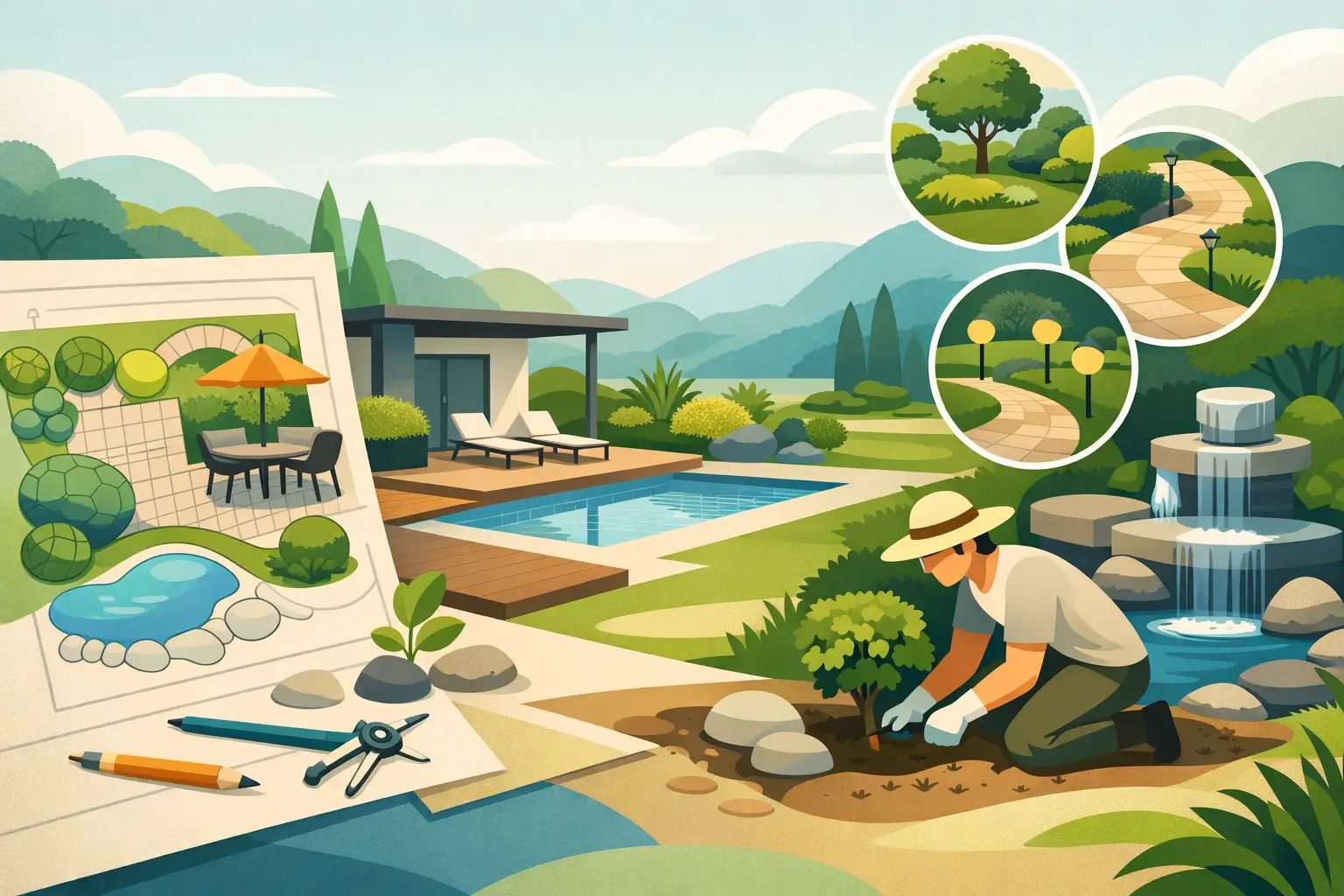
The answer is more involved than many people expect. Professional landscape design is not just about picking plants or deciding where a patio should go. It is the planning framework behind the entire outdoor environment. It considers how the property will be used, how it should feel, how water moves, how materials age, and how every element should relate to the home itself.
For clients investing in a custom outdoor space, that distinction matters. Good design prevents costly revisions, improves long-term performance, and creates a finished landscape that feels intentional rather than pieced together.
What is included in landscape design planning?
Landscape design begins with understanding the property and the people who will use it. Before any material is selected, the design process typically looks at site conditions, architecture, lifestyle goals, and practical limitations. A narrow side yard, a sloped backyard, poor drainage, privacy concerns, or heavy shade all affect what can be built and how the space should be organized.
This early planning stage often includes site measurements, grading considerations, sun exposure, circulation patterns, and a discussion about priorities. Some clients want a quiet retreat. Others need a family-friendly backyard with room for dining, play, and entertaining. Commercial properties may focus more on presentation, durability, pedestrian flow, and lower-maintenance planting.
This is where strong design earns its value. It aligns aesthetics with function before construction begins.
Layout and space planning
One of the most important parts of landscape design is the layout itself. This is the structure of the property – where people move, gather, arrive, and spend time. It determines whether a landscape feels calm and balanced or awkward and disconnected.
A thoughtful layout may include front entry walkways, garden transitions, backyard gathering zones, dining areas, poolside space, service routes, or screening between neighboring properties. The size and placement of these areas matter. A patio that is too small will feel cramped. A walkway that ignores natural foot traffic will be underused. A fire feature set too close to circulation space can interrupt the whole experience.
Good space planning also creates visual order. It helps the property feel proportionate to the home and makes even complex landscapes easier to navigate and enjoy.
Hardscape elements
Hardscape usually forms the backbone of a landscape design. These are the built features that provide structure, function, and durability. Depending on the property, this can include patios, walkways, driveways, steps, retaining walls, seat walls, pool surrounds, outdoor kitchens, fire features, planters, and stone or paver surfaces.
What is included here depends on the goals of the project. A front-yard redesign may focus on entry steps, lighting, and curb appeal. A backyard transformation may center on entertaining, with multiple levels, cooking space, and integrated seating.
Material selection is also part of the design process. Natural stone, concrete pavers, porcelain, wood, and composite materials all offer different looks and maintenance demands. The right choice is not only about appearance. Freeze-thaw performance, slip resistance, durability, and how the material complements the architecture all matter, especially in a climate with seasonal extremes.
Planting design
Planting is where many landscapes gain softness, character, and seasonal interest, but it should never be approached as decoration alone. A planting plan is part of the larger composition. It supports privacy, frames views, defines edges, adds texture, and helps the landscape feel established.
A complete planting design typically includes trees, shrubs, perennials, ornamental grasses, groundcovers, and sometimes annual accents. The mix depends on the style of the home, the maintenance expectations of the client, and the conditions of the site.
This is also where a tailored approach matters. Some clients want clean, architectural plantings with a restrained palette. Others prefer a more natural look with layered textures and a longer bloom season. Neither is automatically better. The right solution is the one that suits the property and the way the owner wants to live with it.
Plant selection should also account for mature size, sunlight, irrigation needs, and resilience. A planting plan that looks full on day one but outgrows the space in three years is not good design.
Grading, drainage, and site performance
The most attractive landscape can still fail if the site does not function properly. That is why grading and drainage are often included in professional landscape design, even if they are not the most visible part of the project.
Water management affects foundations, lawn health, planting success, hardscape longevity, and overall usability. Standing water near patios, runoff toward the house, erosion on slopes, or saturated planting beds can all lead to expensive problems.
Designing for proper drainage may include grading adjustments, catch basins, channel drains, permeable surfaces, swales, dry wells, or other solutions suited to the property. It depends on the land, the soil, and the amount of hard surface being added.
This is one of the clearest differences between basic landscaping and a complete design-and-build approach. Surface beauty matters, but performance underneath it matters just as much.
Lighting and outdoor living features
Landscape design often extends beyond daytime appearance. Lighting is a key part of the plan when the goal is to create an outdoor environment that remains usable and inviting in the evening.
A well-designed lighting plan may include path lights, step lights, accent lighting for trees or architectural features, and subtle illumination around patios and seating areas. Done properly, it improves safety and adds atmosphere without making the property feel overlit.
Outdoor living features are also commonly part of the design scope. These may include pergolas, cabanas, privacy screens, built-in seating, fire pits, fireplaces, outdoor kitchens, and water features. Not every property needs all of these elements. In fact, restraint often creates a better result. The best designs focus on the features that support how the space will actually be used.
For a busy family, that may mean durable entertaining space and low-maintenance planting. For another homeowner, it may mean a quiet garden retreat with layered greenery and subtle lighting. A premium landscape should feel personal, not generic.
Construction details and material coordination
Landscape design is not just conceptual. It also needs to be buildable. That means the design process often includes dimensions, elevations, material transitions, edge conditions, and other technical details needed for accurate installation.
Without that level of coordination, projects can lose quality during construction. Materials may clash, proportions can shift, or details may be improvised on site. That is where craftsmanship suffers.
A fully developed design helps ensure that the finished landscape reflects the original vision. It gives clarity to the build phase and reduces guesswork. For clients who want one accountable partner from concept to completion, this is a major advantage.
That end-to-end mindset is part of what makes a custom project feel cohesive. At Redleaf Landscape Inc, the value is not just in designing attractive outdoor spaces, but in carrying that vision through with precision and quality in craft.
What is included in landscape design for front yards vs. backyards?
The core design principles are similar, but priorities shift depending on the part of the property. Front-yard landscape design often emphasizes curb appeal, arrival experience, lighting, symmetry, and architectural compatibility. It needs to create a strong first impression while still being practical and easy to maintain.
Backyard design is usually more lifestyle-driven. It may include entertaining areas, privacy planting, shade structures, lawn alternatives, family-use zones, or more extensive outdoor living features. The level of detail is often greater because the space serves as an extension of the home.
For commercial properties, the emphasis can be different again. Durability, circulation, visual order, and professional presentation tend to lead the design decisions.
Why landscape design is more than a drawing
Many people think of landscape design as a plan on paper. In reality, it is a decision-making process that shapes how the property will function for years. It connects aesthetics with drainage, materials with maintenance, and lifestyle goals with construction reality.
That is why the question is not only what is included in landscape design. It is also whether those elements have been considered together, with enough care to create a result that feels complete.
When that happens, the landscape does more than look finished. It feels natural to live in, easier to maintain, and better aligned with the home and the people who use it. That is the kind of design worth building.