


23 Apr What Adds the Most Landscape Value?
A front yard can look attractive and still add very little real value. A backyard can be expensive and still miss the mark. When homeowners ask what adds the most landscape value, the answer is rarely a single feature. Value comes from a landscape that looks intentional, functions well, and feels like a natural extension of the home.
That distinction matters. Buyers notice polished curb appeal, but they also notice whether the space is usable, low-maintenance, and built to last. The highest-value landscapes are not the ones with the most accessories. They are the ones where design, craftsmanship, and function work together.
What adds the most landscape value in a home?
The best return usually comes from improvements that solve more than one problem at once. A well-designed front entry improves first impressions and daily arrival. A patio creates living space outside. Proper grading protects the home while making the yard more usable. Mature planting softens architecture, adds privacy, and gives the property a finished look.
In other words, the most valuable landscape upgrades are the ones that improve how the property lives and how it is perceived.
For most homes, the strongest contributors to landscape value are outdoor living spaces, professional hardscaping, healthy and well-scaled planting, landscape lighting, and drainage or grading improvements that protect the investment. These elements tend to outperform purely decorative add-ons because they offer visible impact and practical benefit.
Outdoor living spaces usually lead the list
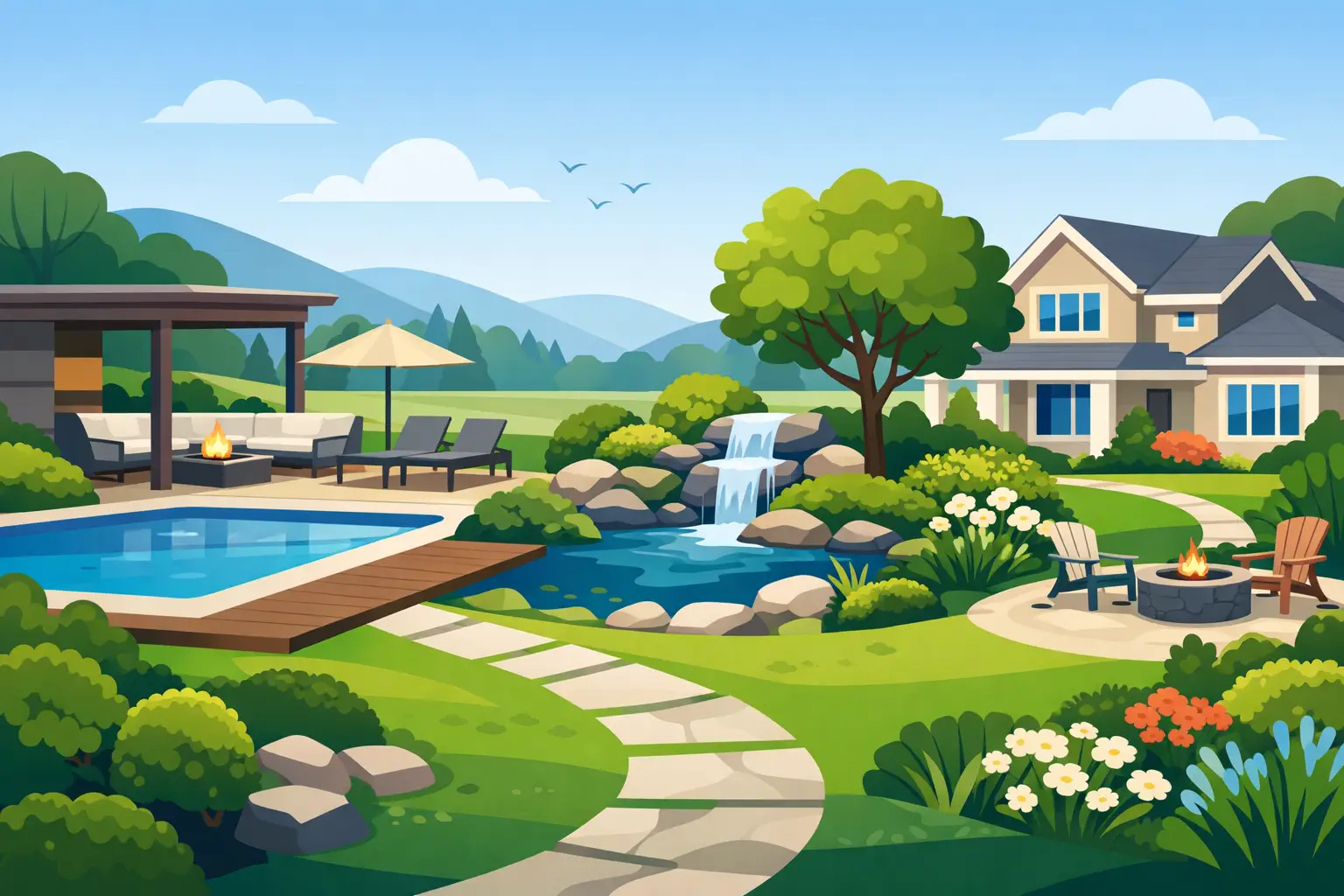
If there is one category that consistently stands out, it is usable outdoor space. A thoughtfully designed patio, terrace, or deck extension can make the property feel larger without changing the footprint of the house. For homeowners, that means more room for dining, entertaining, relaxing, and family time. For buyers, it reads as lifestyle value.
The key is quality and cohesion. A basic slab tucked into the yard may check a box, but it does not create the same impression as a custom outdoor space that is scaled to the home, connected to circulation, and supported by planting, lighting, and finish materials that belong together.
This is where many projects either gain value or lose it. An outdoor kitchen, fire feature, pergola, or built-in seating can be excellent additions, but only when they suit the property and the way the space will actually be used. Overbuilding for the neighborhood or forcing in features that crowd the layout can work against value rather than add to it.
Hardscaping adds value when it feels permanent
Hardscape often does more for resale and long-term value than homeowners expect. Walkways, front entries, retaining walls, steps, driveways, and patios shape the experience of the property every day. When they are designed well and installed properly, they signal quality immediately.
That signal matters because buyers and property owners read hardscaping as a durability investment. They may not know the base preparation or drainage details under the surface, but they can tell when materials are level, edges are crisp, and transitions are clean. Good hardscape gives a property a finished, established feel.
There is also a practical side. Safe, well-planned circulation improves access. Retaining walls can reclaim awkward grades. A better front entry creates a sense of arrival. These are visual upgrades, but they are also functional improvements. That combination is exactly what tends to hold value over time.
Planting matters more than people think
Planting is often treated as the decorative layer at the end of a project. In reality, it is one of the biggest drivers of curb appeal and one of the clearest signs that a landscape has been professionally considered.
The highest-value planting plans are not simply full. They are balanced. They frame the architecture, soften hard edges, create seasonal interest, and fit the scale of the property. They also respect maintenance expectations. A landscape that looks spectacular for one season but becomes overgrown or difficult to manage can quickly lose its appeal.
Mature trees and layered foundation planting tend to have strong value because they make a property feel established. Trees can also improve comfort by adding shade and screening. But there is nuance here. Planting too close to the home, choosing species that outgrow the space, or creating beds that require constant upkeep will not deliver the same return.
A restrained, well-structured planting design usually performs better than an overloaded one. Value comes from confidence and clarity, not clutter.
Lighting extends both beauty and usability
Landscape lighting is one of the most underrated upgrades in residential design. During the day, a property may look complete. At night, without lighting, it can disappear. A professionally lit landscape adds dimension, highlights architectural and planting features, and makes the property feel more refined.
It also improves safety and usability. Path lighting, step lighting, and entry lighting help people move comfortably through the space. Patio and entertaining areas become more functional after dark. For many homeowners, that means the yard gets used more often and for more of the year.
From a value perspective, lighting works because it supports both presentation and performance. It makes the property look elevated while serving a practical purpose. The best systems are subtle. They do not shout for attention. They reveal the space with control and intention.
Drainage and grading are not glamorous, but they protect value
Some of the most important landscape investments are the ones no guest notices right away. If water pools near the foundation, saturates lawn areas, erodes planting beds, or makes patios unusable, the landscape is not doing its job.
Proper drainage and grading can add substantial value because they protect the property itself. They also improve how the yard performs in everyday conditions. A beautiful backyard that stays wet after every rain will never feel fully usable. A front walk that freezes because of poor runoff can become a liability.
For homeowners focused on lasting results, these foundational improvements deserve serious attention. They may not deliver the same instant visual impact as a new patio or planting plan, but they support every visible part of the landscape and preserve the investment over time.
Curb appeal still matters – especially at the front of the home
If the goal is broad market appeal, front-yard improvements often carry outsized influence. Buyers form opinions quickly, and the approach to the home shapes that first impression. A refined front entry, clean walkway, balanced planting, healthy lawn, and well-defined borders can make the entire property feel more valuable before anyone steps inside.
That does not mean every dollar should go to the front yard. It means the front of the property should not be overlooked. In many cases, the most effective approach is to create a strong visual impression at the front while building more functional lifestyle space in the backyard.
The highest-performing landscapes tend to handle both. They greet well and live well.
What adds the most landscape value depends on the property
There is no universal formula because every site has different constraints and opportunities. A compact urban lot may benefit most from a well-planned patio, privacy planting, and lighting. A larger suburban property may see greater value from grading improvements, a custom entry sequence, and defined outdoor rooms. A commercial site may prioritize durability, clean presentation, and low-maintenance planting that supports a professional image.
Budget matters too. If choices have to be made, start with the improvements that shape the space and solve real problems. Solid hardscaping, drainage, circulation, and core planting usually create a better foundation than spending heavily on trend-driven extras.
This is also why integrated design matters. A landscape installed in disconnected phases without a clear overall plan can feel pieced together. By contrast, a property with a coherent design language tends to look more premium and hold value more effectively.
The biggest mistake is spending without a plan
Homeowners sometimes assume landscape value comes from adding more – more stone, more features, more planting, more decorative detail. In practice, value comes from doing the right things well.
A property with a beautifully built patio, disciplined planting, proper drainage, and thoughtful lighting will usually outperform a yard filled with mismatched upgrades. Quality in craft matters. So does restraint. The goal is not to impress with quantity. The goal is to create an outdoor environment that feels complete, functional, and lasting.
That is why design-build execution makes such a difference. When one team considers layout, materials, site conditions, and installation quality together, the result is more cohesive and more durable. For homeowners investing in premium improvements, that level of accountability often separates a project that looks good for a season from one that continues to add value year after year.
For most properties, the answer to what adds the most landscape value is simple in principle even if it is detailed in execution: build outdoor spaces people want to use, make them look like they belong, and make sure they perform as well as they present. If the landscape feels effortless to live with and unmistakably well crafted, value tends to follow.