


24 Oct Permeable Paving Benefits for Better Outdoor Spaces
A beautiful driveway should not send every rainfall rushing toward the street, pooling at the garage, or overwhelming the nearest drain. For homeowners planning a refined patio, front entry, parking area, or garden walk, permeable paving benefits extend far beyond appearance. This system can manage water where it lands while delivering the tailored materials, clean lines, and lasting function expected of a professionally designed outdoor space.
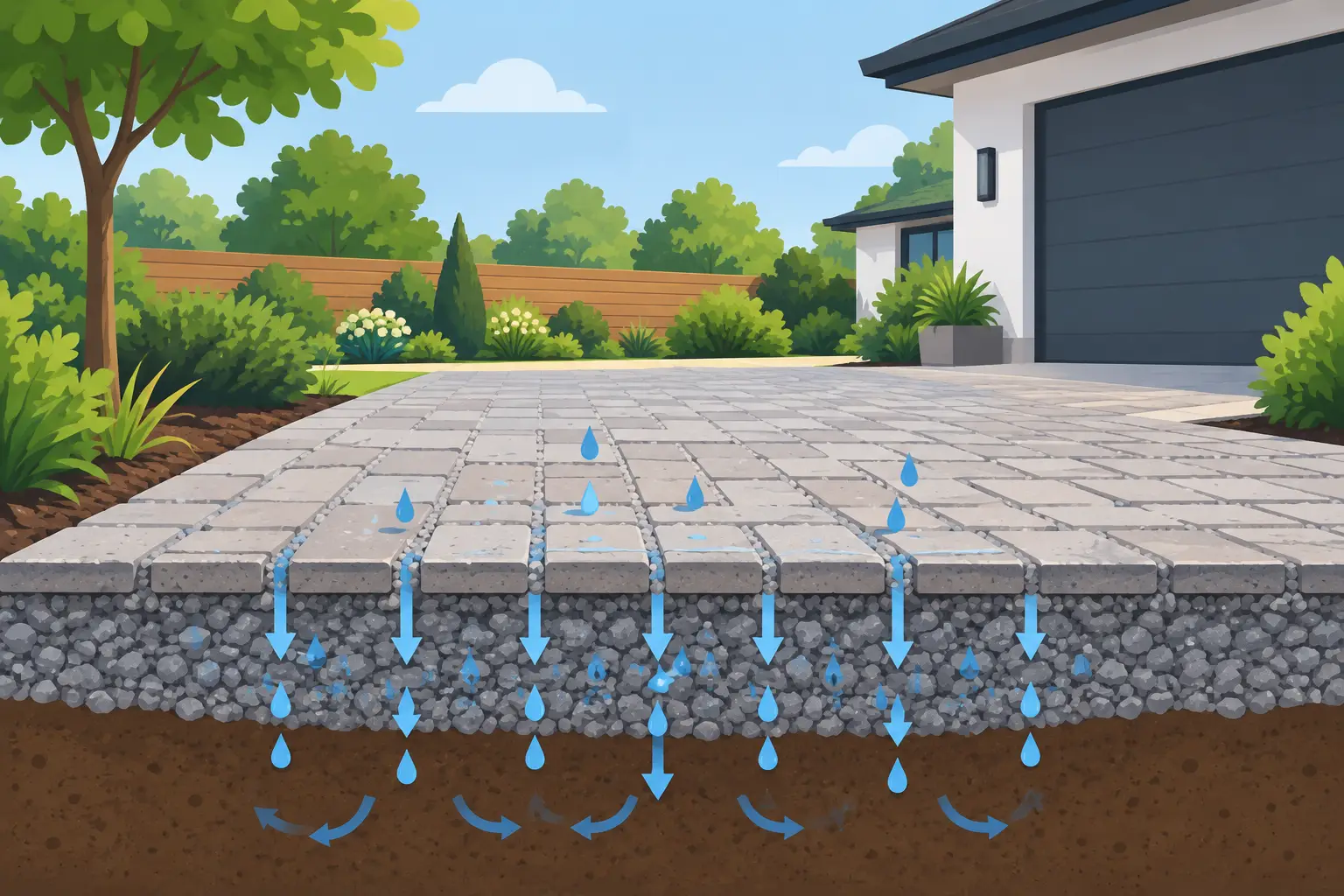
Permeable paving is not simply a standard paver surface with wider joints. It is an integrated installation system: water passes through permeable pavers or joints, moves through carefully graded aggregate layers below, and infiltrates into the ground or is directed to an approved drainage outlet. When it is designed for the property rather than treated as a shortcut, the result can be both visually polished and highly practical.
Permeable Paving Benefits Begin With Smarter Drainage
Traditional hard surfaces shed water. That can be appropriate in some settings, but it also concentrates runoff in a relatively small area. During heavy rain, water may travel quickly across a driveway or patio, carrying sediment and debris with it. On properties with limited grading options, this can contribute to puddling, erosion, and pressure on drainage infrastructure.
Permeable paving slows that process. The surface allows rainwater to move down through the paving system instead of immediately flowing across it. The open-graded stone base temporarily stores water, then releases it gradually into suitable native soil or a designed underdrain system.
For a homeowner, this can mean a more comfortable and usable outdoor space after a storm. A patio is less likely to hold standing water around furniture. A walkway can feel more secure underfoot. Planting beds beside a driveway may receive less concentrated runoff, protecting mulch and reducing washout.
The value is especially clear when a property has several hardscape elements working together. A permeable front walk, driveway apron, rear patio, and side-yard path can all play a role in a broader water-management plan, rather than forcing one drain or one low area to carry the entire burden.
A More Refined Alternative to Visible Drainage Fixes
Drainage solutions do not have to dominate the landscape. Channel drains, catch basins, and exposed swales have their place, but they can interrupt the visual continuity of a carefully planned exterior. Permeable pavement handles part of the drainage function beneath a finished surface, preserving a cleaner look.
That makes it particularly compelling for custom outdoor living areas. The paving can be selected to complement the home’s architecture, whether the desired look is crisp and contemporary, warm and traditional, or natural and garden-forward. Paver shape, tone, laying pattern, edge detailing, and transitions to steps or planting areas all matter. The drainage performance should support the design, not compete with it.
For commercial properties, the same principle applies. Visitor parking areas, pedestrian routes, courtyards, and entry zones benefit from a surface that looks intentional while helping manage stormwater on-site. A well-resolved exterior communicates care before a visitor reaches the door.
Better Groundwater Recharge and Less Runoff
One of the most meaningful permeable paving benefits is its ability to support a more natural water cycle. Impervious surfaces prevent water from soaking into the soil. Permeable systems can return a portion of rainfall to the ground, depending on soil conditions, local requirements, and the system’s design.
This is not just an environmental talking point. Keeping more water on-site can reduce the amount that needs to be moved through pipes, across lawns, or toward municipal systems. It can also support healthier site conditions when paired with properly designed planting areas and thoughtful grading.
That said, infiltration is not automatically appropriate everywhere. Dense clay soils, high groundwater, contaminated soils, steep sites, and locations near certain structures may require an underdrain, a liner, or a different stormwater approach. A responsible design begins with site assessment. It should never assume that every property can simply absorb unlimited rainfall.
Durability Depends on What Is Below the Surface
The finished pavers are what people see, but the base is what determines whether a permeable installation performs well over time. Proper excavation depth, subgrade preparation, edge restraints, aggregate selection, compaction, and final grading are essential. This is where quality in craft becomes visible years later.
A permeable base is different from the dense, compacted base used beneath conventional pavers. It relies on clean, angular aggregate with open voids that store and convey water while still providing structural support. The system must be sized for the anticipated load. A garden path, a family patio, and a driveway used by larger vehicles should not all receive the same specification.
In regions with freeze-thaw cycles, installation quality becomes even more important. A correctly designed system can perform very well in cold weather because its granular base promotes drainage rather than trapping water near the surface. But poor edge restraint, inadequate excavation, or a base that does not match the site can lead to movement, settlement, or uneven areas. Materials alone do not create a durable hardscape. Design and installation do.
Permeable Paving Benefits for Everyday Living
The practical advantages become most apparent in daily use. A driveway that drains efficiently is easier to navigate after rain. A poolside path with reduced surface water can feel safer. A patio that directs water through the surface instead of across it helps protect the comfort of the space during changing weather.
There is also flexibility in how permeable paving is used. It can create a formal motor court, a graceful front approach, a low-maintenance backyard dining terrace, or a stable route through a landscaped side yard. Because modular pavers can often be removed and reset, they may also offer an advantage if future access to underground utilities is needed.
The aesthetic opportunities are substantial, but restraint matters. A premium landscape feels cohesive when paving relates to the home, surrounding stonework, planting palette, and intended use of each area. One surface may need to quietly frame a garden, while another becomes the foundation for entertaining. The best choice is rarely the most dramatic sample in isolation. It is the material that serves the whole property.
What Maintenance Really Looks Like
Permeable pavement is often described as low maintenance, which is fair, but it is not no maintenance. The joints or surface openings must remain open enough for water to enter. Leaves, soil, lawn clippings, and fine sediment can gradually reduce infiltration if they are allowed to accumulate.
Routine sweeping and prompt cleanup of organic debris go a long way. Periodic vacuum sweeping may be appropriate for higher-use surfaces or areas exposed to significant sediment. If joint aggregate is displaced, it should be replenished with the material specified for the system. Avoid sealing the surface or filling joints with ordinary sand, as either can interfere with drainage.
Winter care deserves attention as well. Snow can be cleared with standard equipment when operators use appropriate blade settings and avoid catching paver edges. Deicing products should be selected carefully according to the paver manufacturer’s guidance and the landscape’s needs. Excessive salt use can affect adjacent plants and hardscape materials, regardless of whether the paving is permeable.
When Permeable Paving May Not Be the Best Choice
A thoughtful recommendation includes the trade-offs. Permeable paving can carry a higher upfront cost than a basic asphalt or conventional concrete surface because of excavation, engineered aggregate layers, drainage planning, and installation precision. It also requires the right site conditions and a contractor who understands the complete system.
It may not be the ideal answer for areas with frequent fine-sediment loading, sites where regular maintenance is unlikely, or locations with soil and groundwater conditions that make infiltration unsuitable. In those cases, conventional paving paired with well-designed drainage may be the better investment.
The decision should be based on how water moves across the property, the expected traffic load, the architecture of the home, and the level of long-term care the owner is prepared to provide. A paving plan that looks impressive on installation day but ignores these factors is not a premium solution.
For a property designed as an extension of the home, every surface should earn its place. Permeable paving gives homeowners a way to pair thoughtful stormwater management with enduring materials and a finished appearance that feels considered from the curb to the backyard. The right system begins with a clear understanding of the site, then turns that knowledge into an outdoor space built to perform beautifully through every season.