


14 Jul Outdoor Living Trends for 2026 That Last
A beautiful backyard is no longer defined by a single patio, a few plantings, and outdoor furniture brought out in May. Homeowners are investing in spaces that work harder: places to cook, host, relax, play, and step away from the pace of the house without leaving home. The outdoor living trends for 2026 reflect that shift toward purposeful, well-built environments that feel personal and perform through changing seasons.
For homeowners planning a significant landscape investment, the most valuable trend is not a particular finish or feature. It is a complete design approach where every element, from the grading beneath a patio to the lighting around a planting bed, supports the way the property is meant to be lived in.
Outdoor Living Trends for 2026: Rooms With a Reason
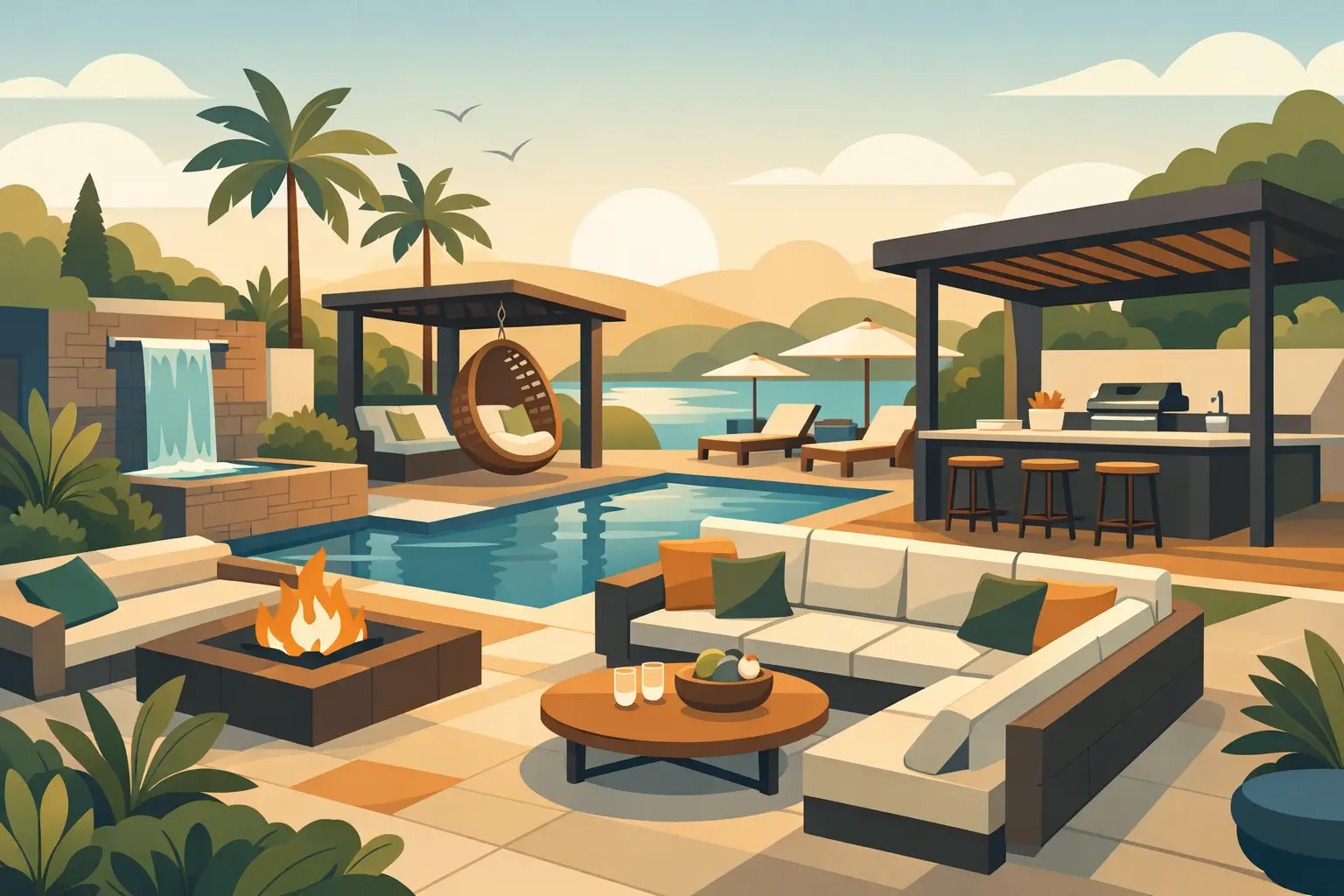
The strongest outdoor spaces are being designed as a series of connected rooms rather than one open expanse. A dining area needs enough room for chairs to move comfortably. A lounge zone benefits from a sense of enclosure and a clear view of the garden or fire feature. A poolside area may need durable, slip-resistant surfaces, storage, and circulation that does not cut through the main entertaining space.
This approach creates a more polished result because each area has a job. It also makes a property more adaptable. A family might use one zone for casual weekday meals and another for larger gatherings, while a quieter corner becomes a retreat for morning coffee or reading.
The trade-off is that more defined spaces require careful planning. Too many small zones can make a modest yard feel crowded. On a compact property, one flexible terrace with built-in seating, layered planting, and adjustable lighting may deliver more value than trying to fit every possible feature into the plan.
Natural Materials, Used With Intention
In 2026, material selection is moving away from surfaces chosen only for immediate visual impact. Homeowners want finishes that age well, feel substantial, and belong with the architecture of the house. Natural stone, textured concrete, quality porcelain, warm wood accents, and carefully detailed masonry all have a place when they are selected for the right setting.
The key is restraint. A landscape does not need five competing materials to look custom. A cohesive palette can create a stronger impression, especially when hardscape colors relate to the home’s exterior, existing stonework, or interior finishes visible through large windows and doors.
Durability matters just as much as appearance. In four-season climates, freeze-thaw cycles, drainage, base preparation, and edge detailing have a direct effect on how a patio or walkway performs over time. A premium surface installed without proper preparation will not deliver a premium result. Quality in craft begins below grade, where much of the work is never seen but always felt.
Shade and Shelter Become Essential
Outdoor living is extending beyond peak summer, and homeowners are asking for more control over sun, wind, and light rain. Pergolas, covered structures, privacy screens, and thoughtfully positioned trees are becoming central parts of the design rather than last-minute additions.
A structure should do more than cast shade. It can frame a dining area, create a transition between house and garden, support lighting, and give a large yard a stronger sense of scale. Louvered systems offer flexibility, while a fixed roof provides dependable coverage. The best choice depends on how the space will be used, the orientation of the yard, local permitting requirements, and the architecture of the home.
Plant-based shade remains equally valuable. A well-placed canopy tree can cool a sitting area, soften hardscape, and make a new landscape feel established over time. It requires patience, but it brings a natural character that a built structure alone cannot replicate.
Outdoor Kitchens Get Smarter, Not Bigger
The large outdoor kitchen is still appealing for homeowners who entertain often, but the trend is toward better planning rather than more appliances. A compact cooking station with generous prep space, durable cabinetry, convenient waste storage, and proper task lighting can outperform a sprawling installation that sees limited use.
Consider the route between the indoor kitchen and the outdoor cooking area. If the layout requires repeated trips across the yard, a refrigerator or beverage station may be worthwhile. If meals are usually simple, a grill, counter space, and nearby dining area may be all that is needed.
Fire features are following a similar path. Clean-lined gas fire tables and fireplaces remain popular because they are easy to use and integrate well into contemporary designs. Wood-burning features offer a more traditional experience, but they require more space, maintenance, and attention to local regulations. The right feature is the one that matches the household’s habits, not the one that occupies the most square footage.
Planting With Purpose and Resilience
One of the most lasting outdoor living trends for 2026 is the return to planting as a functional part of the landscape. Gardens are being asked to provide privacy, seasonal interest, habitat, shade, drainage support, and a softer counterpoint to built features.
This does not mean every property needs a wild or informal garden. A refined landscape can still support biodiversity and reduce maintenance when the plant palette is appropriate for the site. Native and climate-adapted plants, layered evergreens, ornamental grasses, flowering perennials, and deciduous shrubs can create a garden with structure in every season.
Water-conscious design is also becoming more practical. Rather than treating drainage as an invisible problem, homeowners are incorporating grading, permeable surfaces, rain gardens, and planting zones that help manage runoff. These choices protect the property while making the landscape feel more natural and complete.
A low-maintenance garden is not a no-maintenance garden. The goal is to reduce unnecessary upkeep through intelligent plant selection, proper soil preparation, sensible spacing, and irrigation where it provides real value. An overly dense planting plan may look full on installation day, but it can become difficult to manage as plants mature.
Lighting That Creates Atmosphere
Landscape lighting is becoming more architectural and less decorative. The best systems make paths easier to navigate, highlight material textures, reveal the depth of planting beds, and create a welcoming view from inside the home.
Rather than flooding the yard with bright fixtures, designers are using layers of low-level path lighting, subtle uplighting, step lights, and focused illumination at key gathering areas. The effect should feel warm and intentional. When every tree, wall, and border is lit at the same intensity, the landscape loses its sense of depth.
Lighting also extends the useful life of outdoor spaces. A patio that feels inviting after sunset is more likely to become part of everyday life, whether it is used for a late dinner, a conversation around the fire, or a quiet moment at the end of the day.
Technology Should Stay in the Background
Convenience remains part of modern outdoor design, but visible technology is giving way to integrated solutions. Homeowners want lighting controls, irrigation scheduling, audio, and heating options that are easy to manage without filling the landscape with exposed wires, bulky equipment, or distracting fixtures.
The design must come first. Technology should support the experience of the space, not become the experience itself. Planning utilities early allows equipment, outlets, drainage, and access points to be accommodated cleanly before hardscape and planting are installed.
Design for Your Life, Not a Trend Cycle
The most successful outdoor projects in 2026 will not look identical. A young family may prioritize open lawn, durable surfaces, and storage. Frequent hosts may choose a covered dining area, outdoor kitchen, and layered lighting. A homeowner seeking a private retreat may place greater value on screening, water, planting, and comfortable lounge seating.
A custom landscape earns its value when it reflects those priorities with clarity. At Redleaf Landscape, that means considering the full property, then bringing design, craftsmanship, and installation together in a finished environment that feels considered from every angle.
Start with the moments you want the yard to hold: the first coffee outside, a long dinner with friends, children moving freely through the garden, or a quiet view from the kitchen window. Those everyday moments should guide the design long after the trends of 2026 have changed.