


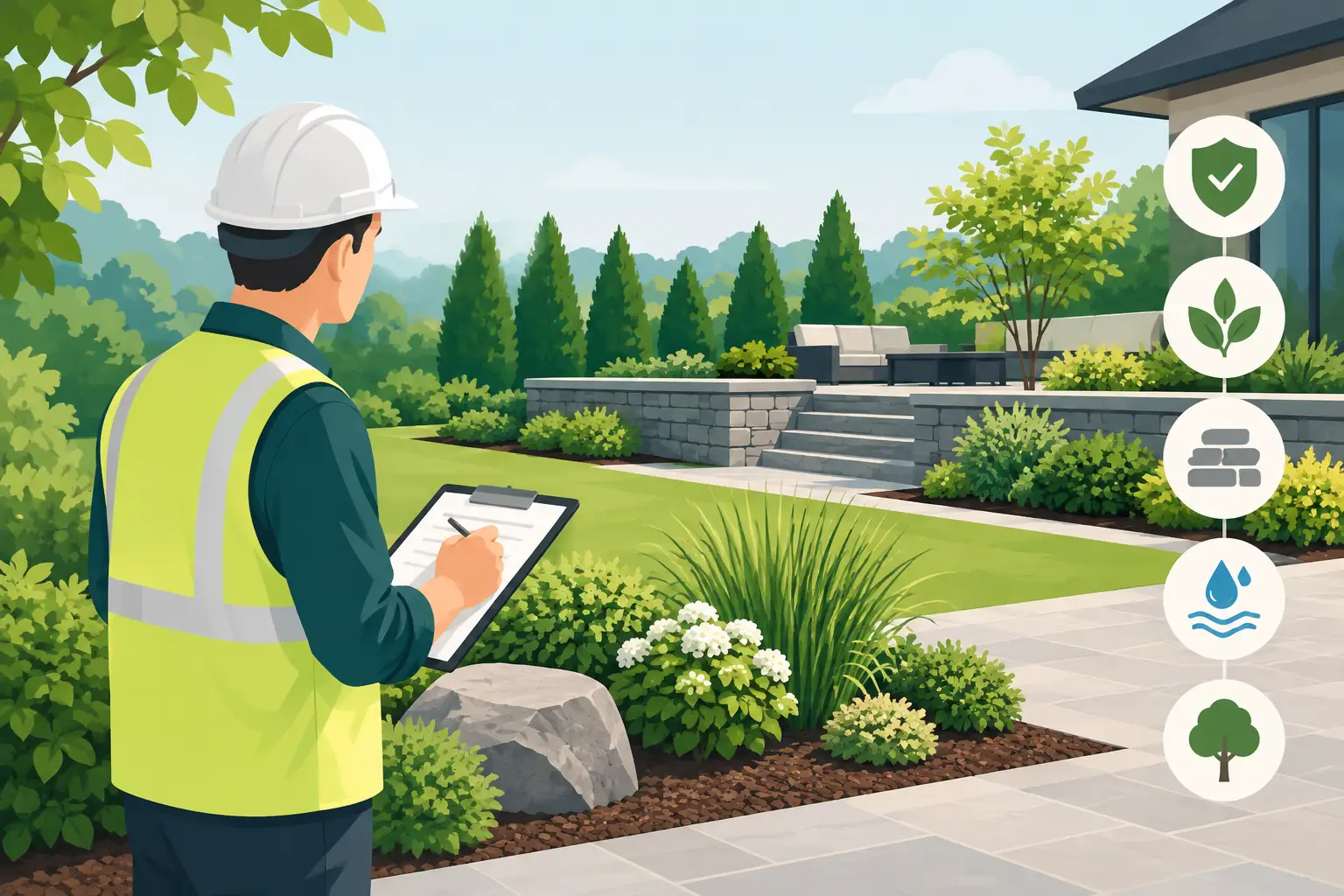
26 Sep Landscape Construction Quality Standards Explained
A finished landscape can look impressive on installation day and still fall short within a season. Water may settle beside the foundation, pavers may shift, plant beds may struggle, or a carefully planned entertaining area may not function the way it appeared on paper. Landscape construction quality standards are what separate a surface-level makeover from an outdoor environment designed to perform, endure, and complement the home.
For homeowners and property decision-makers, quality is not simply a matter of choosing premium stone or mature plant material. It is the disciplined execution behind every visible feature: the base beneath a patio, the slope behind a garden bed, the drainage route below a lawn, and the finishing details that make the entire property feel intentional.
What Quality Means in Landscape Construction
High-quality landscape construction begins with a clear connection between design and site conditions. A plan may include a generous patio, retaining walls, planting areas, outdoor lighting, and a new lawn, but each element must work with the property’s grade, drainage patterns, soil, access points, and existing structures.
A quality standard is not one fixed detail applied to every property. The correct approach depends on the site. A compact urban yard may require careful excavation and drainage planning around neighboring properties. A large family backyard may need durable circulation routes, distinct play and dining zones, and planting that can handle regular use. Commercial landscapes often place greater emphasis on public safety, accessibility, visibility, and long-term maintenance.
The common standard is thoughtful coordination. Materials, structural preparation, and finishing work should support the landscape’s intended use rather than compete with it.
Start Below the Surface
The most consequential parts of a landscape project are often the parts no one sees once construction is complete. Proper excavation, base preparation, compaction, and drainage are foundational to the performance of patios, walkways, driveways, retaining walls, and lawns.
Grading and Drainage Must Be Deliberate
Water is one of the leading causes of landscape failure. When a patio is installed without the proper pitch, water can pool on the surface or run toward the home. When grades are adjusted carelessly, a project can create drainage problems in adjacent beds, along property lines, or around foundations.
Quality construction establishes where water will go before hardscape materials are installed. That may involve shaping the grade, incorporating drainage systems where appropriate, and ensuring paved surfaces direct water away from structures. The solution should be tailored to the property, not treated as an afterthought once puddles appear.
For a homeowner, this work is difficult to judge after the fact. Ask the contractor how water will be managed during heavy rain and how changes to the yard’s elevation will affect existing drainage. A professional answer should account for the whole site, not only the new patio or walkway.
Base Preparation Determines Whether Hardscapes Stay Level
Interlocking pavers, natural stone, and concrete all need a stable, properly prepared foundation. A beautiful pattern cannot compensate for an inadequate base. Without correct excavation depth, suitable aggregate, thorough compaction, and carefully installed bedding material, surfaces can settle, heave, separate, or develop uneven edges.
The required base depth and construction method will vary by material, soil conditions, drainage, and expected traffic. A pedestrian garden path does not face the same demands as a driveway. The standard is not to overbuild every feature without reason. It is to build each feature for its actual use and its conditions.
Landscape Construction Quality Standards for Materials
Material selection should balance appearance, durability, maintenance, and context. A stone that looks exceptional beside a contemporary home may not be the practical choice for a shaded pool deck. A wood feature can add warmth and character, but it requires different detailing and maintenance expectations than masonry or composite materials.
Quality is also about consistency. Pavers should be selected and laid with attention to color variation, cuts, edge restraint, and transitions. Natural stone should be sorted and placed with an eye for thickness, texture, and joint treatment. Retaining wall components should be compatible with the wall’s height, load, and drainage requirements.
Plant material deserves the same consideration. Healthy plants, correct planting depth, appropriate soil preparation, and species suited to light and moisture conditions give a landscape a stronger start. A dense planting plan may look complete immediately, but it can create overcrowding and maintenance issues as plants mature. In other cases, a more layered approach allows the garden to develop with balance over time.
Precision Shows at the Edges
Premium landscape work is recognized in the transitions. These are the places where paving meets planting, where a step meets a terrace, where a wall meets grade, and where lighting integrates with circulation and architecture.
Clean lines alone are not enough. Edges must also be secure, safe, and designed to last. Steps should feel comfortable underfoot, with consistent dimensions and appropriate proportions. Walkways should lead naturally from one destination to another. Patio joints should be even and intentional. Retaining walls should align with the surrounding grade rather than appearing placed onto it.
Finishing details are not cosmetic extras. They influence safety, usability, and the sense that the landscape belongs to the property. When those details are handled well, an outdoor space feels composed without calling attention to the individual construction decisions behind it.
Function Should Guide the Build
A landscape is successful when it supports the way people actually live. That means a dining area needs enough room for chairs to move comfortably. A fire feature needs thoughtful clearance and seating arrangement. A pool surround should account for wet traffic, drainage, and durable materials. A front entrance needs a clear, welcoming path that holds up through changing seasons.
This is where a design-and-build approach offers a meaningful advantage. The team creating the concept understands how it will be constructed, and the installation team has a clear picture of the intended finished result. Fewer handoffs can reduce missed details, conflicting assumptions, and costly changes during construction.
For Redleaf Landscape Inc., that connection between design, craftsmanship, and installation is central to creating outdoor spaces that feel personal while meeting the practical demands of everyday use. A landscape should reflect the homeowner, but it must also perform for the homeowner.
How to Evaluate a Contractor’s Quality Process
Before construction begins, the right questions can reveal a great deal about a contractor’s standards. Ask how the company evaluates drainage and grading, what preparation is planned beneath hardscape areas, and how changes in site conditions are handled. Review drawings, material selections, and project scope closely enough to understand what is included.
You should also ask how the contractor protects existing features, manages access, and maintains the site during construction. On a well-run project, the work area is organized, communication is clear, and each phase follows a logical sequence. There may be unavoidable disruption during excavation and installation, especially in tight GTA properties, but the process should never feel careless or improvised.
Project portfolios can help, particularly when they show work that has been completed long enough to demonstrate durability. Look beyond broad views. Notice the alignment of stonework, the transitions around steps, the relationship between planting and architecture, and whether the landscape appears designed for use rather than photographs alone.
A Finished Landscape Should Improve With Time
The best landscape construction does not rely on immediate visual impact alone. It anticipates seasonal changes, weather exposure, plant growth, and daily life. Stone surfaces should remain stable. Drainage should continue to direct water appropriately. Planting should gain presence as it establishes. Outdoor spaces should become easier to enjoy because their layout and materials were considered from the beginning.
Quality standards are ultimately a form of respect for the property and the investment being made in it. Choose a team that can explain not only what your landscape will look like, but also how it will be built, how it will handle the conditions of your site, and why each construction decision supports the years ahead.