


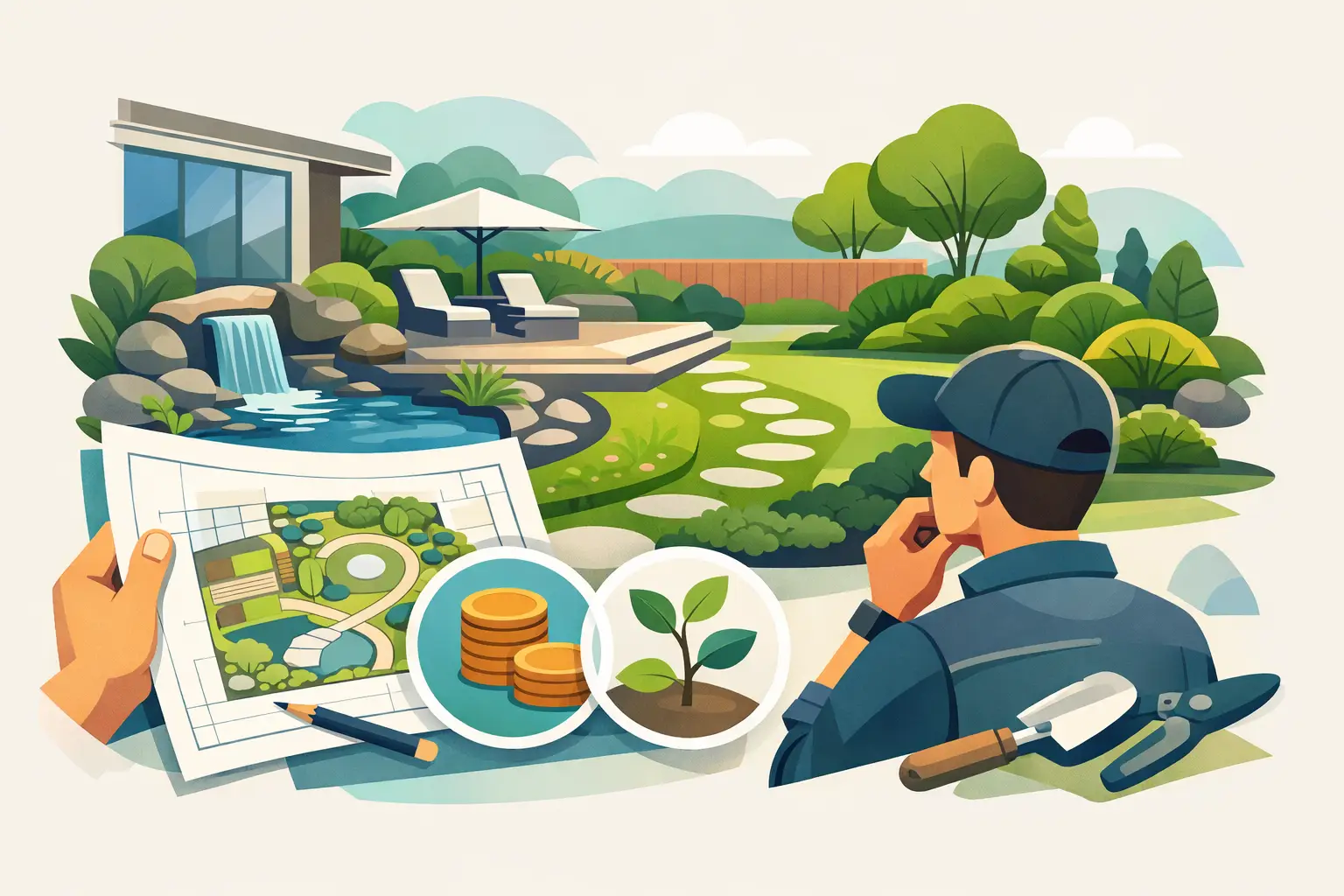
08 Jun Is Professional Landscape Design Worth It?
A beautiful yard can still fall short if it does not work for the way you live. The patio is too small for entertaining, the grading sends water toward the foundation, the plantings look good for one season and struggle after that. That is usually the moment homeowners start asking, is professional landscape design worth it?
For the right property, the answer is yes – not because a designer adds decorative extras, but because a well-planned landscape solves problems before installation begins. It brings structure to the project, aligns the outdoor space with the home, and helps ensure that what gets built is functional, durable, and visually cohesive. When the goal is a custom outdoor environment rather than a few disconnected upgrades, professional design often becomes the difference between a yard that looks finished and one that truly performs.
Why homeowners ask if professional landscape design is worth it
Most people do not question the value of design because they dislike good design. They question it because they are trying to make a smart investment. If you are already budgeting for stonework, planting, lighting, drainage, or a pool area, it is reasonable to ask whether paying for design separately creates real value or simply adds cost.
The short answer is that design is where the value gets defined. Without it, decisions are often made piece by piece. A homeowner adds a walkway one year, a patio the next, and screening or planting later. Each improvement may be fine on its own, but the property can still feel fragmented. Dimensions may be off, circulation may feel awkward, and materials may not relate well to the architecture.
Professional landscape design creates a plan before money is spent in the ground. That plan considers how the site functions, how people move through it, what the property needs structurally, and how each feature works together. It is not just about appearance. It is about building the right outdoor space the first time.
What you are really paying for
When people hear “landscape design,” they sometimes picture sketches, plant suggestions, and aesthetic preferences. In a premium design-build setting, the scope is much deeper.
You are paying for site analysis, scale, proportion, material coordination, layout logic, grading awareness, and practical decisions that affect how the finished landscape will look and perform over time. You are also paying for foresight. That means understanding where drainage issues may develop, how sun and shade affect planting success, how retaining elements should integrate into the grade, and how outdoor living areas should be sized for real use.
Good design also protects the investment in installation. A poorly planned patio that needs to be adjusted after construction is expensive. Planting in the wrong location is expensive. Discovering late in the process that you do not have enough space for dining, circulation, and a grill area is expensive. Design reduces those avoidable costs by forcing clarity early.
For busy homeowners, there is another form of value that matters just as much: fewer decisions under pressure. A design plan creates direction. Instead of making dozens of fragmented choices during construction, you move forward with a cohesive vision.
Is professional landscape design worth it for every project?
Not always. If you are replacing a few shrubs, refreshing mulch beds, or making a minor update to an already functional yard, a full design package may be more than you need. There are projects where straightforward installation work is perfectly appropriate.
But once the project includes multiple elements – such as a patio, planting, lighting, privacy screening, grading improvements, front entry enhancements, or a full backyard transformation – the value of design rises quickly. The more moving parts involved, the more important planning becomes.
This is especially true for properties where the landscape needs to do more than look attractive. Families want outdoor spaces that support dining, entertaining, relaxation, and play. Professionals want a yard that feels polished without becoming another maintenance burden. Commercial properties need curb appeal, durability, and a presentation that reflects the brand or building standard. In all of those cases, design is not an extra. It is the framework that makes the outcome successful.
Where design tends to pay off most
The return is usually strongest when the property has clear challenges or clear ambition. A sloped lot, poor drainage, limited privacy, awkward access, or an underused backyard all benefit from thoughtful planning. So does a property where the owner wants a refined, custom result that feels like an extension of the home rather than an assortment of upgrades.
It also pays off when long-term value matters. A professionally designed landscape is easier to phase intelligently, easier to maintain with purpose, and more likely to hold its visual integrity over time.
The hidden cost of skipping design
The biggest mistake homeowners make is assuming they can save money by skipping the planning stage. Sometimes they do save on the front end. But they often spend more later correcting problems that should have been addressed before construction began.
A common issue is layout. Patios are built too small, walkways feel forced, sightlines from the house are ignored, and focal points land in the wrong place. Another issue is material inconsistency. Without a unifying design direction, one hardscape decision does not always support the next. The result can feel patchwork, even if every individual component is high quality.
There is also the performance side. Drainage, grading, and plant selection are not glamorous topics, but they matter. Water management problems can shorten the life of hardscaping and create headaches around foundations or turf areas. Plants that are chosen for appearance alone may underperform in the site conditions available. These are the kinds of details that separate a landscape that looks good at completion from one that continues to work well year after year.
Design value goes beyond resale
Homeowners often ask whether landscape design increases property value. It can, especially when the finished work improves curb appeal, expands usable outdoor living space, and complements the architecture of the home. A well-designed front entry creates a stronger first impression. A functional backyard can make the property more attractive to future buyers.
But resale is only one part of the equation, and often not the main reason people invest. The more immediate return is in daily use. A backyard that supports entertaining, family time, quiet evenings, and better circulation has real lifestyle value. A front landscape that feels polished and intentional changes how the property is experienced every day.
That kind of return is harder to calculate, but it is often what makes the investment feel worthwhile. When the outdoor environment is designed around how you actually live, the property becomes more enjoyable, more complete, and more aligned with the standard of the home itself.
Why design-build often delivers the strongest value
One reason homeowners hesitate on design is the fear of paying for a concept that proves difficult to build. That concern is fair. A design only creates value if it can be executed properly.
This is where a design-build approach has a clear advantage. When the same professional team handles consultation, design, and installation, the process is more accountable. The design is informed by construction realities from the start. Budget conversations happen earlier. Material choices can be made with performance and installation quality in mind, not just appearance.
It also helps preserve the integrity of the original vision. Too often, projects lose coherence when design and construction are separated and communication breaks down between multiple parties. A single team can carry the project from concept through completion with greater consistency and attention to detail.
For clients who value efficiency, that matters. You are not just buying drawings. You are investing in a process that reduces friction and improves the odds of a finished result that matches expectations.
So, is professional landscape design worth it?
If your goal is a basic cleanup or a simple refresh, maybe not. If your goal is a custom, high-function outdoor space that looks refined, performs well, and feels intentional from every angle, it usually is.
Professional landscape design is worth it when you want more than installation. It is worth it when the property has challenges to solve, when the project involves multiple components, and when quality, cohesion, and long-term performance matter. It is also worth it when you want your outdoor space to reflect the same care and character as the home itself.
That is why experienced firms such as Redleaf Landscape Inc build around design, craftsmanship, and execution rather than treating planning as an afterthought. The real value is not in having a design on paper. It is in what that design allows the property to become.
A well-designed landscape should not feel like an accessory. It should feel like the property was always meant to be this way.