


26 Oct How to Upgrade Commercial Curb Appeal With Purpose
A customer often forms an opinion of your business before reaching the front door. Cracked paving, overgrown beds, poor lighting, or an unclear entry can suggest neglect, even when the operation inside is exceptional. Knowing how to upgrade commercial curb appeal means treating the exterior as a working part of your brand, not an afterthought. The goal is a property that feels welcoming, organized, and built to perform through every season.
Why Commercial Curb Appeal Deserves a Design Strategy
Commercial curb appeal does more than make a building look attractive. It helps visitors understand where to go, gives tenants and employees confidence in the property, and sets a standard for the experience ahead. For offices, retail centers, hospitality properties, medical practices, and multi-unit developments, that first impression can influence trust before a conversation begins.
The strongest improvements are not usually the most decorative. They are the ones that make the site easier to navigate while bringing structure, color, and visual balance to the architecture. A well-positioned walkway, a clean planting edge, and lighting that draws attention to the entrance can have more impact than adding more plants without a plan.
It also pays to think long term. Commercial sites receive constant foot traffic, vehicle traffic, salt exposure, and weather changes. Materials and plantings need to hold their appearance under real conditions, not just look impressive on installation day.
Start With a Property-Level Assessment
Before selecting plants, pavers, or site furnishings, look at the property from the perspective of someone arriving for the first time. Drive in from the street. Park where a guest would park. Walk to the main entrance. Notice every point where the route feels uncertain, inconvenient, or visually tired.
Pay close attention to the areas that carry the most weight: street-facing signage, parking lot edges, pedestrian routes, the entrance zone, and any outdoor seating or gathering space. These are the locations where thoughtful landscape design produces the clearest return.
A useful assessment considers practical issues alongside appearance. Is drainage moving water away from the building and walkways? Are planting beds too narrow to support healthy growth? Does the main entrance compete with secondary doors or service areas? Are utilities, waste enclosures, and loading areas visible from customer-facing spaces? Addressing these concerns early prevents a cosmetic project from becoming an expensive correction later.
How to Upgrade Commercial Curb Appeal at the Entrance
The entrance is where curb appeal becomes an experience. It should be immediately visible from the parking area and clearly distinguished from other parts of the building. If visitors hesitate before locating the door, the arrival sequence needs refinement.
Hardscaping establishes the foundation. A wider walkway, well-defined paving pattern, or carefully proportioned entry plaza can make the building feel more intentional and accessible. The material choice should suit the architecture and expected traffic. Natural stone can create a refined, established appearance, while concrete pavers may offer flexibility for high-use areas and future repairs. The right choice depends on the property, budget, maintenance plan, and desired character.
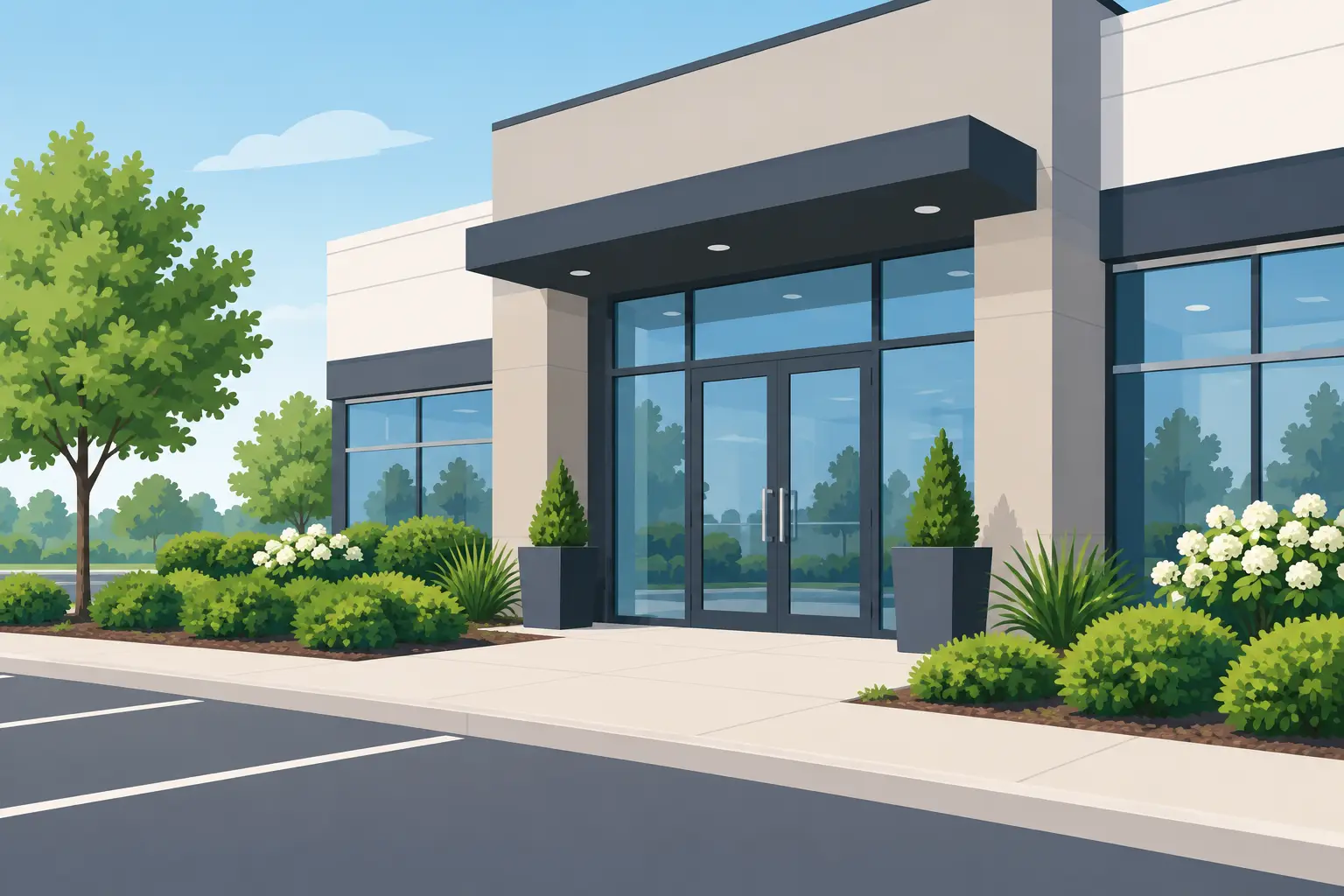
Planting should frame the entrance rather than hide it. Use layers of low plant material, structured shrubs, and occasional vertical accents to guide the eye toward the door. Avoid placing large shrubs where they block signage, windows, or sightlines. For professional properties, a clean composition with repetition often feels stronger than a crowded collection of unrelated colors and textures.
Site furnishings can also strengthen the entry when they serve a purpose. Benches, planters, bike parking, and receptacles should feel coordinated with one another and positioned so they do not interfere with pedestrian flow. Small details matter because they signal that the entire property is managed with care.
Build a Planting Plan for All Four Seasons
A commercial landscape should not depend on a short burst of summer color. A layered planting plan creates interest across the year while keeping maintenance practical. Evergreens provide winter structure, ornamental grasses add movement and texture, flowering perennials offer seasonal color, and deciduous trees create shade and scale.
The best palette is one suited to the local site. Sun exposure, wind, soil conditions, irrigation access, and snow storage all affect what will thrive. Selecting plant material solely for appearance can lead to sparse beds, repeated replacements, and an inconsistent presentation within a few seasons.
Use repetition to create a polished result. Repeating key plants along walkways, building edges, and entrance beds ties a large property together. Seasonal containers can introduce more vivid color near the door, where they are easy to refresh and where their impact is most visible. This approach keeps the landscape composed instead of overly busy.
Maintenance should shape the design from the start. Beds need enough room for plants to mature without spilling onto paths. Mulch, edging, and accessible irrigation reduce the work required to keep the property crisp. On larger sites, grouping plants with similar water and care needs makes ongoing service more efficient.
Use Lighting, Signage, and Screening to Finish the Site
Landscape lighting extends the value of a commercial property after sunset. It improves visibility at steps, changes in grade, walkways, and entrances while adding depth to the landscape. The most effective lighting is purposeful and restrained. It highlights architectural features, key trees, and arrival routes without creating glare for drivers, tenants, or neighboring properties.
Signage deserves the same level of attention. A sign should be visible, legible, and integrated into the landscape rather than placed as an isolated object in a patch of lawn. Low planting and a clean stone or masonry base can give monument signs a more permanent, professional presence. Keep plant material below the sign face and plan for its mature height.
Screening is equally valuable. Mechanical units, dumpsters, loading areas, and utility equipment may be necessary, but they do not need to dominate the view. Fencing, masonry walls, evergreen hedges, or layered planting can soften these service areas while preserving the access required for operations. The solution should never compromise safety, ventilation, or municipal requirements.
Invest Where Visitors Notice First
Not every commercial property requires a complete exterior rebuild. When budget or timing calls for a phased approach, focus first on the visible and high-use areas. Repairing damaged walkways, refreshing the entrance planting, improving lighting, and updating a tired sign area can shift the entire perception of the site.
A broader redesign may be the better investment when the property has recurring drainage issues, failing hardscape, confusing circulation, or a landscape that no longer reflects the business it supports. In those cases, piecemeal improvements can cost more over time and create a disconnected result.
Working with an experienced design-and-build team helps bring those decisions into one coordinated plan. From initial site observations through installation, the goal is to balance visual impact with durability, maintenance needs, and the way people actually use the property. Redleaf Landscape brings that craftsmanship-led approach to commercial environments designed to perform as well as they present.
Your exterior should make the right statement before anyone steps inside: this is a place that values quality, clarity, and care. Start with the arrival experience, choose materials built for the site, and let every detail reinforce the standard your business is known for.