


05 Aug How to Choose Landscape Stonework That Lasts
A patio can look exceptional on installation day and still become a disappointment after its first few winters. Loose joints, shifting steps, poor drainage, and stone that feels out of scale with the home are rarely material problems alone. They are planning problems. Knowing how to choose landscape stonework means looking beyond color samples and considering how every surface will perform, connect, and age in your specific property.
For a custom outdoor space, stonework should do more than fill an area. It should define where people gather, create safe circulation, manage grade changes, and give the landscape a sense of permanence. The right choice begins with the way you want to live outside, then pairs that vision with materials and construction details built for the site.
Start With the Purpose of the Space
Stonework is often selected too early in the process. Homeowners may fall in love with a particular paver or natural stone before deciding whether the space is meant for quiet morning coffee, large weekend entertaining, a pool surround, or a practical path from the driveway to the front door.
Begin by identifying what the surface must do. A dining patio needs enough room for chairs to move comfortably when occupied. A front walkway needs a direct, safe route that suits daily use and winter conditions. Retaining walls may need to hold back substantial soil, while a low garden wall may simply provide a visual edge and informal seating.
These uses affect the material, layout, and construction approach. A large-format porcelain tile may create a refined, contemporary terrace, for example, but its clean lines require careful grading and precise installation. Natural flagstone offers texture and an organic character that works beautifully with informal planting, though its irregular shapes call for a different design language than tightly aligned modular pavers.
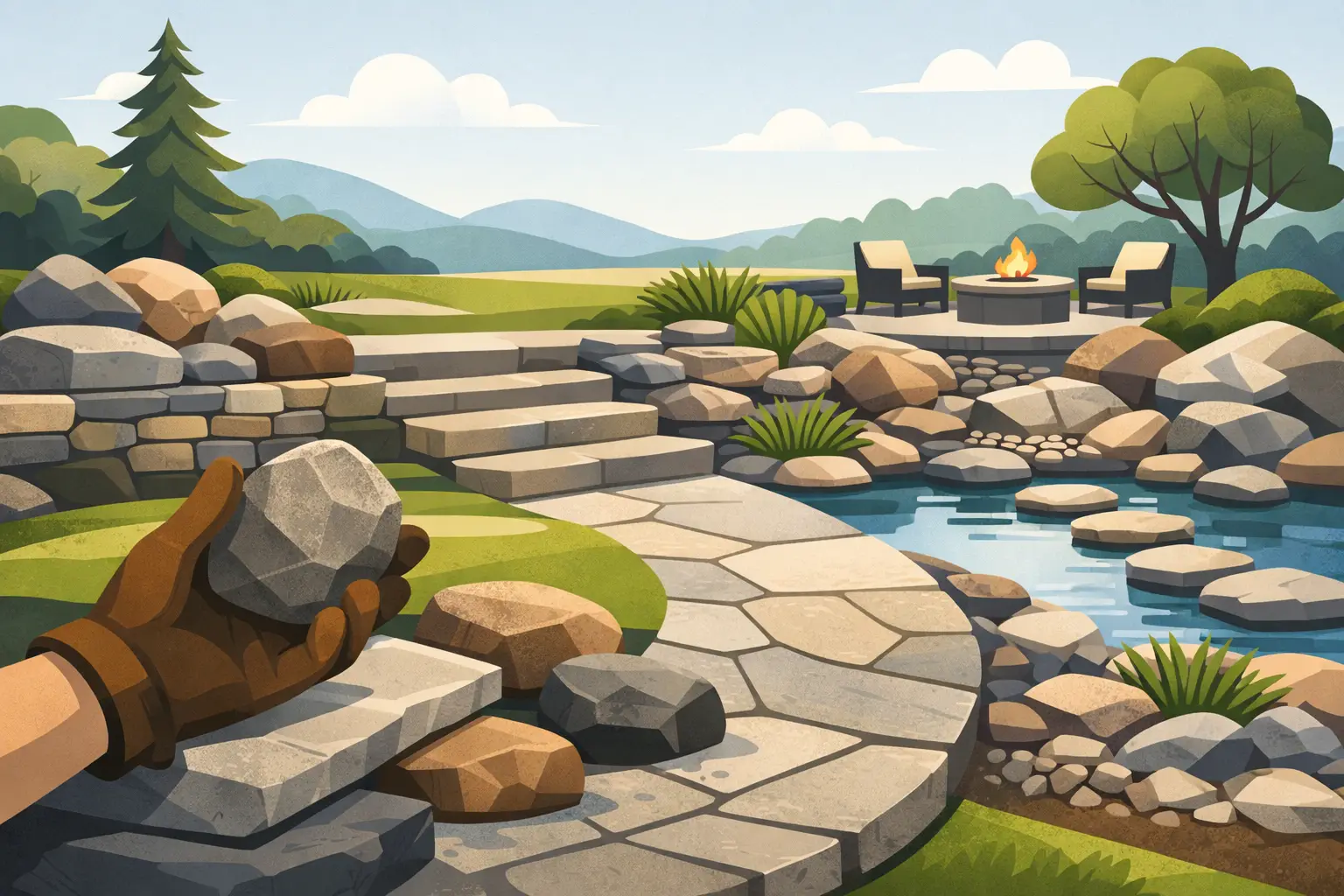
Consider the full outdoor plan, not one feature in isolation. A patio, steps, pathways, planting beds, and a fire feature should feel intentional together. This is where a cohesive design adds value: the stonework establishes the structure that makes the entire landscape feel finished.
How to Choose Landscape Stonework for Your Home
The architecture of the home is a useful starting point, but it should not become a rigid rule. Stonework should complement the property rather than compete with it.
A traditional brick or stone home often suits warm-toned natural stone, tumbled pavers, or materials with subtle texture. A contemporary home may call for larger formats, crisp edges, restrained color variation, and clean joint lines. On a transitional home, the best result may combine a classic material with a more tailored pattern.
Color deserves more attention than most homeowners expect. A sample viewed indoors or in a showroom can look very different in open daylight, under shade, or after rain. Stone also changes with surrounding elements. The same gray paver may appear cool beside white siding, warm beside red brick, or almost blue against dense evergreen planting.
Ask to see larger samples in the actual project area. Look at them in sun and shade, and consider the colors that will remain in place year-round: siding, brick, roofing, fencing, and pool coping. Avoid chasing a perfect color match. A well-chosen stone usually relates to the home through undertone, texture, or scale rather than matching one existing finish exactly.
Scale is equally important. Small units can bring detail and movement to a compact courtyard or winding path. Larger slabs can make a broad patio feel calmer and more expansive. On the other hand, oversized pieces in a narrow side yard may feel crowded, while too many small pieces across a large entertaining area can look busy.
Choose Materials for Climate, Use, and Maintenance
In the Greater Toronto Area, landscape stonework must handle freeze-thaw cycles, snow removal, rain, and substantial temperature swings. A beautiful surface without the proper base, drainage, and edge restraint will not deliver the long-term performance a premium project deserves.
Natural stone remains a strong choice for homeowners who value individuality and enduring character. Flagstone creates a relaxed, natural look, while limestone and granite can provide a more formal or architectural finish. Each piece has variation, which gives the installation depth and authenticity. The trade-off is that natural stone generally requires more careful selection, cutting, and installation to achieve consistent results.
Concrete pavers offer reliable dimensions, wide color options, and flexibility for patterned installations. They are practical for patios, walkways, and driveways when installed on a properly prepared base. Individual units can also be repaired more easily than a monolithic poured surface if future access or localized adjustment is needed.
Porcelain pavers bring a refined, modern appearance and excellent stain resistance. They can be particularly appealing around outdoor kitchens and contemporary entertaining spaces. However, the right product and installation system matter. Surface texture, edge detailing, and slip resistance should be evaluated carefully, especially near pools, steps, and areas exposed to snow or water.
For any material, think realistically about maintenance. Natural stone may benefit from periodic sealing depending on the variety and location. Paver joints may need replenishment over time. Light-colored materials can show leaf tannins, barbecue spills, or tire marks more readily than mid-tone surfaces. Lower maintenance is possible, but no exterior material is entirely maintenance-free.
Let Drainage Shape the Design
Water is one of the most important factors in durable stonework. It affects comfort, safety, and the stability of the base beneath the surface. A patio should not trap water against the foundation, and a walkway should not become a channel that directs runoff toward an entryway.
Proper grading creates a subtle, intentional slope that moves water away from structures and toward appropriate drainage areas. Depending on the property, that may involve swales, catch basins, permeable surfaces, or integrated drainage channels. The solution depends on the site’s existing grades, soil conditions, roof runoff, and nearby structures.
This is why a stonework project should not be treated as a surface replacement alone. If an older patio has settled, the visible issue may be uneven stone, but the cause may be inadequate excavation, poor base preparation, missing edge restraint, or drainage that was never resolved. Correcting the underlying condition is the difference between a temporary improvement and a lasting investment.
Pay Attention to Movement, Edges, and Transitions
The most successful stonework feels natural underfoot because the details have been carefully considered. Steps should have comfortable proportions, consistent riser heights, and a clear landing area. Pathways should be wide enough for their purpose. Changes in level should be obvious and safely lit where appropriate.
Edges matter as much as the field of the patio. A crisp soldier course, a natural stone border, or a carefully designed band can frame the surface and connect it to adjacent gardens. Edge restraints below the surface help keep pavers from spreading and joints from opening. These details are not decorative extras. They support the performance and visual discipline of the installation.
Transitions also deserve attention. Where stone meets lawn, planting, decking, or a driveway, the materials should meet cleanly and in a way that allows for drainage and seasonal movement. A well-designed transition makes the project look custom rather than assembled from separate parts.
Invest in the Work Below the Surface
Stone is only as good as the foundation beneath it. Professional excavation, a properly compacted granular base, appropriate bedding material, and accurate slope are essential. The required depth and construction method vary by project conditions and intended use. A pedestrian path and a driveway do not carry the same loads, and a pool deck has different drainage considerations than a front entry.
It can be tempting to reduce the budget by simplifying preparation work that will no longer be visible after installation. That is usually the wrong place to compromise. A premium stone surface earns its value through both its appearance and its ability to remain level, stable, and functional over time.
When comparing project proposals, make sure you understand what is included below grade, how drainage will be handled, and how steps, walls, and borders will be built. The lowest initial price may not reflect the same level of site preparation or craftsmanship.
Build a Stonework Plan That Can Grow With You
If the entire outdoor vision cannot be completed at once, create a master plan before beginning the first phase. A patio installed today may eventually connect to a pergola, outdoor kitchen, pool, garden room, or expanded planting plan. Planning ahead allows the first phase to establish the correct elevations, circulation routes, and material palette for future additions.
This approach also helps prioritize the work that has the greatest impact now. A properly sized patio and safe access from the home may be more valuable than adding smaller decorative features before the main outdoor living area is resolved. Good design balances immediate enjoyment with a clear path for future investment.
At Redleaf Landscape, custom stonework is approached as part of a complete outdoor environment, where every material and detail supports the way the property is meant to be used. The goal is not simply to install stone, but to create a setting that feels considered from the first step outside.
Choose stonework that reflects your home and your lifestyle, then give equal weight to the preparation behind it. When material, drainage, proportion, and craftsmanship are aligned, the result becomes a durable foundation for years of outdoor living.