


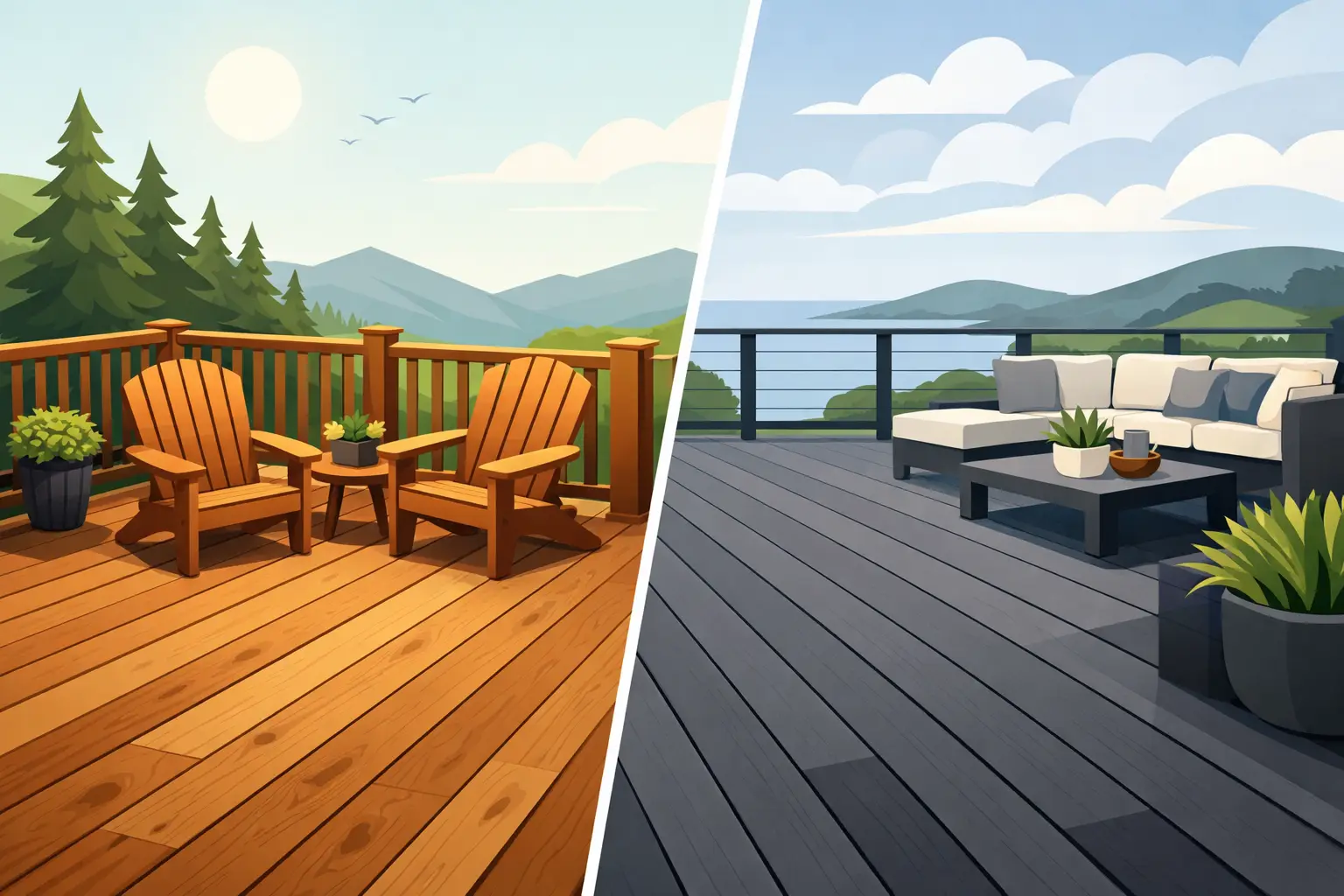
03 May Cedar Deck vs Composite Decking
A deck can change how a backyard lives. It becomes the place where mornings start, where family dinners stretch later into the evening, and where the yard begins to feel like a true extension of the home. That is why the cedar deck vs composite decking decision matters more than most homeowners expect. You are not just choosing a material. You are choosing how the space will look, age, feel underfoot, and fit into your routine for years.
For some properties, cedar is the right answer because it brings warmth, character, and a natural presence that works beautifully with planting, stone, and mature landscapes. For others, composite is the smarter investment because it reduces maintenance and delivers a more predictable long-term finish. The better choice depends on how you want to use the space, how much upkeep you are willing to take on, and how important a natural wood appearance is to the overall design.
Cedar deck vs composite decking: what changes the decision
At a glance, this can look like a simple choice between natural wood and a manufactured alternative. In practice, the decision is more nuanced. A deck is rarely a standalone surface. It is part of a larger outdoor environment that may include privacy screens, lighting, steps, planting beds, outdoor kitchens, covered areas, or poolside transitions. The material has to perform well, but it also has to belong.
Cedar tends to appeal to homeowners who want an authentic, organic look. It has grain variation, texture, and color movement that many manufactured boards still cannot fully replicate. In a landscape designed to feel warm, timeless, and connected to nature, cedar can be a strong fit.
Composite decking appeals to homeowners who want consistency and lower day-to-day responsibility. It is especially attractive for busy households, rental properties, and entertaining spaces where ease of ownership matters as much as appearance. If the goal is a polished deck with less annual maintenance, composite often moves to the front of the line.
Appearance and design impact
Cedar has a softness and richness that is difficult to fake. Fresh cedar brings warm reddish and honey tones, and even as it ages, it carries a real-wood character that many people specifically want. In the right setting, cedar feels elevated without feeling overdesigned. It works particularly well with natural stone, gardens, and homes that lean traditional, transitional, or west coast inspired.
That said, cedar changes over time. Sun exposure, moisture, foot traffic, and maintenance habits all influence how the boards weather. Some homeowners love that patina. Others are disappointed when the deck no longer looks like it did on installation day.
Composite offers more control. The color is more stable, the board profiles are more uniform, and the overall finish tends to remain more consistent across the surface. That can be a major advantage when you want a clean architectural look or when the deck is part of a larger, highly finished outdoor living plan. Modern composite lines have improved significantly in realism, but they still read differently than real wood up close. For some clients, that is not a drawback. For others, it is the deciding factor.
If natural beauty is the priority
Cedar usually wins on authenticity. If you care most about grain, warmth, and the tactile quality of real wood, composite may feel slightly too uniform, no matter how advanced the product.
If consistency is the priority
Composite usually has the edge. It delivers a cleaner, more controlled finish over time, especially on larger decks where visual uniformity matters.
Maintenance and long-term ownership
This is where the gap between materials becomes more noticeable.
Cedar requires ongoing care. To preserve its appearance and help protect the wood, it needs cleaning, staining, or sealing on a regular schedule. The exact timing depends on sun exposure, moisture levels, and product choice, but the point is simple: cedar asks for attention. If that maintenance is delayed, the boards can fade, dry out, crack, or become more vulnerable to wear.
For homeowners who enjoy caring for natural materials, that may be acceptable. For homeowners with limited time, it can become a recurring obligation that slowly shifts from manageable to frustrating.
Composite is designed to reduce that burden. It does not need sanding, staining, or sealing in the same way wood does. Routine cleaning is still necessary, especially with leaves, pollen, food spills, and mildew-prone areas, but ownership is generally easier. That is one of the biggest reasons composite remains popular in premium outdoor projects. It supports a refined result without asking for the same level of yearly labor.
Cost now versus cost later
Initial budget often pushes this conversation, but upfront price is only part of the picture.
Cedar is commonly less expensive at the start, especially when compared with higher-end composite products. If you are focused on lowering immediate construction costs, cedar can look attractive. But the lower entry price should be weighed against ongoing maintenance expenses and the likelihood of earlier repairs or board replacement over time.
Composite usually costs more upfront. Material pricing is higher, and depending on the system, installation details can also add cost. However, the reduced maintenance and longer service life can improve value over the long term. For many homeowners, especially those planning to stay in the property for years, that trade-off makes financial sense.
There is no universal winner here. If the deck is part of a near-term upgrade before a move, cedar may pencil out differently than it would for a forever home. If the deck is being built as part of a long-range outdoor living investment, composite often becomes easier to justify.
Durability in real-world conditions
A deck has to handle more than weather. It has to deal with furniture movement, grilling, spills, kids, pets, and constant foot traffic.
Cedar is naturally resistant to decay and insects, which is one reason it has remained a respected decking material for so long. But it is still wood. It can scratch, splinter, warp, and show wear over time, especially if exposure is harsh or maintenance slips.
Composite is built for durability, but not all composite boards perform the same. Quality matters. A better product will resist fading, staining, and moisture more effectively than an entry-level option. Even then, composite can still get scratched or heat up in full sun depending on color and brand. It is lower maintenance, not maintenance-free.
This is why material selection should never happen in isolation. Deck orientation, sun exposure, surrounding trees, drainage, and intended use all affect performance. A dark composite deck in direct afternoon sun may not be ideal for barefoot comfort. A cedar deck in a damp, shaded area may need especially disciplined upkeep. Good design solves problems before they become disappointments.
Comfort, feel, and everyday use
Homeowners often focus on appearance and cost, then overlook how the deck feels to live on.
Cedar has a more natural surface feel. Many people prefer the warmth and texture of wood underfoot. It tends to stay more comfortable in certain conditions, and it brings a familiar softness that suits relaxed family spaces.
Composite can feel denser and, in some cases, warmer under direct sun. That does not make it a poor choice, but it does mean comfort should be considered during design. Board color, airflow beneath the deck, shading elements, and site orientation all influence how pleasant the surface will be in midsummer.
If the deck is being designed for lounging, bare feet, and long summer afternoons, those details matter. The right material is not just the one that photographs well. It is the one that works for the way the space will actually be used.
Which material fits your property best?
If your goal is a highly natural landscape with rich material variation and authentic wood character, cedar may be the better fit. It pairs beautifully with custom gardens, stonework, and homes where warmth and texture are central to the design language. It asks more of you over time, but for some homeowners, the visual return is worth it.
If your goal is a polished outdoor living area with less upkeep and stronger long-term consistency, composite is often the better choice. It is especially well suited to entertainment-focused backyards, modernized exteriors, and households that want the space to stay sharp without a recurring maintenance cycle.
For many premium projects, the real answer comes from looking beyond the deck boards themselves. The best outcome is not choosing cedar or composite in the abstract. It is selecting the material that supports the architecture, the lifestyle, and the long-term expectations for the property. That is where experienced design and installation make a difference, because the right deck should feel intentional from day one and still feel right years later.
If you are weighing cedar against composite, think about the life you want the space to support, not just the material sample in your hand.