


23 Aug An Interlocking Patio Installation Review That Lasts
A patio can look complete the day the last paver is placed and still reveal serious shortcomings after its first winter. That is the real value of an interlocking patio installation review: looking beyond the color and pattern to assess the work that determines whether an outdoor space remains level, drains properly, and feels as refined five years from now as it does on day one.
For homeowners investing in a custom backyard, an interlocking patio is rarely an isolated feature. It may anchor a dining area, connect a pool to the home, frame a fire feature, or create the first impression at the front entrance. The installation must support that larger vision. A well-built patio brings order, comfort, and lasting curb appeal to the property. A poorly built one can create water issues, uneven surfaces, and an expensive disruption just when the space should be enjoyed.
What an Interlocking Patio Installation Review Should Examine
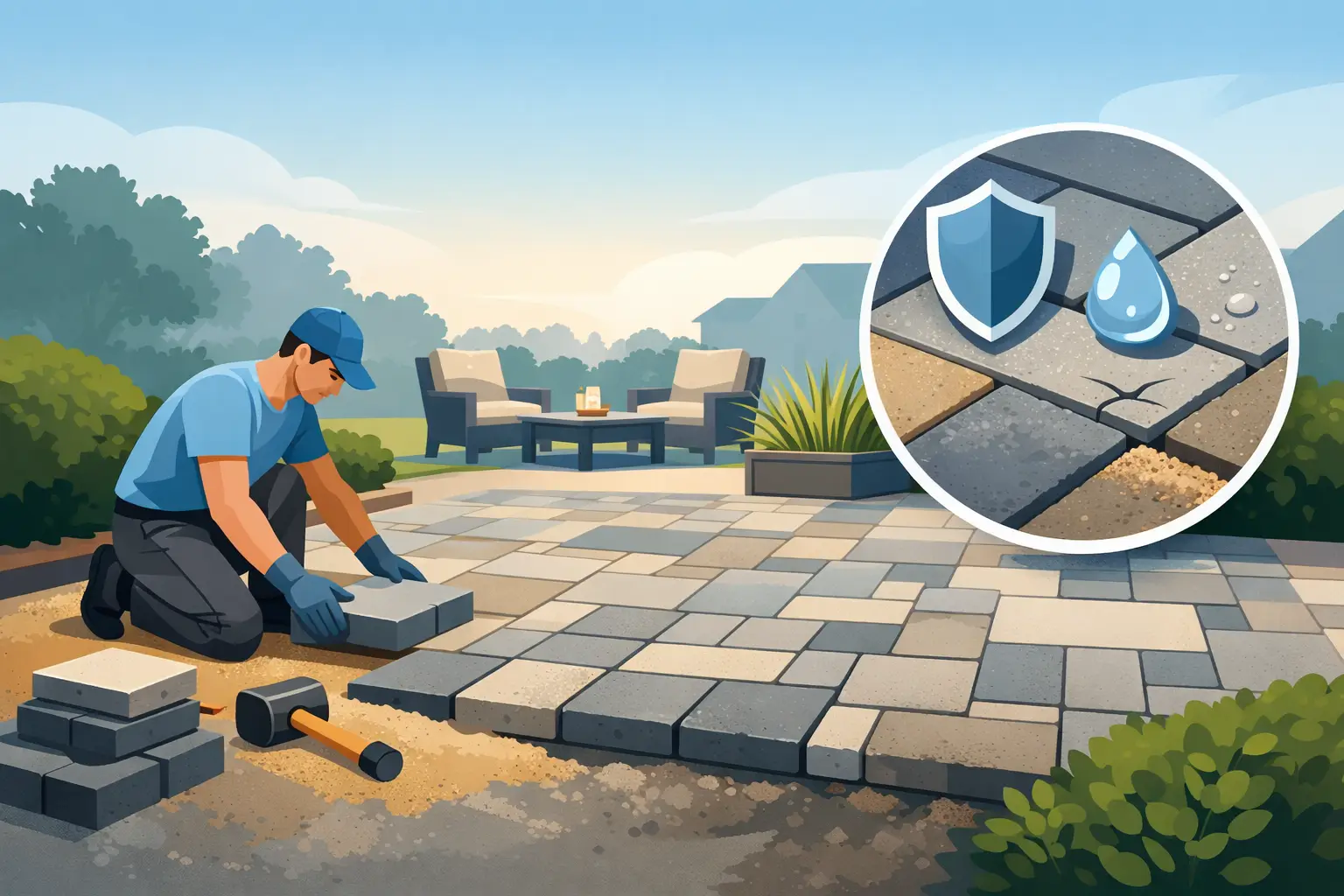
A meaningful review starts below the pavers. Interlocking stone is a system, not simply a finished surface laid over soil. Each layer has a job: the excavation establishes depth and drainage, the granular base provides stability, the bedding layer supports precise leveling, and edge restraints hold the field of pavers in place.
The visible surface matters, but it is not the whole story. A premium installation is defined by the care taken in the details most people will never see. That care is particularly important in climates with freeze-thaw cycles, where moisture and movement can expose weak preparation quickly.
Base preparation is the foundation of performance
The base should be excavated to an appropriate depth for the site, its soil conditions, and the intended use of the patio. A quiet seating area does not face the same demands as a driveway, but every patio needs a compacted aggregate base that can resist settling and seasonal movement.
Quality crews build the base in controlled lifts, compacting each layer rather than placing all aggregate at once and hoping the compactor can reach the bottom. This takes more time, but it creates a stable platform for the finished pavers. When shortcuts occur here, the warning signs often arrive later: low spots, rocking stones, separated joints, or a patio that no longer meets adjacent steps cleanly.
A review should also consider transitions. The patio must meet the house, lawn, garden beds, coping, or walkway with intentional elevations. These connection points are where careful planning becomes visible. A threshold that is too high can create a trip hazard. One that is too low may invite water toward the home.
Drainage should be designed, not left to chance
Water management is one of the clearest markers of a professional installation. A patio needs a consistent slope that guides rainwater away from structures and toward an appropriate drainage area. The exact solution depends on the property, including existing grades, soil, roof runoff, and nearby landscaping.
On a relatively open yard, a gentle pitch may be all that is needed. On a tighter urban property or a patio located near the home, drainage may require greater coordination with downspouts, channel drains, permeable surfaces, or grading beyond the patio itself. The goal is not merely to make water disappear from the pavers. It is to manage it without creating erosion, pooling, or pressure against the foundation.
A patio that holds water after a normal rainfall deserves attention. Minor dampness in textured stone is different from standing water that remains for hours. Persistent puddling can point to inadequate slope, settlement, or a drainage plan that did not account for the full site.
Materials and Design Should Work Together
Interlocking pavers offer considerable design flexibility, from clean contemporary large-format stone to traditional textures that complement established architecture. The strongest results do not begin with selecting a favorite paver in a showroom. They begin by considering the home, surrounding landscape, expected use, and maintenance expectations.
Color is a practical decision as well as an aesthetic one. Light tones can make compact spaces feel open but may show spills and organic debris more readily. Darker pavers can create drama and hide some marks, though they may absorb more heat in full sun. A blended color palette can be forgiving and visually connected to natural plantings, masonry, and the home’s exterior finishes.
Pattern also affects performance. Some patterns create a more formal, linear look, while others offer stronger visual movement or a classic character. The best choice depends on scale. Large pavers can make a broad entertaining space feel composed and modern, but may overwhelm a narrow side yard. Smaller units can handle curves and detailed borders beautifully, though they introduce more joints and more cutting.
A thoughtful design uses borders, inlays, steps, and retaining elements with restraint. These details should clarify the layout, define functional zones, or echo the architecture. Added decoration without a purpose can make an outdoor space feel busy rather than custom.
The Details That Separate Fine Work From Average Work
Once the base, drainage, and layout are correct, execution becomes the difference between acceptable and exceptional. Pavers should be set with consistent joint spacing and clean alignment. Cuts around walls, posts, steps, curves, and utilities should be precise rather than filled with awkward slivers of stone.
Edge restraint is another detail that deserves scrutiny. It prevents the outer pavers from shifting under normal use and helps preserve the integrity of the entire field. An edge that is poorly secured may allow pavers to spread over time, opening joints and disrupting the pattern.
Jointing material should be selected for the project and installed properly. Polymeric sand can help stabilize joints and reduce weed growth when used according to the manufacturer’s requirements, but it is not a cure for a weak base or poor drainage. Proper cleaning, compaction, and activation are essential. Residue left on the paver surface can create a haze, while inadequately filled joints may wash out prematurely.
Finishing work matters too. The patio should be cleaned thoroughly, adjacent lawn and beds restored, and any disturbed areas addressed. A professional team treats the site as a complete property, not simply a work zone with a new surface at its center.
Questions to Ask Before Approving an Installation
Homeowners do not need to become installers to make informed decisions. They do, however, benefit from asking direct questions before construction begins. How will water be directed away from the home? What base depth and material are planned for this site? How will the crew handle transitions at doors, steps, and existing hardscape? What edge restraint and jointing method will be used?
It is also reasonable to ask how changes will be handled if excavation reveals unexpected soil conditions, buried materials, or drainage concerns. The answer should be clear and practical. Every property has variables, especially mature homes and established neighborhoods. A reliable contractor identifies issues early, explains the options, and protects the long-term performance of the project rather than covering a problem to maintain a schedule.
For larger outdoor living projects, the patio should be reviewed in relation to the full plan. Future planting, lighting, kitchens, pergolas, pools, and access routes all affect where a patio belongs and how it should be built. Coordinating these elements before installation avoids costly revisions later.
When Repair Is Enough and When Replacement Makes Sense
Not every uneven patio requires a complete rebuild. Isolated pavers can sometimes be lifted and reset when the underlying base remains sound. Joint sand can be refreshed, stains may be treated, and small drainage adjustments can improve surface performance.
Replacement becomes the wiser investment when settlement is widespread, water consistently moves toward the home, edges are failing, or the existing patio no longer supports how the property is used. Rebuilding also creates an opportunity to improve the layout. A patio that once held a small table may now need space for family dining, a grill station, and comfortable circulation.
The trade-off is straightforward: repairs can extend the life of a fundamentally sound patio, while repeated patching of a failed system often spends money without resolving the cause. A site assessment should separate cosmetic wear from structural concerns so the next decision is based on value, not just the immediate appearance.
Redleaf Landscape Inc approaches hardscape work as part of a complete outdoor environment, with the design, grading, and finishing details considered together. That perspective helps ensure an interlocking patio supports the way a property looks, feels, and functions over time.
A patio should invite you outside without asking for constant attention. When the base is stable, water has a clear path, and every transition is carefully resolved, the result is more than a clean arrangement of pavers. It becomes a dependable setting for the life happening around it.