


26 Jul Design Build Landscaping Review That Matters
A design build landscaping review should tell you more than whether a finished patio looks impressive in a photo. It should reveal how a company thinks, communicates, manages details, and follows through when a project moves from an idea to an active job site. For homeowners and property managers investing in a custom outdoor space, those differences shape the experience just as much as the final result.
A well-designed landscape is not a collection of separate features. The patio, planting, lighting, grading, walkways, drainage, and outdoor amenities need to work together. That is where a qualified design-build partner earns its place: by taking responsibility for the full vision and the craft required to build it.
What Design-Build Landscaping Actually Means
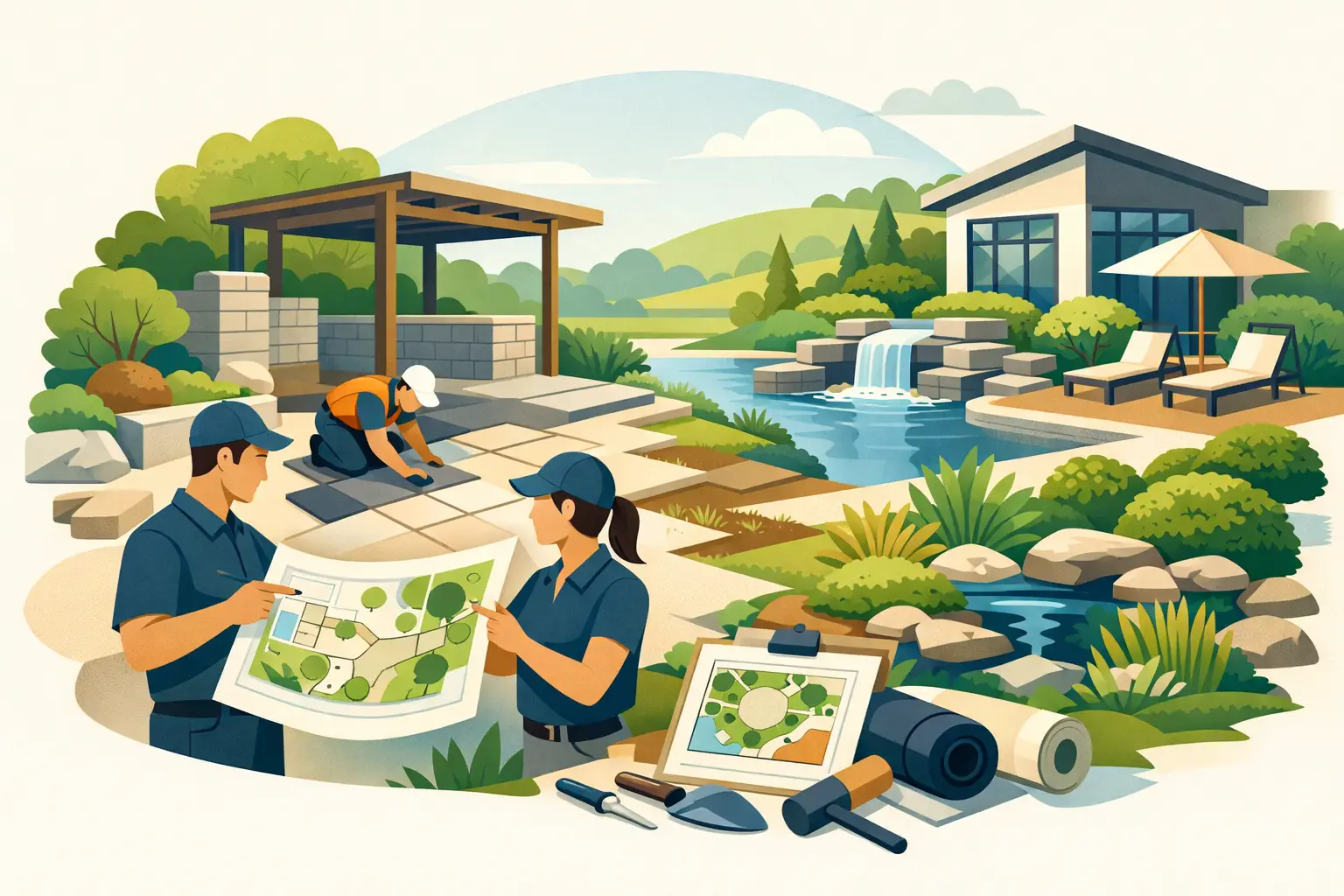
Design-build landscaping brings planning, design, and installation under one accountable team. Rather than hiring a designer, then seeking separate contractors to price and install the work, the client works with a single partner from the initial consultation through construction.
This approach is particularly valuable when a property needs more than a surface refresh. A backyard with poor drainage, awkward access, limited usable space, or an outdated layout requires careful coordination before materials ever arrive. The design needs to account for how the property is used, how water moves across the site, what local conditions demand, and how each feature will be built.
The benefit is continuity. The people developing the plan understand the realities of installation, and the installation team works from a design developed with actual construction in mind. That can reduce gaps between the original concept and the completed landscape.
It does not mean every design-build firm delivers the same level of service. Some offer a basic sketch and a labor quote. Others provide a detailed process that considers site conditions, materials, construction sequencing, and long-term performance. A meaningful review looks beyond the label.
How to Read a Design Build Landscaping Review
Online ratings are useful, but a five-star score alone does not explain why clients were satisfied. Read written feedback closely and look for recurring details about the experience. Specific comments tend to carry more value than broad praise.
A strong review may mention that the team listened to the homeowner’s goals, explained options clearly, protected the property during construction, or handled changes professionally. These details indicate that the contractor has a process, not simply a crew available to complete a job.
Pay attention to whether reviewers describe projects similar to yours. A company that excels at small planting upgrades may not be the right fit for a full outdoor living transformation with retaining walls, stonework, lighting, drainage improvements, and custom planting. The scale and complexity of the work matter.
Look for accountability, not just compliments
The most useful feedback often addresses how a firm responded when conditions changed. Landscape construction can uncover buried rock, unexpected grading issues, access limitations, or material availability concerns. No experienced contractor can promise that every site will be free of surprises. What matters is how those surprises are identified, priced, communicated, and resolved.
Reviews that describe timely updates, clear explanations, and responsible problem-solving are strong indicators. Vague assurances that a company is “great” may be encouraging, but they do not provide enough insight for a major property investment.
Consider the age and range of reviews
Recent reviews show how a company is operating now. Older reviews can demonstrate consistency and longevity. Ideally, you will see both, along with evidence of work across different property types and project sizes.
For a custom project, photographs should support what the reviews say. Look for finished spaces with clean transitions, intentional material choices, properly proportioned features, and planting that complements the architecture rather than competing with it. Close-up details matter as much as wide-angle images. Stone cuts, edge restraint, steps, joints, grading, and finishing all speak to the quality of craft.
Questions a Review Cannot Answer for You
Even excellent public feedback cannot replace a thoughtful consultation. Your property, priorities, budget, and timeline are specific. A reputable design-build firm should be prepared to discuss them directly before making promises.
Ask how the company approaches site assessment. Proper planning may involve reviewing drainage, sun exposure, existing grades, property access, utility considerations, and the condition of any structures that will connect to the new landscape. A beautiful plan that ignores these conditions can become costly or disappointing later.
You should also ask what is included in the design phase. Will you receive a concept plan, material recommendations, planting direction, and a defined scope of work? How are revisions handled? The answer depends on the project, but clarity at this stage helps prevent assumptions from becoming change orders during construction.
Budget discussions deserve the same level of care. Premium landscaping is a long-term investment, and the lowest estimate is rarely the full story. A lower price may reflect fewer site preparations, thinner materials, limited drainage work, less detailed installation, or omissions that appear later. A well-prepared proposal should make it easier to understand what you are buying and why it costs what it does.
Signs of a Reliable Design-Build Partner
The right contractor does not need to overpromise. They should be confident enough to explain trade-offs honestly. For example, natural stone may offer character and lasting appeal, while manufactured pavers can provide consistent sizing and a broader range of coordinated options. Mature plant material creates an immediate impact, but younger plantings may make better sense when budget and future growth are priorities.
Reliable firms also understand that construction quality begins below the surface. Base preparation, drainage strategy, grading, and proper edge details are not the most visible parts of a project, yet they have a major effect on how hardscaping performs through seasonal weather changes. In regions with freeze-thaw cycles, that work is essential.
Communication is another practical measure of professionalism. Before work begins, you should understand the anticipated schedule, site access needs, payment structure, and who will be your point of contact. During construction, the team should keep you informed without requiring you to chase updates.
For commercial properties, dependability extends to public safety, durability, access, and the impact on daily operations. An installation partner should recognize that exterior presentation represents the business, while construction disruption affects employees, visitors, tenants, and customers.
Why One Point of Responsibility Matters
When design and installation are separated, disagreements can arise over whether a detail was impractical, omitted, or incorrectly interpreted. A design-build model helps reduce this risk because one firm owns the full process. The goal is not merely convenience. It is alignment between the intended result and the work performed on site.
That accountability is especially valuable for projects with several interconnected elements. Consider a backyard designed for entertaining: the patio elevation affects drainage, the kitchen location affects utility planning, the lighting plan affects circulation and atmosphere, and plantings need to frame the space without creating future maintenance problems. Each decision influences another.
Since 1986, Redleaf Landscape Inc has approached this kind of work as a complete property transformation, combining custom design with professional installation and close attention to the details that make outdoor spaces feel considered, functional, and personal.
Make Your Final Decision on More Than Price
Before selecting a landscape contractor, compare proposals according to scope, materials, preparation work, project management, and the level of design included. If one quote is substantially lower, ask what has been excluded rather than assuming it represents equal value.
A good partner will welcome informed questions. They should be able to explain their recommendation without pressuring you into features that do not serve your goals. The best landscape is not necessarily the largest or most elaborate one. It is the one that fits the property, supports how you live or work, and continues to feel right after the first season.
Choose the team whose work demonstrates care beneath the surface as well as above it. When planning and craftsmanship are treated with equal importance, an ordinary yard has the potential to become a lasting part of the property you are proud to come home to.