


10 Jun Custom Outdoor Living Spaces That Work
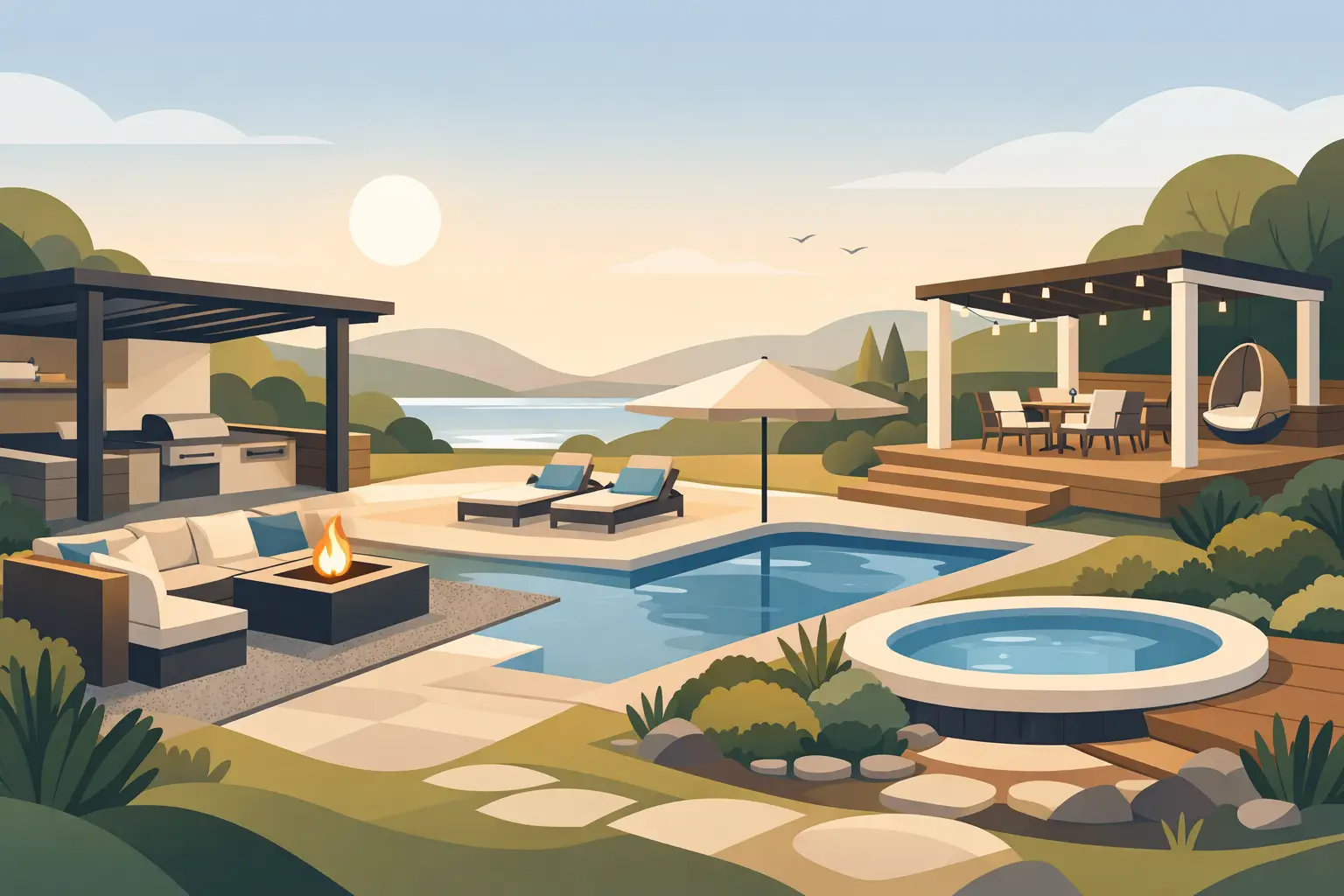
A backyard can look finished on paper and still fall short once real life starts happening in it. The grill smokes into the seating area. The patio is beautiful at noon and unusable by 4 p.m. The fire feature feels too close to the door, or too far from the conversation. That is the difference between adding features and creating custom outdoor living spaces. The best results are not built around a checklist. They are built around how people actually live.
For homeowners who want more than basic landscaping, the outdoor space has to do real work. It should support quiet mornings, family dinners, summer entertaining, and the everyday movement between house and yard. It should feel considered from every angle, not pieced together over time. When the design is right, the landscape becomes an extension of the home rather than a separate area that gets used a few months a year.
What custom outdoor living spaces really mean
The word custom gets used loosely in this industry. In practice, custom means the layout, materials, and details are shaped by the property, the architecture, and the people using the space. It is not a matter of choosing from a few standard patio patterns or dropping a pergola into an empty corner.
A well-designed outdoor living environment starts with proportion. The size of the terrace should make sense with the scale of the home. Circulation paths should feel natural. Dining, cooking, lounging, and play areas should connect without competing for space. Good design also accounts for less obvious realities, such as drainage, sun exposure, privacy from neighbors, and the visual lines seen from inside the house.
This is where many projects either gain long-term value or lose it. A yard may look attractive in photos, but if the grade was not handled properly or the materials were selected without regard for climate, the finish will not hold up. Lasting quality comes from design and execution working together.
Why a custom outdoor living space adds more than appearance
A polished yard improves curb appeal, but appearance is only part of the return. The bigger gain is usable square footage without an addition. When the outdoor environment is planned properly, it supports the same functions people want indoors – gathering, relaxing, dining, and retreating – with more openness and flexibility.
For busy families, that can mean a patio that handles weeknight meals as well as weekend guests. For professionals, it may mean a clean, architectural setting that feels restorative after a long day. For commercial properties, it often means presenting a more refined exterior while improving durability and reducing the need for frequent repairs.
There is also the matter of cohesion. A custom outdoor space should not feel like an afterthought behind a well-designed home. It should carry the same level of intention. The paving, planting, lighting, and built elements should all support one another. That sense of unity is what elevates a project from serviceable to memorable.
The design decisions that shape the result
The most successful projects usually begin with a simple question: how should this space perform? That answer drives nearly every major decision.
Layout comes before features
It is tempting to begin with the wishlist – outdoor kitchen, fireplace, covered lounge, water feature. Those elements can be excellent investments, but only if the layout supports them. A smaller yard may benefit more from one generous, flexible entertaining space than several cramped zones. A larger property may need distinct areas connected by planting and pathways so the space feels purposeful instead of scattered.
Good layout also anticipates movement. Guests should not have to pass through the cooking zone to reach the seating area. Access from the house should be direct and comfortable. If there is a pool, garden, or lawn, those transitions should feel intentional.
Materials set the tone and the maintenance level
Material selection is not only about style. It affects longevity, maintenance, safety, and how the entire landscape relates to the home. Natural stone offers depth and permanence, but it may not suit every budget or every application. High-quality concrete products can provide excellent performance with a cleaner, more contemporary look. Wood can bring warmth, while composite surfaces may reduce maintenance over time.
There are trade-offs in every direction. Premium materials tend to perform better and age more gracefully, but they require careful installation to justify the investment. Lower-cost options can work in the right setting, yet they may not deliver the same visual refinement or durability. The right choice depends on priorities, site conditions, and how the space will be used year after year.
Planting should support the architecture
Planting is often treated as decoration added near the end of a project. In a well-composed landscape, it does much more. It softens hardscape, frames views, creates privacy, guides movement, and adds seasonal interest. It can also improve comfort by filtering sun, buffering wind, and helping the space feel more established.
The strongest planting plans feel connected to the architecture rather than separate from it. Clean-lined homes often benefit from restrained, structured planting. More traditional homes may support greater softness and layering. In either case, sustainability matters. Plant choices should suit the site, the maintenance expectations, and the long-term health of the landscape.
Custom outdoor living spaces in the GTA need local thinking
Designing for the Greater Toronto Area requires practical judgment, not just visual ambition. Freeze-thaw cycles, drainage demands, changing sun angles, and seasonal use all affect what should be built and how it should be installed. A feature that works well in a warmer climate may need a different approach here.
That is one reason an end-to-end process matters. Design decisions should reflect how the project will actually be constructed, and construction should protect the integrity of the design. When those phases are disconnected, details can get lost. Grades shift, materials get substituted, and finished spaces stop matching the original intent.
For that reason, many property owners prefer one accountable team to guide the work from concept through installation. It reduces coordination issues and creates a clearer standard for execution. For a premium project, that consistency is not a luxury. It is part of the result.
What homeowners often underestimate
Most people understand the visible parts of an outdoor project. They can picture the patio, the steps, the lighting, and the planting beds. What often gets underestimated is the amount of discipline required behind the scenes.
Base preparation, grading, edge restraint, drainage strategy, lighting placement, and construction sequencing all shape how the landscape performs. If these are rushed or handled inconsistently, even expensive materials can fail early. Cracked surfaces, standing water, shifting pavers, and poor plant performance usually trace back to decisions that were made long before the final walkthrough.
This is where craftsmanship becomes more than a talking point. Attention to detail affects the look of the finished work, but it also affects how the project holds up over time. Precision is visible in the alignment of materials, the clarity of transitions, and the clean integration of each feature. It is just as visible several seasons later, when the space still feels solid and intentional.
A better project starts with the right questions
The planning phase should go beyond style preferences. Yes, the visual direction matters. But so do the daily habits of the people using the space. How many people gather regularly? Is cooking central to entertaining, or secondary? Is privacy a priority? Does the yard need to feel open for children, or more tailored for adult entertaining? How much maintenance is realistic?
Clear answers lead to better design choices. They also help establish where to invest. Some properties need stronger structure and hardscape first. Others benefit from privacy screening, shade, or a more refined entry sequence. Not every yard needs every feature. The strongest outdoor environments are edited with discipline.
That approach has guided Redleaf Landscape Inc through decades of work for clients who want more than a surface-level upgrade. Since 1986, the standard has remained the same: thoughtful design, quality in craft, and outdoor spaces that feel as personal as they are functional.
The right outdoor space should make daily life easier and better looking at the same time. When it is shaped around the property, the architecture, and the way you live, it stops feeling like a project and starts feeling like it always belonged there.