


16 Jul Pergola vs Covered Patio: Which Fits Your Yard?
The choice between a pergola vs covered patio often comes down to one question: do you want your outdoor space to feel open to the landscape, or protected from the elements? Both can turn an ordinary backyard into a more inviting place to dine, relax, and entertain. But they create very different experiences, especially when shade, weather protection, maintenance, and architectural style are considered from the start.
A well-designed structure should not feel like an afterthought attached to the house. It should extend the way you live indoors into the landscape, complement the home’s proportions, and give the patio a clear purpose. The right decision depends on how you plan to use the space, how much sun and rain your yard receives, and how much year-round comfort matters to your household.
Pergola vs Covered Patio: The Core Difference
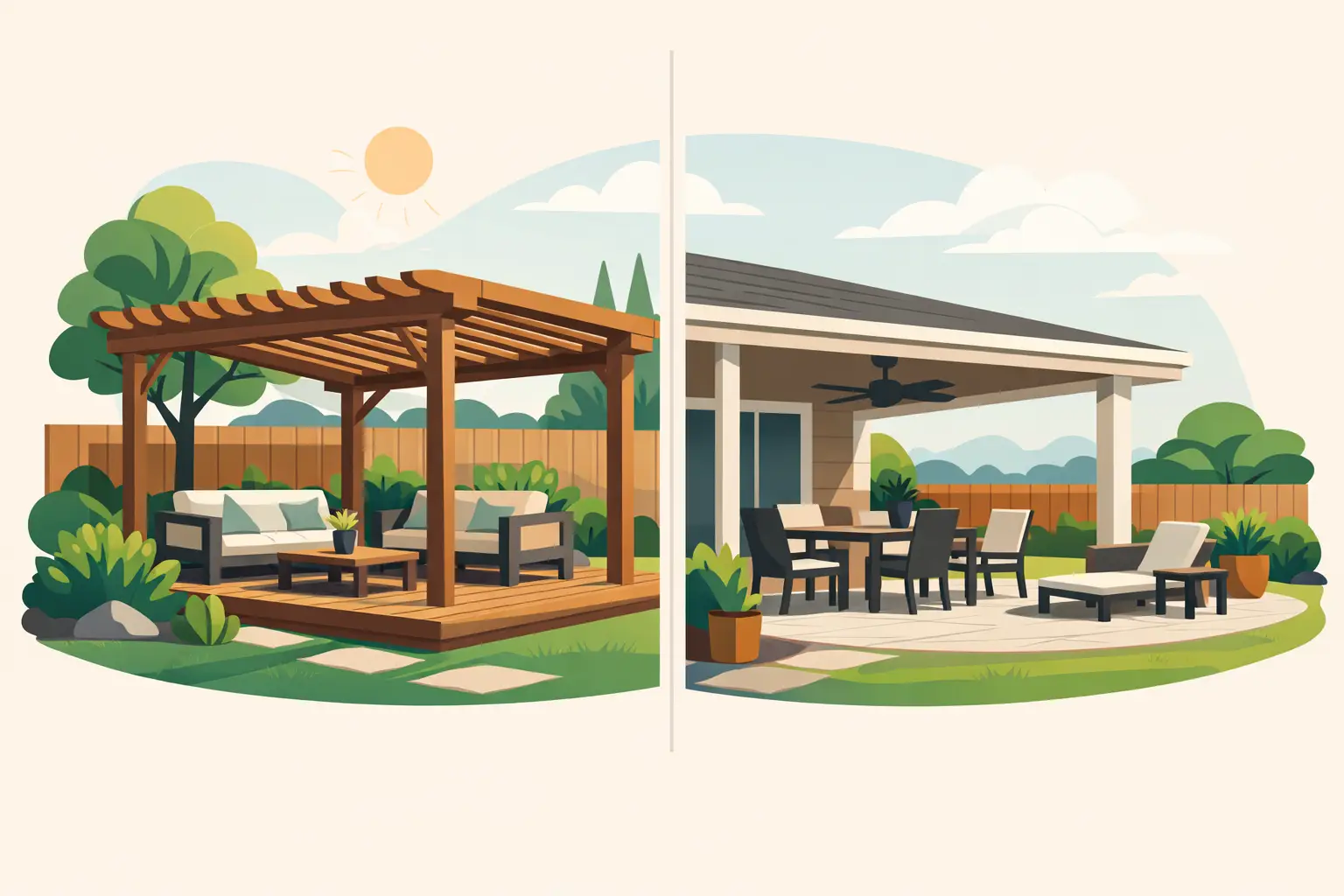
A pergola is an open-air structure built with vertical posts and overhead beams or slats. It provides definition, visual height, and partial shade while allowing sunlight, breezes, and views of the sky to remain part of the experience. Pergolas can stand independently in the yard or attach to the home, often becoming a focal point over a dining area, lounge space, outdoor kitchen, or garden path.
A covered patio has a solid roof. It may be attached to the home or designed as a freestanding pavilion, but its purpose is more protective: shelter from rain, stronger shade, and a more dependable outdoor room. Depending on the roofing material and design, a covered patio can make the space usable through light rain, intense summer sun, and shoulder seasons that would otherwise limit time outdoors.
Neither option is automatically better. A pergola prioritizes atmosphere and connection to the garden. A covered patio prioritizes comfort and consistency. The strongest choice is the one that supports your daily routines rather than simply adding a structure to the yard.
When a Pergola Is the Better Choice
A pergola suits homeowners who want their patio to remain open, bright, and connected to the landscape. It creates a sense of enclosure without making the yard feel smaller or blocking natural light from adjacent interior rooms. On a property with beautiful mature trees, planting beds, or a carefully designed pool area, this openness can be a major advantage.
Pergolas are also highly flexible in appearance. A clean-lined aluminum pergola can complement a contemporary home, while stained wood or a timber-style structure can bring warmth to a more traditional property. The spacing and orientation of the overhead slats can be designed to manage sun exposure. For example, slats positioned to block the strongest afternoon sun can make a west-facing patio noticeably more comfortable without fully closing it in.
Climbing plants can soften a pergola over time, creating seasonal shade and a more natural garden character. This approach does require patience and maintenance, however. Vines need training, pruning, and careful selection so they do not overwhelm the structure or introduce avoidable moisture issues near the home.
A pergola is often the right fit when the goal is to create an elegant destination in the landscape rather than a fully weather-protected room. It can define an outdoor dining zone, frame a fire feature, or give a large patio a stronger sense of proportion. It also works well where homeowners enjoy sunlight but want relief during the hottest parts of the day.
The Limits of a Pergola
Traditional pergolas do not keep rain out. Even with dense slats or a canopy, wind-driven rain can reach the seating area, and furniture may need protective covers or nearby storage. Shade will also shift throughout the day and season, so a pergola may not provide enough coverage for a patio that is exposed to relentless afternoon sun.
Retractable fabric canopies, adjustable louvered roofs, and shade screens can improve performance, but they also add cost and maintenance considerations. These features can be worthwhile when you want the open character of a pergola with more control over sun exposure. They should be specified carefully, particularly in areas that experience snow, wind, and frequent freeze-thaw cycles.
When a Covered Patio Is the Better Choice
A covered patio is built for dependable use. If your family wants to eat outside even when the forecast is uncertain, watch the game outdoors, protect an outdoor kitchen, or create a shaded gathering place for children and guests, a solid roof delivers a level of comfort a standard pergola cannot match.
The roof also protects furnishings, finishes, and appliances. Upholstered seating, dining tables, grills, televisions, and kitchen cabinetry generally last longer when they are not exposed to direct sun and repeated rainfall. For homeowners investing in a premium outdoor living environment, that protection can help preserve the appearance and performance of the space over time.
Because it reads more like an outdoor room, a covered patio can support additional features such as recessed lighting, ceiling fans, heaters, built-in speakers, and integrated drainage. These details are what make a patio feel useful after sunset and during cooler months, not just on perfect summer afternoons.
Architectural integration matters greatly here. The roof pitch, fascia, columns, ceiling finish, and material palette should feel intentional alongside the existing home. A poorly matched patio cover can look bulky or reduce daylight inside. A custom design considers sightlines from key rooms, roof transitions, drainage, and the relationship between the structure and surrounding planting.
The Trade-Offs of a Solid Roof
More protection usually means more construction complexity. A covered patio may require footings, structural engineering, permits, roof drainage, and careful connection details where it meets the home. It can also cost more than a straightforward pergola, particularly when electrical work, finished ceilings, heating, or custom materials are included.
A solid roof changes the light conditions beneath and around the patio. That may be exactly what is needed for a hot, exposed yard, but it can make a small space feel darker if the design is too deep or too enclosed. The best projects balance coverage with openness, often using strategically placed openings, lighter ceiling finishes, or a transition from covered space to uncovered patio.
How to Choose Based on Lifestyle
Start with the moments you want the space to support. If you picture quiet morning coffee, an evening glass of wine, and dinner under a changing sky, a pergola may give you the atmosphere you are looking for. If you picture hosting birthdays without worrying about rain, cooking outdoors regularly, or keeping a lounge area comfortable for longer stretches of the year, a covered patio may offer better value.
Sun exposure should shape the decision as much as lifestyle. A north-facing patio may benefit from a pergola that provides definition without sacrificing precious daylight. A south- or west-facing patio may need the deeper shade of a covered roof, especially if the area is used during peak afternoon hours.
Consider the house itself, too. A pergola can be an excellent way to introduce structure to a backyard without competing with an already detailed facade. A covered patio may be more appropriate when the home has a strong roofline and the outdoor living area needs to function as a direct extension of the kitchen or family room.
The scale of the patio matters. On a compact lot, a pergola can provide a sense of destination while preserving a more open visual feel. On a larger property, a covered patio can anchor a substantial entertaining area, especially when paired with an outdoor kitchen, fireplace, or poolscape. In either case, the structure should be proportioned to the patio, not selected as an isolated feature.
Design Details That Make Either Option Feel Custom
Whether you choose a pergola or a covered patio, the surrounding landscape determines whether the finished space feels complete. Quality hardscaping, thoughtful planting, outdoor lighting, privacy screening, and drainage all contribute to how the structure performs and how it feels to use.
The flooring beneath the structure deserves equal attention. Natural stone, porcelain pavers, concrete, and premium decking each create a different visual and functional foundation. Material selection should coordinate with the home’s exterior while addressing traction, maintenance expectations, and local climate conditions.
Lighting should be layered rather than limited to one bright fixture overhead. Soft downlighting can make dining comfortable, while step lights, path lights, and subtle landscape illumination help the patio remain safe and welcoming after dark. Privacy can come from planted hedges, ornamental trees, screens, or carefully positioned walls, depending on the character of the property and the level of enclosure desired.
For custom outdoor projects, Redleaf Landscape Inc. looks beyond the structure itself. The most successful spaces are designed as complete environments, where the patio, planting, lighting, drainage, and architecture work together with attention to detail and quality in craft.
Plan for Structure, Drainage, and Long-Term Care
A beautiful overhead structure still needs to perform under real conditions. Before construction begins, confirm local permit requirements, property setbacks, utility locations, and any homeowner association rules that may apply. Structural requirements can vary based on roof loads, wind conditions, and the size of the proposed structure.
Drainage is particularly important for a covered patio. Roof runoff must be directed away from the foundation and away from areas where it could create erosion, pooling, or icy conditions. For pergolas, drainage around the post footings and patio surface still matters. Water that collects at the base of posts or against the home can shorten the life of even high-quality materials.
Maintenance expectations should also be realistic. Wood may need periodic cleaning, staining, or sealing. Metal and composite systems generally require less finishing work but still benefit from inspection, cleaning, and seasonal care. A solid roof needs gutter maintenance and occasional checks around flashing and connections. Choosing durable materials and planning the details correctly at installation is far easier than correcting problems later.
The right outdoor structure should make you want to spend more time outside, not add another maintenance concern to the property. Choose the option that suits the way you gather, the weather you live with, and the level of comfort you want your landscape to deliver year after year.