


15 Apr Landscape Architect vs Design Build
If you are planning a major outdoor project, the landscape architect vs design build question usually comes up right after the inspiration phase ends and real decisions begin. You may already know what you want – a refined front entry, a complete backyard retreat, better drainage, an outdoor kitchen, a pool setting that feels integrated with the home. The harder part is deciding who should lead the work and how the project should move from concept to finished installation.
That choice matters more than most property owners expect. It affects budget clarity, design continuity, timeline control, and the quality of the final result. In some cases, a landscape architect is the right fit. In others, a design-build firm offers a smoother and more accountable path. The best answer depends on the project, the property, and how involved you want to be in managing moving parts.
Landscape architect vs design build: what is the difference?
A landscape architect is a licensed design professional whose work is centered on planning, grading, site design, technical documentation, and, in many cases, permitting or regulatory compliance. Their role is often strongest when a project has environmental complexity, large-scale site considerations, stormwater requirements, public-facing use, or approval hurdles that need formal drawings and professional oversight.
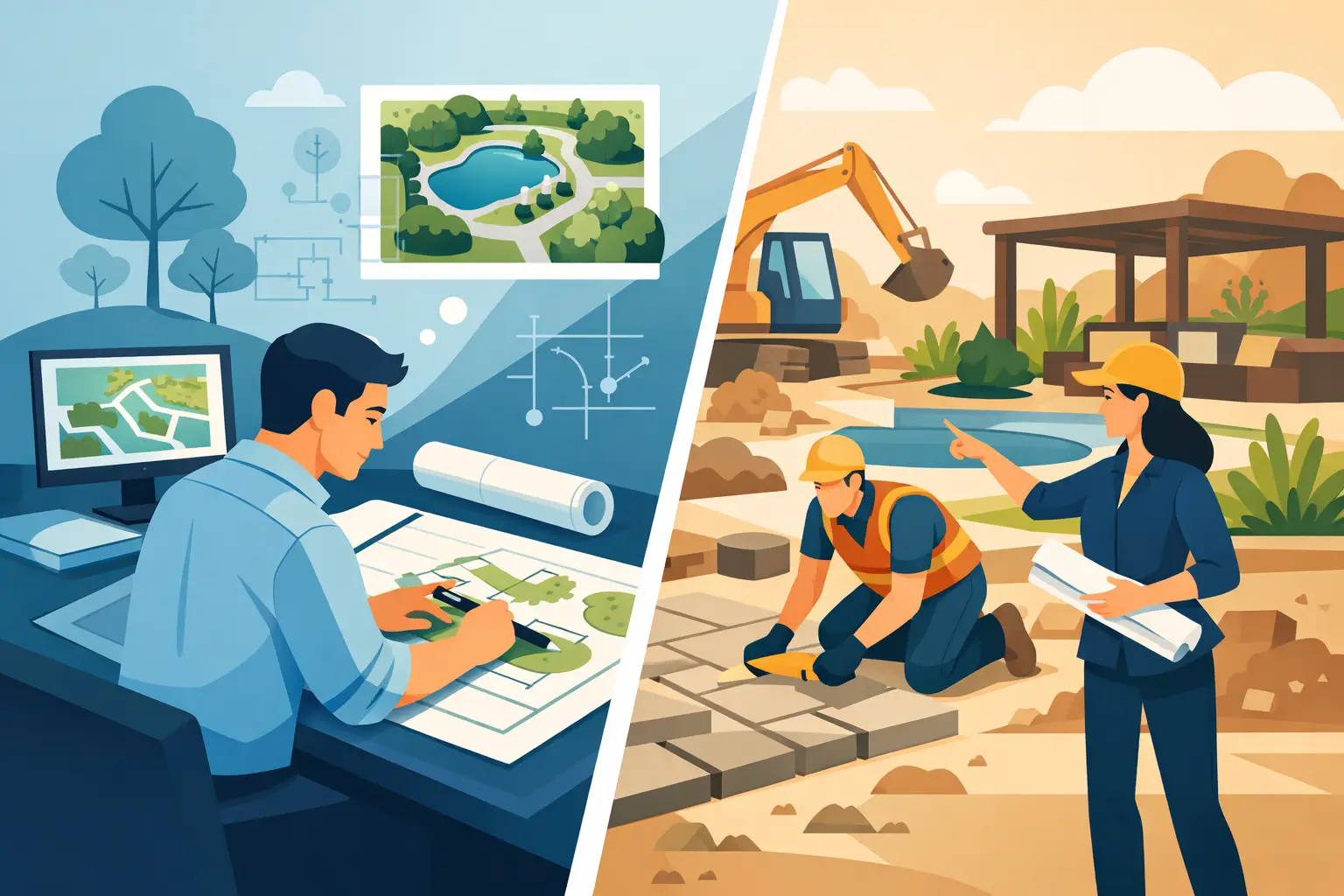
A design-build firm combines design and installation under one roof. Instead of hiring a designer first and then bidding that plan out to contractors, you work with a single company that develops the concept, refines the details, budgets the work, and installs the project. The same team is responsible for carrying the vision through to completion.
That sounds like a simple distinction, but in practice it changes the entire experience. One model separates design from construction. The other integrates them.
When a landscape architect makes the most sense
There are projects where a landscape architect is clearly valuable. If your site has steep grade changes, shoreline issues, major drainage concerns, municipal review requirements, or a development-scale scope, formal landscape architectural services may be necessary. The same is true for certain commercial properties, institutional sites, and projects that need stamped drawings or extensive coordination with civil engineers and other consultants.
A landscape architect can also be the right choice if you want an independent design package before speaking to installers. Some homeowners prefer that separation. They want a design-first process, then the option to price the plans with multiple contractors.
That approach can work well, but it comes with trade-offs. A design created without the builder at the table can sometimes look stronger on paper than it does in real-world budgeting or construction logistics. Materials may need to be revised later. Details may shift once excavation starts. Responsibility can also become fragmented if the installer interprets the design differently than intended.
None of that means the model is flawed. It simply means the owner often takes on more coordination and more risk between design intent and execution.
When design-build is the better fit
For many residential outdoor living projects, design-build offers a more direct and more practical path. If your goal is a custom, finished space rather than a stand-alone drawing set, an integrated firm can streamline everything from layout and material selection to phasing and installation quality.
This is especially true for projects like patios, retaining walls, planting plans, lighting, kitchens, fire features, pool surrounds, entry sequences, and full-property transformations. These projects live or die by execution. The best design in the world will fall short if grading is off, materials are substituted poorly, or installation details are rushed.
With design-build, the people shaping the concept also understand what it takes to build it properly. That creates better alignment between ambition and reality. It also helps avoid a common problem – a design that needs to be value-engineered so heavily that the final result no longer feels like the original vision.
For busy homeowners and property decision-makers, there is another advantage: one accountable partner. You are not managing separate design professionals, estimators, trades, and installers while trying to keep everyone moving in the same direction.
The real difference is accountability
The biggest distinction in the landscape architect vs design build conversation is not style. It is accountability.
When design and construction are handled separately, each party has a defined role, but there can be gray areas when changes happen. If site conditions differ from the drawings, if allowances were misunderstood, or if materials are no longer available, someone has to resolve that gap. Often, that someone is the client.
In a design-build model, that gap is narrower because the same firm owns both the design intent and the construction outcome. Budget conversations happen earlier. Site realities are factored into the design process. Installation decisions are informed by field experience, not guessed at from a distance.
For premium landscape work, that continuity matters. Custom outdoor spaces are not assembled from a kit. They are built through dozens of decisions about grading, transitions, drainage, proportions, finishes, lighting, planting maturity, and how the space should actually function day to day. A single accountable team is often better positioned to protect those details.
Cost, budgeting, and where surprises tend to happen
Many clients assume using a separate designer gives them more cost control because they can collect competing bids. Sometimes that is true. But lower bid pricing does not always mean better value, especially when contractors are pricing incomplete information or interpreting plans differently.
A landscape architect may charge design fees independently from installation costs. Then the project goes to bid, and actual construction pricing may come in above expectations. At that point, redesign or scope reductions can follow.
Design-build pricing is often more iterative. Budget and design develop together. That does not automatically make it cheaper, but it can make it more honest earlier in the process. If you want a high-end outdoor room with natural stone, integrated lighting, drainage upgrades, and mature planting, a design-build team can usually tell you sooner whether the scope aligns with your investment range.
That is valuable because it protects momentum. It also protects the quality of the end result.
Design quality is not owned by one model
Some people hear design-build and assume it means less sophisticated design. That depends entirely on the firm.
A strong design-build company is not just installing products. It is thinking in terms of spatial flow, architectural consistency, sightlines, materials, drainage, seasonality, and long-term performance. The difference is that the design is developed with construction expertise built in.
Likewise, not every landscape architect is focused on luxury outdoor living or the installation details that make a residential space feel refined. Some are exceptional at large-scale planning, public realm work, or technical documentation. Those are different strengths.
The right question is not which title sounds more impressive. It is who can deliver the level of design and execution your property deserves.
How to choose between landscape architect and design-build
Start with the project itself. If it is technically complex, regulation-heavy, or tied to broader site planning requirements, a landscape architect may be necessary. If it is a custom residential or commercial landscape where design quality and construction quality need to stay tightly aligned, design-build is often the better fit.
Then consider how you want the process to feel. Do you want to assemble your own team, manage handoffs, and separate design from installation? Or do you want one experienced firm to guide the project from concept through final walkthrough?
Also look closely at built work, not just renderings or plans. A polished concept is only part of the story. The finished installation reveals whether the company understands craftsmanship, proportion, detailing, and how outdoor spaces live over time.
For clients who value attention to detail, design cohesion, and a finished landscape that feels like a true extension of the home, the integrated model often delivers a stronger experience. That is one reason established firms like Redleaf Landscape Inc focus on end-to-end execution rather than treating design and construction as disconnected services.
The best choice depends on the outcome you want
If you need formal planning expertise, specialty documentation, or a consultant-led design process, a landscape architect may be the right starting point. If you want a beautifully resolved outdoor environment built with clarity, continuity, and craftsmanship, design-build may serve you better.
A well-designed landscape should do more than look attractive for a season. It should support how you live, improve how your property functions, and hold its quality over time. Choose the path that gives your project the best chance to be built as thoughtfully as it was imagined.