


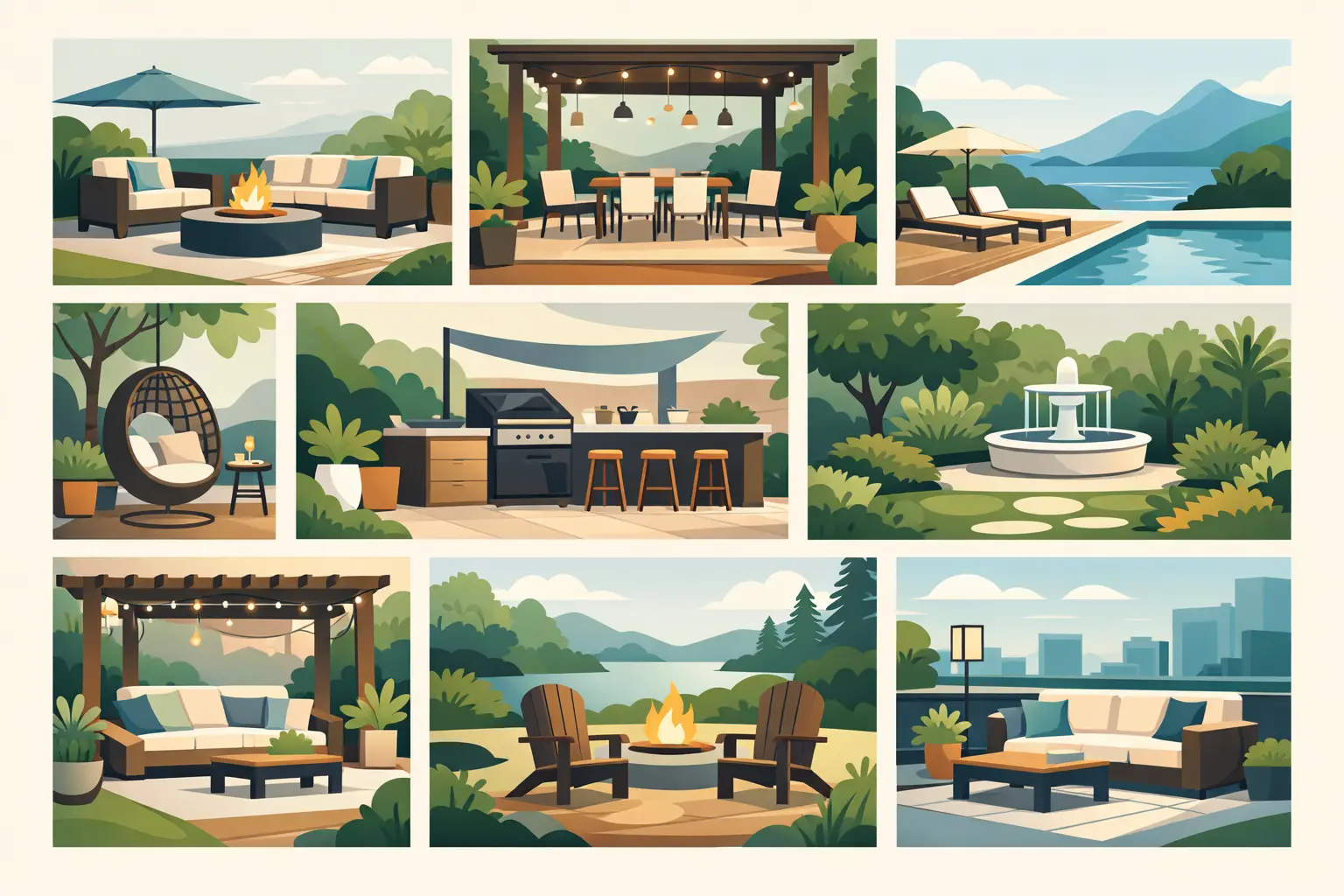
07 Mar 9 Outdoor Living Space Design Ideas
A well-designed backyard changes how a property feels the moment you step outside. It is no longer just lawn, fencing, and a patio set. It becomes a place to host, unwind, dine, and spend more time at home in a way that feels intentional.
The best outdoor living space design ideas are not about adding more features for the sake of it. They are about creating a space that works for your lifestyle, fits the architecture of your home, and holds up beautifully over time. For some homeowners, that means a refined entertaining area with a built-in grill and dining terrace. For others, it means a quiet lounge, better privacy, and lighting that makes the yard usable after sunset.
Start with how the space should function
Before choosing pavers, furniture, or planting, the most important design decision is how you want the space to perform. A family with young children will use a yard differently than empty nesters who entertain often. A commercial property has another set of priorities entirely, with durability, first impressions, and circulation taking the lead.
This is where many projects go off track. Homeowners often start with a feature they like, such as a fire pit or pergola, without thinking through how people will move through the yard or how each area connects to the home. A better approach is to define zones first. Dining, lounging, cooking, and open circulation all need their own place, even in smaller yards.
When the layout is handled properly, the yard feels calm and easy to use. When it is not, even expensive materials can feel crowded and underwhelming.
Outdoor living space design ideas that create structure
The strongest outdoor spaces usually rely on structure before decoration. Hardscape elements establish form, movement, and purpose. Planting and styling then soften and complete the space.
1. Build clear zones with patios and terraces
A single flat patio can work, but a more tailored design often feels more architectural and more usable. Separate surfaces or slight level changes can create distinction between a dining area, a fireside lounge, and a poolside retreat without making the yard feel chopped up.
This does not always require a large property. Even a modest backyard can benefit from a primary entertaining terrace near the house and a secondary destination farther out. That second space might be a quiet seating area, a small fire feature, or a garden focal point that draws the eye across the yard.
The trade-off is budget and complexity. More defined zones usually mean more excavation, grading, and material transitions. But the payoff is a space that feels designed rather than simply furnished.
2. Make the outdoor kitchen earn its footprint
An outdoor kitchen is one of the most requested features in premium landscape projects, but it only works when it matches the way the homeowner actually entertains. Some households need a full setup with built-in grill, refrigeration, storage, and generous prep space. Others are better served by a simpler cooking station with a durable counter and room for serving.
Oversizing this feature can take valuable square footage away from seating and circulation. Undersizing it can make hosting awkward. The right solution depends on how often you cook outside, how many people you usually host, and whether the space is intended for quick family dinners or larger gatherings.
3. Use a pergola or covered structure to define the room
One of the smartest outdoor living space design ideas is to give the yard some overhead definition. A pergola, pavilion, or covered patio creates a sense of enclosure that makes the space feel like a true extension of the home.
This is not only about appearance. Shade improves comfort, helps protect furnishings, and can make a west-facing yard much more usable in the heat of summer. Covered structures also create an opportunity for integrated lighting, fans, heaters, or retractable screens.
The design should feel consistent with the house. A sleek modern structure can look striking on the right property, but it will feel disconnected if the home has a more traditional character. Good design always respects that relationship.
Design for comfort after the sun goes down
A backyard that only works in full daylight is not reaching its potential. Lighting is one of the most overlooked investments in outdoor design, and one of the most transformative.
4. Layer lighting instead of relying on one source
Strong outdoor lighting is subtle. Path lights improve safety and guide movement. Step lights add visibility and polish. Downlighting from structures or trees creates atmosphere. Accent lighting on stonework, specimen trees, or water features gives the yard depth and presence after dark.
Too much lighting can be just as problematic as too little. Overly bright fixtures flatten the mood and can make a space feel commercial rather than refined. The goal is warmth, visibility, and dimension.
5. Add a fire feature with purpose
Fire brings people together quickly. It extends the season, creates a focal point, and gives the yard a natural gathering place. Built-in fire pits tend to suit casual conversation areas, while outdoor fireplaces can introduce a stronger architectural element and more visual weight.
Placement matters. A fire feature should support conversation without interrupting movement or overwhelming the layout. Wind exposure, sightlines from the house, and clearance from structures all need careful consideration. It is a feature that looks simple on paper but benefits from experienced planning.
Let planting do more than decorate
Planting should never feel like an afterthought. It is what softens hardscape, frames views, and gives the space seasonal life. But in high-function outdoor environments, planting also needs to perform.
6. Use planting for privacy and atmosphere
Privacy is a major priority for many homeowners, especially in established neighborhoods where homes sit close together. Layered planting can create that privacy in a much more elegant way than fencing alone. Ornamental trees, evergreen screening, and well-scaled shrubs can soften boundaries while making the yard feel more secluded.
The right planting plan also changes how the space feels emotionally. A clean, restrained palette supports a modern design. A looser mix with texture and seasonal change creates a softer, more natural character. Neither approach is inherently better. It depends on the home, the client, and the desired experience.
7. Choose materials and plants for longevity
Beautiful design has to survive real use. In the GTA, that means freeze-thaw cycles, snow, heat, foot traffic, and the wear that comes with entertaining and family life. Material selection matters just as much as layout.
Natural stone offers character and timeless appeal, but some products require more maintenance than homeowners expect. Concrete pavers can provide excellent performance and design flexibility, especially when installed properly. The same logic applies to planting. A high-maintenance garden may look impressive in year one, but if it does not fit the client’s schedule or appetite for upkeep, it will not age well.
The best outdoor spaces are designed for long-term enjoyment, not just first impressions.
Think beyond the backyard surface
Great outdoor living design is often defined by the details homeowners do not notice right away, but would miss if they were absent.
8. Create transitions that connect house and landscape
A backyard feels more luxurious when the transition from inside to outside is easy and intentional. That may mean aligning the patio with interior flooring lines, widening steps from the back door, or carrying similar material tones from the home into the landscape palette.
This is one reason custom design matters. A yard should not feel like a separate project dropped behind the house. It should feel connected to the architecture and the way the property is used as a whole.
9. Plan storage, utilities, and maintenance early
The polished finished result depends on practical planning. Cushions need storage. Outdoor kitchens need gas, electric, and water considerations. Drainage needs to be resolved before hardscape is installed. Snow management, irrigation, and service access may also affect the layout.
These are not the glamorous parts of the project, but they are often what separates a space that photographs well from one that genuinely works. End-to-end planning reduces compromises later and protects the integrity of the design.
Why custom design makes the difference
There is no shortage of inspiration online, but inspiration is not the same as a buildable plan. The most successful outdoor living space design ideas are shaped by the property itself – its grade, architecture, sun exposure, privacy conditions, and intended use.
That is why custom design-and-build matters. It brings design vision and execution together from the start, which leads to better decisions about layout, material compatibility, construction details, and long-term performance. For homeowners who want more than a basic patio install, that integrated approach saves time, avoids disconnects, and produces a more cohesive result.
At Redleaf Landscape Inc, that process has guided custom outdoor transformations across the GTA since 1986. The goal is not simply to add features. It is to create outdoor environments that are functional, refined, and built with lasting attention to detail.
The right yard should feel like it belonged there all along – an extension of the home, a better way to use the property, and a place you will want to return to every chance you get.