


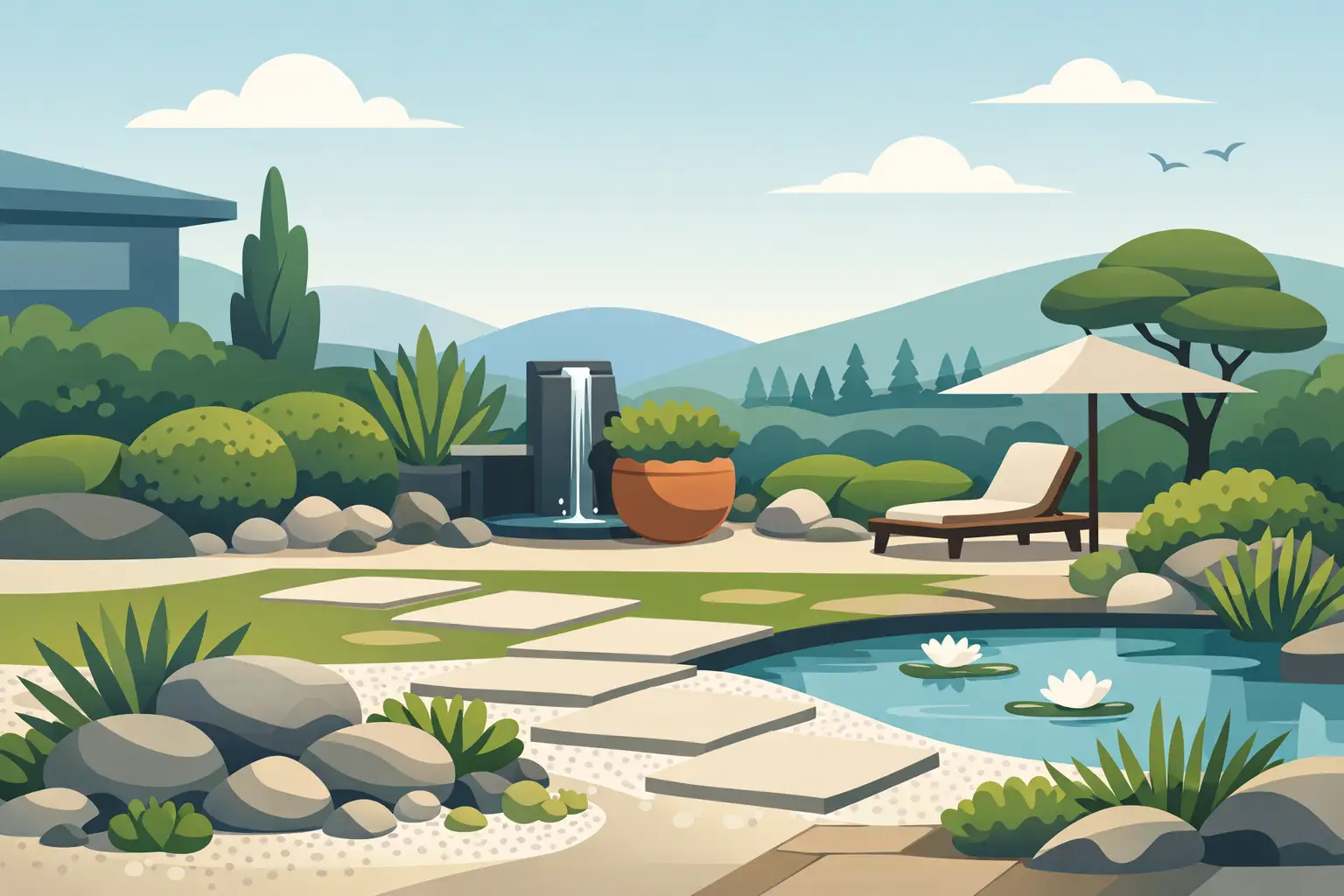
11 Mar 11 Low Maintenance Landscaping Ideas
A beautiful yard should not feel like a second job. For many homeowners, that is the real challenge – creating an outdoor space that looks refined, functions well, and does not demand constant watering, pruning, edging, and seasonal rework.
The good news is that low maintenance landscaping ideas have come a long way from the old assumption that less upkeep means less style. When the design is handled properly, a lower-maintenance landscape can feel cleaner, more intentional, and more luxurious than a yard packed with fussy planting beds and high-demand lawn. The key is making smart decisions early, because maintenance is often shaped more by layout and material choice than by what happens after installation.
What low maintenance landscaping really means
Low maintenance does not mean no maintenance. Every outdoor space needs some level of care. Trees grow, weeds find openings, and seasonal cleanup is part of owning a property. What low maintenance does mean is reducing the amount of time, cost, and effort required to keep the landscape looking finished.
That usually comes down to three things: limiting high-demand surfaces, choosing materials that age well, and selecting plants that suit the site rather than fighting it. A yard that is designed around those principles tends to stay attractive with less intervention. It also tends to perform better over time, especially for busy households that want the property to feel polished without constant weekend work.
Low maintenance landscaping ideas that still feel custom
The most successful landscapes balance visual impact with practical restraint. Instead of filling every corner, they create structure and let a few strong elements do the work.
1. Reduce the size of the lawn
A large lawn is often the biggest maintenance commitment on a property. It needs mowing, fertilizing, watering, edging, and repair in areas that thin out from shade, pets, or foot traffic. Reducing turf is one of the most effective ways to lower upkeep.
That does not mean removing grass entirely. In many properties, a smaller lawn still makes sense for kids, pets, or open visual space. The smarter move is to keep lawn where it is useful and replace the rest with planting beds, groundcover, or hardscape. That shift alone can dramatically cut routine maintenance while making the yard feel more intentional.
2. Build around hardscape that earns its footprint
Patios, walkways, steps, and seating areas are some of the hardest-working elements in a landscape. They organize movement, expand usable space, and reduce the amount of planting and lawn that needs attention. They also create year-round structure, which matters in climates where gardens look very different from one season to the next.
The trade-off is upfront investment. Quality stone, concrete, or paver installation costs more than basic planting. But when designed and installed properly, hardscape offers long-term durability and significantly lower upkeep than large softscape areas. For homeowners who want an outdoor living space that feels like an extension of the home, this is often the right place to invest.
3. Choose planting in larger masses, not scattered singles
One of the most overlooked low maintenance landscaping ideas is simply planting with more discipline. Landscapes become harder to maintain when every bed contains a little of everything. Scattered plants create visual clutter and make pruning, mulching, and weeding more tedious.
Larger masses of the same shrub, ornamental grass, or perennial are easier to manage and typically look stronger. Repetition creates calm and gives the property a more finished, architectural feel. It also makes replacement simpler if a plant fails or needs updating later.
4. Prioritize hardy, site-appropriate plants
Plants that are constantly struggling will always demand more attention. If a full-sun plant is installed in shade, or a moisture-loving plant is placed in dry soil, the maintenance never really stops. You end up compensating with irrigation, fertilizer, pruning, and replacement.
A better approach is to match plant selection to actual site conditions. Consider sun exposure, drainage, winter performance, and mature size. Drought-tolerant perennials, durable shrubs, native-adapted varieties, and ornamental grasses often perform well with less intervention once established. The goal is not just survival. It is choosing plants that hold their shape and color without becoming demanding.
5. Use mulch strategically
Mulch is not just a finishing touch. It helps conserve moisture, suppress weeds, moderate soil temperature, and give beds a cleaner appearance. In practical terms, that means less watering and less time spent pulling weeds.
The keyword is strategically. Too little mulch loses effectiveness, while too much can smother roots and create moisture problems. Mulch also needs periodic refreshing, so it is not maintenance-free. Still, in properly designed beds with clean edging, it is one of the simplest ways to improve both performance and appearance.
Designing for less upkeep from the start
Maintenance is often decided before the first plant goes in. The way a property is organized has a direct effect on how easy it is to care for.
6. Simplify bed lines and transitions
Complicated curves, narrow strips of lawn, and awkward corners may look interesting on paper, but they can create unnecessary trimming, edging, and cleanup. Cleaner bed lines are easier to mow around, easier to mulch, and easier to maintain over time.
This is especially important in front yards, where curb appeal depends on a consistently neat appearance. Simplicity often reads as more upscale because it allows materials and planting to look deliberate rather than busy.
7. Install edging that keeps materials in place
Defined edges between lawn, beds, gravel, and hardscape help the entire landscape stay cleaner. They reduce migration of mulch and stone, make mowing easier, and keep planting zones visually crisp.
There are different options depending on the design – metal edging, stone borders, concrete curbs, or natural transitions. The right choice depends on the style of the property and the materials already in use. The main point is that a well-defined edge saves labor later.
8. Use gravel and decorative stone carefully
Stone can be useful in low maintenance landscaping, particularly in side yards, utility areas, and modern designs where a clean, architectural look fits the home. It does not need mowing, and it can help with drainage in the right application.
But this is one of those areas where it depends. Decorative stone is not always lower maintenance if it is installed without proper base preparation, edging, and weed control. Leaves collect in it, weeds can still appear, and loose stone is not ideal for every family or every front yard. Used selectively and installed well, it can be an asset. Used too broadly, it can feel harsh and become a different kind of upkeep.
Low maintenance landscaping ideas for outdoor living
For many upscale properties, the real goal is not just less work. It is more usable outdoor space with fewer headaches.
9. Create defined entertaining zones
An outdoor dining area, a lounge space, or a fire feature can shift the focus of the yard from maintenance to living. When more of the property is designed for use, there is less pressure to fill every square foot with high-maintenance planting.
This approach also adds value beyond convenience. It makes the landscape more functional and more aligned with how people actually use their homes. A well-built backyard gathering space usually delivers more lasting satisfaction than an oversized lawn or elaborate planting bed that requires constant care.
10. Add irrigation where it makes sense
It may seem counterintuitive, but irrigation can support a lower-maintenance landscape when used thoughtfully. Drip irrigation in planting beds, for example, directs water where it is needed and reduces the guesswork of hand watering.
Of course, irrigation is not necessary for every property, and poorly planned systems create their own issues. But for larger landscapes or clients who travel often, it can protect the investment and keep the property performing consistently with less day-to-day attention.
11. Plan for four-season structure
A landscape that depends only on summer flowers often feels disappointing for much of the year. Strong low-maintenance design includes evergreen structure, durable shrubs, ornamental grasses, and hardscape elements that hold visual interest beyond peak bloom season.
That matters for two reasons. First, the property looks composed even when the garden is quieter. Second, you are not forced to rely on frequent seasonal change-outs just to keep things attractive. A landscape with good bones asks less of you and gives more back year-round.
When lower maintenance should still feel high end
There is a difference between minimizing work and cutting corners. The best low-maintenance landscapes still require thoughtful design, proper grading, quality installation, and a clear understanding of how the property will mature. If those fundamentals are missed, even simple landscapes become frustrating.
That is why many homeowners benefit from a design-and-build approach rather than piecing together decisions one area at a time. A cohesive plan can reduce future maintenance while improving how the entire property functions and feels. For homeowners looking to build that kind of outdoor space, Redleaf Landscape Inc brings a craftsmanship-led approach that prioritizes beauty, function, and long-term performance.
The right landscape should give you more time to enjoy your property, not more chores to manage. If every choice is working a little harder – from plant selection to hardscape layout – less maintenance starts to feel like a better standard, not a compromise.