


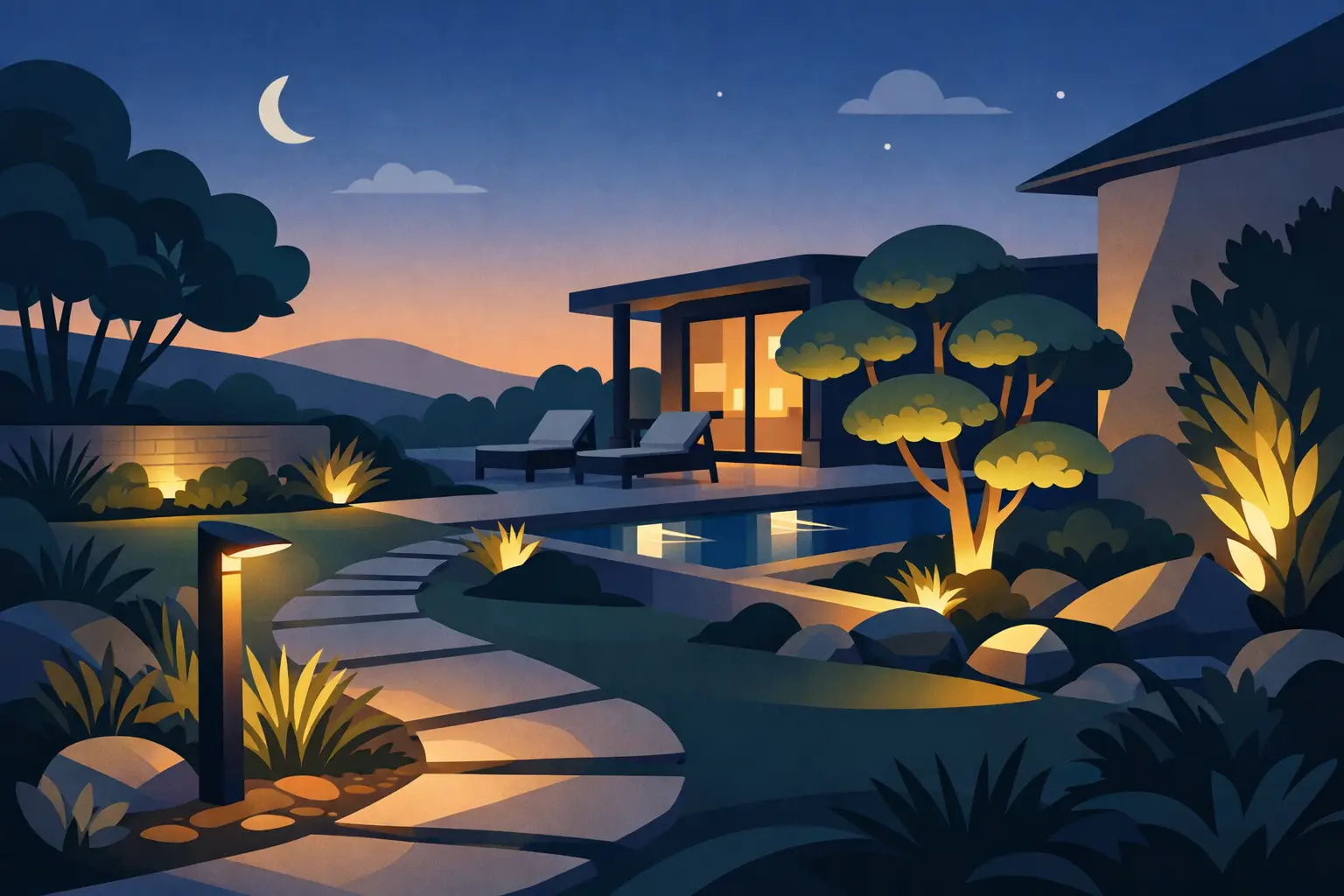
16 Mar Landscape Lighting That Feels Intentional
The difference between a well-lit landscape and an overlit one is usually obvious the moment the sun goes down. One feels calm, refined, and easy to move through. The other looks harsh, uneven, and brighter than it needs to be. Good lighting is not about adding fixtures everywhere. It is about shaping how your property is experienced after dark.
For homeowners investing in a custom outdoor space, lighting should never be treated as an afterthought. It affects safety, curb appeal, atmosphere, and how often you actually use the space. A patio that feels inviting at 8 p.m. becomes a true extension of the home. A front entry that is softly illuminated feels more welcoming and more complete. The best results come from a plan, not from a box of fixtures chosen one by one.
A landscape lighting design guide starts with purpose
Every strong lighting plan begins with a simple question: what should this space do at night? The answer changes everything.
If the goal is safer circulation, the design should prioritize steps, path transitions, grade changes, and entry points. If the goal is entertaining, the emphasis may shift toward patios, outdoor kitchens, seating areas, and focal planting. If curb appeal is the priority, the lighting should support the home’s architecture, reveal texture, and create depth from the street.
In most projects, the real answer is a mix of all three. That is where experience matters. Lighting should support how people move through the property while also creating a sense of balance. Too much focus on utility can make a space feel flat. Too much focus on drama can leave key areas underlit. The most successful designs handle both.
Think in layers, not fixtures
A common mistake is to plan lighting fixture by fixture instead of scene by scene. A better approach is to think in layers.
The first layer is functional light. This covers walkways, steps, drive approaches, gates, and entries. These areas need visibility, but not glare. You want people to feel confident moving through the property without seeing exposed bulbs or hot spots.
The second layer is ambient light. This gives outdoor living spaces their comfort. It might come from subtle downlighting near a seating area, integrated lighting in a retaining wall, or a soft wash near a dining space. This is the layer that makes a landscape usable in the evening rather than simply visible.
The third layer is accent light. This is where the design gains character. Trees, specimen planting, stonework, water features, columns, and facade details can all be highlighted with restraint. Accent lighting should guide the eye and create contrast. It should not compete with every other part of the yard.
When these layers are planned together, the property feels composed. When they are not, lighting tends to look random.
Where to place lighting for the strongest result
Placement matters more than fixture count. A few well-positioned fixtures almost always outperform a larger number placed without a clear strategy.
Path lighting is one of the most misunderstood categories. Fixtures should define direction and help reveal edges, but they do not need to line every inch of a walkway. In fact, spacing them too evenly can create an airport-runway effect that feels dated and overly bright. It is often better to light key turns, intersections, and changes in elevation while letting darkness remain part of the composition.
Steps deserve special attention. Poorly lit stairs are both a safety issue and a missed design opportunity. Depending on the construction, lighting can be integrated into risers, adjacent walls, or surrounding planting beds. The goal is even visibility across each tread without blinding someone as they approach.
Up-lighting on trees and architectural features can add dramatic structure, but it needs discipline. A mature tree may benefit from one carefully aimed fixture or a pair that reveals canopy and trunk. A stone wall may need a gentle graze to bring out texture. What it does not need is a cluster of fixtures producing multiple conflicting beams.
Patios and outdoor living areas often benefit from a softer touch than homeowners expect. Bright overhead light can flatten the space and make it feel commercial. Layered perimeter lighting, subtle downlighting, and integrated light in built elements usually create a more comfortable effect.
Choosing the right brightness and color temperature
More light is not better. Better light is better.
One of the fastest ways to diminish a premium landscape is to over-brighten it. Harsh output erases depth, creates glare, and makes planting look unnatural. Softer, targeted illumination usually produces a more upscale result because it preserves contrast and lets focal points stand out.
Color temperature matters just as much. In most residential landscapes, warmer light tends to feel more natural and inviting, especially around stone, wood, and planting. Cooler tones can work in certain contemporary settings, but they often feel too stark when used across an entire property. The right choice depends on the architecture, material palette, and mood you want to create.
This is one of those areas where it depends. A modern commercial frontage may benefit from a cleaner, crisper appearance. A backyard designed for family gatherings and relaxed entertaining usually calls for warmth. The important thing is consistency. Mixing color temperatures without a reason can make a property feel disjointed.
This landscape lighting design guide would be incomplete without talking about glare
Glare is the detail that separates basic lighting from refined lighting. You can have quality fixtures and still get a poor result if light is aimed carelessly or exposed directly to view.
The best lighting lets you notice the effect before you notice the source. Fixtures should be shielded where possible, tucked into planting thoughtfully, and aimed with precision. This is especially important near front entries, seating areas, and windows, where glare can quickly become irritating.
There is also a practical side to this. Light spilling into neighboring properties or directly into interior rooms is rarely welcome. Good design respects the property lines and the way people actually live in the space.
Plan for the landscape as it will grow
Lighting and planting should always be considered together. A fixture that works perfectly on installation day may disappear behind new growth two seasons later. A young ornamental tree may need a different approach than a mature shade tree. Shrubs fill in. Perennials spread. Branching changes.
That is why lighting works best when it is integrated into the broader landscape design rather than added at the very end with little coordination. Fixture locations, beam spread, and access for future adjustment all need to account for the landscape as a living system.
This is also where craftsmanship shows. Clean installation, thoughtful wire routing, durable materials, and serviceable placement all matter over time. Outdoor lighting needs to perform through weather, seasonal change, and years of use. Appearance on day one is only part of the job.
Control systems and maintenance matter more than most people expect
A beautiful lighting plan can still disappoint if it is inconvenient to use. Timers, photocells, and smart controls can all improve performance, but they should match how the property is actually used.
Some clients want a simple automated schedule that handles front and rear zones consistently. Others want flexibility for entertaining, seasonal adjustments, or later-night shutoff in selected areas. Neither approach is inherently better. The right system is the one that supports the lifestyle of the people using the space.
Maintenance should be part of the conversation from the start. Fixtures need periodic adjustment, lenses need cleaning, and plant growth changes light distribution over time. Even high-quality systems benefit from checkups. A landscape that is custom designed deserves the same standard of care after installation.
Why professional design makes a visible difference
Landscape lighting sits at the intersection of design, construction, and long-term performance. That is why piecemeal decisions often lead to uneven results. The fixture might be fine, but the placement is wrong. The brightness might be strong, but the effect is uncomfortable. The patio might be lit, but the rest of the property falls away awkwardly.
A professionally designed system looks at the entire composition. It considers architecture, circulation, materials, planting, focal points, and how the property should feel at night. It also takes installation quality seriously, because even a strong concept can be undermined by poor execution.
For clients investing in a tailored outdoor environment, lighting is part of the finished experience, not an accessory. When handled well, it reinforces craftsmanship, extends usability, and gives the landscape a sense of permanence. That is exactly why it deserves the same level of attention as the hardscape, planting, and layout.
If you are planning an outdoor transformation and want the nighttime experience to feel as polished as the daytime one, a thoughtful lighting plan is one of the smartest decisions you can make. At its best, lighting does not compete for attention. It gives your property presence, comfort, and lasting character after dark.