


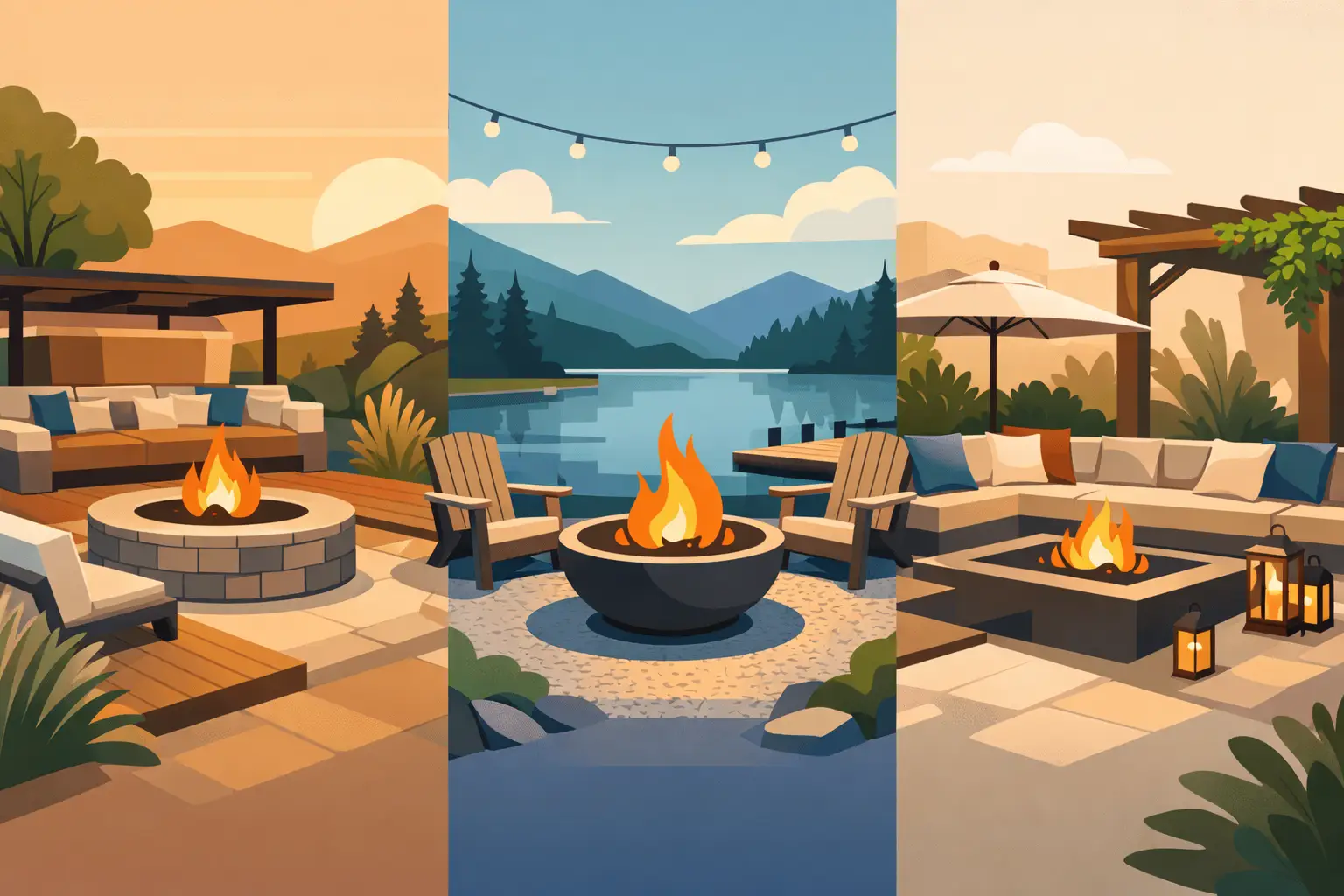
14 Mar 12 Fire Pit Patio Design Ideas That Work
A fire pit changes how a patio gets used. What sits empty after dinner suddenly becomes the place everyone drifts toward – on cool spring nights, late summer evenings, and crisp fall weekends. The best results, though, do not come from dropping a fire feature into the middle of a hardscape and hoping it feels finished. Strong fire pit patio design ideas start with how people move, gather, relax, and see the space from the house.
For homeowners investing in a custom outdoor living area, the goal is not simply to add a flame. It is to create a patio that feels composed, comfortable, and built to last. That means balancing scale, materials, safety, and everyday function so the fire pit looks like it belongs there from the start.
Fire pit patio design ideas that start with layout
Layout is the decision that shapes everything else. A fire pit patio can feel intimate and welcoming, or awkward and oversized, depending on how the seating zone relates to the house, yard, and traffic flow.
One of the most reliable approaches is to treat the fire pit as a destination rather than the entire patio. In larger backyards, that often means creating a dedicated conversation area set slightly apart from the dining space. This separation helps each zone do its job. Dining stays practical and open for serving, while the fire pit area feels more relaxed and social.
In smaller yards, a single patio can still work beautifully, but proportions matter. A compact circular or square seating arrangement tends to feel more natural than stretching furniture around a fire pit that is too large for the footprint. If people have to squeeze past chairs or pull seats too far away from the flame, the patio may look good on paper but feel inconvenient in real use.
Sightlines matter too. A well-placed fire pit anchors the view from interior living spaces, especially when seen through large rear windows or patio doors. That visual connection gives the backyard presence year-round, even when the space is not in active use.
Choose a fire pit shape that fits the architecture
Among the most overlooked fire pit patio design ideas is matching the shape of the feature to the home and surrounding hardscape. Round fire pits are often the easiest for conversation because everyone faces inward equally. They also soften patios dominated by straight edges and rectangular forms.
Square and rectangular fire pits feel more architectural. They pair well with modern homes, linear patios, and structured planting plans. They can also help define seating areas with built-in benches or sectional furniture, especially when the design leans clean and contemporary.
Neither option is automatically better. It depends on the character of the property. A traditional home with layered planting and natural stone may feel better served by a round fire pit with a softer edge detail. A more modern residence may benefit from crisp lines and a lower-profile rectangular feature that echoes the home’s geometry.
Built-in seating creates a more finished patio
If the goal is a polished outdoor room rather than a temporary setup, built-in seating deserves serious consideration. Seat walls around a fire pit give the patio structure, improve durability, and help the space feel intentionally designed.
Built-ins are particularly effective when space is limited. They reduce the need for bulky movable furniture and keep the circulation area cleaner. They also hold up well through changing weather and require less seasonal management than a patio full of standalone chairs.
That said, built-in seating is less flexible. Homeowners who host different group sizes or like to rearrange furniture may prefer a hybrid approach – a permanent seat wall paired with a few movable lounge chairs. That combination offers the visual strength of masonry with the adaptability of loose furnishings.
Material selection makes or breaks the look
A fire pit should feel integrated with the patio, not like an afterthought added from a different project. That is why material selection matters so much. Pavers, natural stone, concrete slabs, and masonry each create a different impression, and the right choice depends on the home’s architecture, the intended style, and maintenance expectations.
Natural stone has a timeless, high-end presence and works especially well in landscapes designed to feel established and organic. Pavers offer excellent versatility and are often ideal for tailored layouts with consistent patterning. Large-format slabs can create a more contemporary look with clean lines and restrained detailing.
The fire feature itself should relate to the patio surface and any adjacent retaining walls, steps, or pillars. Contrast can be effective, but only when it looks intentional. A sleek concrete fire bowl on a rustic patio may feel disconnected unless other elements help bridge the styles.
In the GTA climate, freeze-thaw durability should also guide material choices. A beautiful design on day one is not enough. Outdoor living spaces need to perform through real seasonal changes, which is where professional planning and installation make a measurable difference.
Gas or wood depends on how you live
The best fire pit patio design ideas are always tied to lifestyle. One of the biggest early decisions is whether the fire feature will be gas or wood-burning.
Gas fire pits are cleaner, easier to operate, and generally better suited to homeowners who want convenience. They turn on quickly, require less cleanup, and support a more refined patio experience. For many custom projects, gas is the preferred choice because it aligns with how busy households actually use outdoor space.
Wood-burning fire pits offer a more traditional atmosphere, along with the sound and scent many people associate with an authentic backyard fire. They can be a strong fit for larger properties or more rustic designs, but they also require more storage, more maintenance, and greater attention to smoke direction.
There is no universal answer here. It depends on the setting, local regulations, and how often the fire pit will realistically be used.
Layer the patio with supporting features
The most successful fire pit areas rarely stand alone. They feel comfortable because supporting elements have been considered from the beginning.
Lighting is a major one. Soft perimeter lighting, step lights, and subtle accent fixtures help the patio remain functional after dark without competing with the fire itself. Good lighting also adds safety, especially along grade changes or walkway connections.
Planting matters just as much. Ornamental grasses, structured evergreens, and low seasonal plantings can soften hardscape edges and make the fire pit area feel settled into the landscape. Privacy planting is often worth the investment too, particularly in neighborhoods where homes sit close together.
A pergola, pavilion, or overhead structure may also make sense, though clearances and fire safety need careful planning. In some designs, a nearby covered lounge area complements an open-air fire pit zone, giving the yard more than one way to be enjoyed.
Keep comfort and spacing realistic
Beautiful patios can still fail if the seating area does not feel comfortable. The distance between the fire pit and seating should allow people to enjoy warmth without feeling crowded. Too close, and the space becomes uncomfortable. Too far, and the fire loses its purpose as a gathering feature.
Furniture scale matters here. Deep lounge seating may look luxurious, but it needs room. On a modest patio, slimmer-profile chairs often create a better experience because they preserve clear movement around the space.
It is also worth thinking beyond peak entertaining moments. A fire pit patio should work for two people on a quiet weeknight just as well as it does for guests on a weekend. Designs that rely on oversized layouts or too many fixed elements can feel underused when daily life is more casual.
Think about the yard as a whole
Some of the strongest fire pit patio design ideas come from stepping back and designing the entire outdoor environment, not just the feature itself. A fire pit should connect logically to doors, walkways, lawn areas, pools, and planting beds. When each part of the yard feels related, the patio becomes part of a larger composition instead of an isolated upgrade.
That broader view is also where property value enters the conversation. A well-designed fire pit patio can improve curb appeal, outdoor usability, and buyer perception, but only if it feels cohesive with the rest of the landscape. Quality craftsmanship and thoughtful planning are what turn a popular feature into a lasting investment.
For homeowners who want an outdoor space that reflects how they live and entertains with confidence, custom design is often the difference between a patio that merely looks finished and one that truly performs. That is the standard Redleaf Landscape Inc brings to outdoor living projects across the GTA, where every detail matters from concept through installation.
A fire pit should do more than add warmth. It should give your patio a reason to be used often, enjoyed comfortably, and remembered long after the evening ends.