


06 Mar Choosing a Landscape Design-Build Company
You can usually spot the difference between a “nice yard” and a true outdoor living space in the first 30 seconds. One feels accidental – a patio here, a few shrubs there. The other feels composed. The walkway lands exactly where you naturally want to walk. The lighting makes the space usable after sunset. The planting looks beautiful now and still makes sense five years from now.
That difference rarely comes from buying better plants. It comes from choosing the right landscape design and build company – a partner that can take a vision, translate it into a buildable plan, and execute it with craftsmanship.
What a landscape design and build company actually does
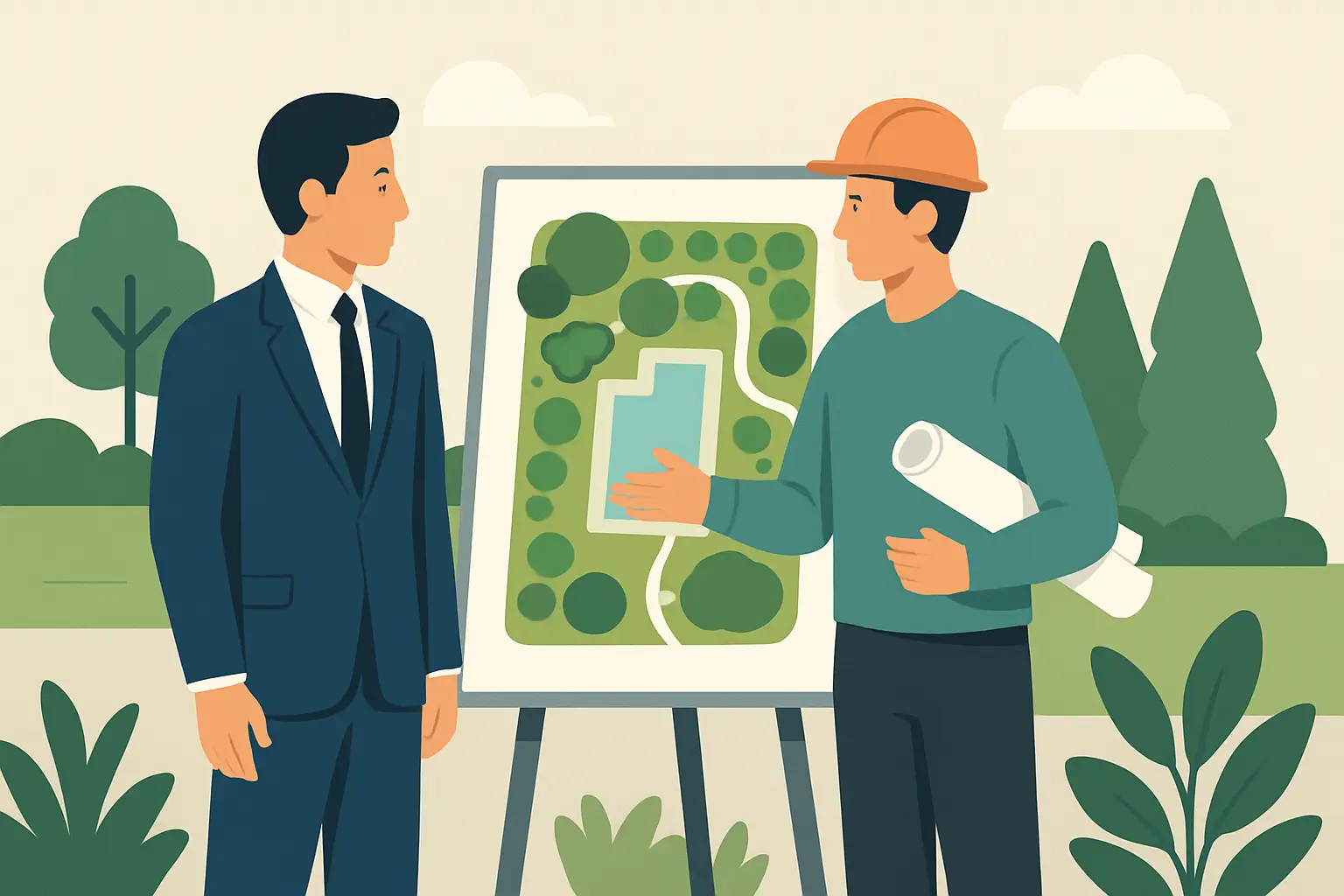
A design-build firm handles the full arc of your project: consultation, concept, design development, materials selections, scheduling, construction, and finishing details. Instead of hiring a designer, then shopping the design to contractors, then coordinating trades yourself, you have one accountable team responsible for the result.
That matters most when the project has moving parts: grading, drainage, patios, walls, steps, lighting, irrigation, planting, carpentry, and sometimes features like outdoor kitchens or pergolas. When design and installation are separated, it is easy to lose intent as budgets tighten or site conditions change. Design-build keeps the feedback loop tight, so the plan stays grounded in real construction and the finished landscape stays true to the original vision.
Why “design-build” changes the outcome (and the experience)
The obvious benefit is convenience. The bigger benefit is control.
A seasoned design-build team designs with installation in mind. They know where water will go in a heavy rain. They know what base preparation prevents shifting pavers. They know which plant palette will hold up to the microclimate created by a south-facing wall or a windy corner.
It also reduces the most common homeowner frustration: you approve a design, then the installer says it cannot be built as drawn, or it can but only with compromises that were never discussed. In design-build, those conversations happen earlier, before you fall in love with a detail that does not fit the site or the budget.
There is a trade-off to acknowledge. Design-build is not always the lowest initial price, especially when the firm invests heavily in planning, skilled labor, and proper construction methods. But when you consider rework, replacements, and the cost of living with a layout that does not function, value tends to show up over time.
The process you should expect from a premium firm
Every company has its own workflow, but a professional design-build process is intentionally structured. It protects your investment and keeps decisions from piling up at the worst possible moment.
1) Consultation that goes beyond “what do you want?”
A strong consultation includes how you live, not just what you like. Do you entertain in the evenings? Do you need a safe play zone with clear sightlines? Are you trying to reduce lawn and maintenance? For commercial properties, is the priority brand presentation, pedestrian flow, snow storage, or durability?
You should also expect practical questions about drainage, sun exposure, existing trees, access for machinery, and how construction will affect daily life.
2) Concept and layout that solves circulation first
Before materials and plants, layout should lock in how you move through the space. The best outdoor rooms feel intuitive. Steps land where your feet expect them. A grill area has a direct path to the kitchen. Seating is placed for conversation and for the view you actually want.
If a concept plan looks beautiful but ignores movement, slope, and transitions, it will not age well.
3) Design development where details get real
This is where a premium design-build firm earns its reputation. Expect selections and details that tie everything together: paver pattern and border decisions, wall cap choices, stair geometry, lighting placement, planting structure, and how water is managed.
It is also where you should see “function meets natural beauty.” A sustainable landscape is not a style trend – it is a performance standard. That can mean smarter grading, better soil prep, water-wise planting, and materials that hold up to freeze-thaw cycles and heavy use.
4) Pre-construction clarity
Before work begins, you should know what is included, what is excluded, the sequence, and the realistic schedule. A reputable firm will set expectations on site access, noise, protection of existing elements, and what the final walkthrough will cover.
5) Installation with craftsmanship, not shortcuts
Quality shows up in the unglamorous parts: base depth, compaction, drainage layers, edge restraint, fastener and footing standards, and the little alignment decisions that keep everything crisp.
A landscape can look great the day it is finished and still be built poorly. The question is whether it will still look great after the first winter, the first season of heavy rain, and years of daily use.
How to compare a landscape design and build company
Most bids look similar at a glance. The difference is buried in assumptions.
Start by asking how the company documents scope. If a proposal simply lists “patio” and “planting,” you cannot compare it to a proposal that spells out excavation depth, base materials, drainage approach, and plant sizes. The more detailed proposal is not trying to be complicated – it is trying to be accountable.
Pay attention to how the firm talks about craftsmanship and execution. Do they explain how they build, or do they only show photos? Strong project photography matters, but process is what protects you.
Also evaluate design capability. If you are paying for custom work, you should see a point of view: cohesive materials, proportion, and a plan that responds to your architecture. A good design does not fight the house. It extends it.
And be realistic about timelines. Premium firms are often booked in advance. If someone can start immediately in peak season with no trade-offs, ask why.
The questions that reveal quality fast
When you are vetting a firm, you do not need to interrogate them like a general contractor. You do need a few questions that make shortcuts hard to hide.
Ask how they handle drainage and grading. If the answer is vague, that is a risk.
Ask what is beneath the patio, not just what is on top. A great surface on a weak base is a future repair.
Ask how they approach plant selection for longevity. You want structure, seasonal interest, and the right plant in the right place, not a “pretty now” mix.
Ask who is accountable on-site. Premium results require supervision and communication, especially when weather and site conditions force adjustments.
Where the best projects tend to invest
Budget is personal, and every site has constraints. Still, the landscapes that feel effortless typically prioritize a few foundational categories.
They invest in layout and transitions – steps, landings, and pathways that make the space feel natural.
They invest in lighting. Not to make the yard bright, but to make it usable and safe, with a layered look that flatters architecture and planting.
They invest in proper construction under hardscape. This is where durability lives.
They also invest in a planting plan with structure. The goal is not a garden that peaks for two weeks. It is a landscape that looks intentional from spring through winter.
Residential vs. commercial: the standard shifts, the principles don’t
Residential projects often prioritize lifestyle: dining, lounging, privacy, and an experience that feels like an extension of the home. Materials are chosen for comfort as much as durability.
Commercial projects lean into first impressions and performance: clean lines, predictable maintenance, durability, and safe pedestrian flow. But the best commercial landscapes still use the same principles of composition and function – they just measure success differently.
Either way, you want a partner who can scale the process without losing attention to detail.
What “sustainable” should mean in real life
Sustainability is sometimes reduced to a plant list. In a high-performing landscape, it is broader.
It can mean managing water on-site through grading and drainage strategies so you are not fighting puddles, ice, or erosion. It can mean improving soil health so plants establish faster and require less intervention. It can mean selecting materials that last, because replacing a failing patio every few years is not sustainable in any sense.
Sustainable design is practical, not preachy. It is simply what happens when function is treated as part of beauty.
A note for GTA property owners
If you are planning a premium outdoor project in and around the Greater Toronto Area, working with a firm that understands local conditions and construction realities can save you from expensive surprises. Redleaf Landscape Inc has been proudly serving the GTA since 1986, with a design-and-build approach rooted in quality in craft and careful execution. If you want a single accountable team from concept to completion, you can start the conversation at https://www.redleaflandscape.ca.
The closing thought that should guide your decision
Choose the company that treats your landscape like a long-term extension of your property, not a short-term makeover. When design, construction, and accountability stay aligned, you do not just get a finished yard – you get an outdoor space that keeps earning its place in your daily life.