


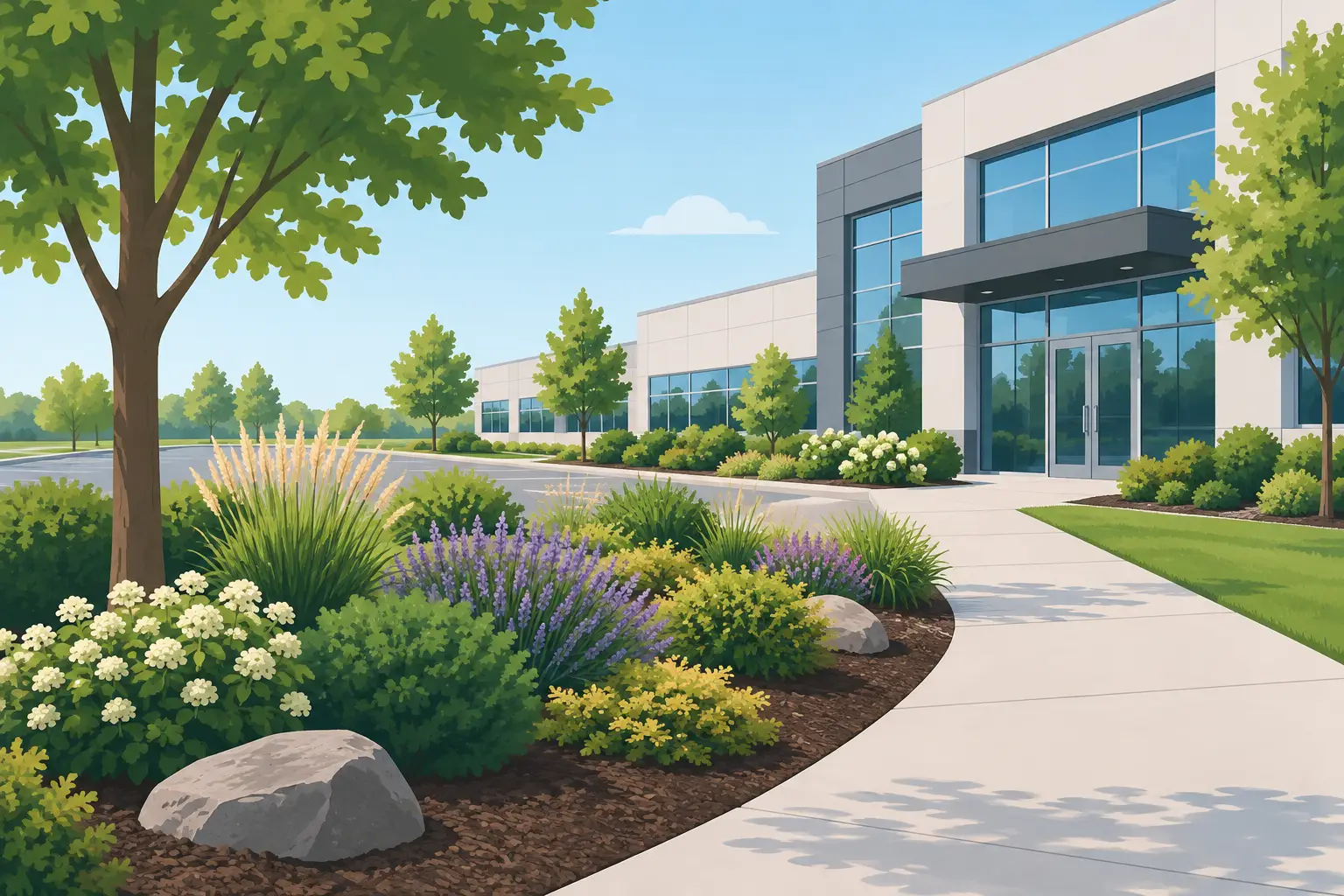
12 Oct A Guide to Commercial Site Planting That Lasts
The first thing visitors notice about a commercial property is rarely the building itself. It is the approach: the entry drive, the walkways, the view from the parking area, and the condition of the planting that frames it all. Healthy, purposeful landscaping signals that a property is managed with care. Sparse beds, struggling shrubs, and plant material placed without a plan can send the opposite message.
A guide to commercial site planting should begin with that reality. Planting is not a finishing touch added after construction. It is a working part of the site, shaping first impressions, directing movement, softening hardscape, managing environmental pressures, and protecting long-term property value.
Start With How the Property Is Used
Commercial planting succeeds when it responds to the daily demands of the property. An office entrance, multifamily community, retail plaza, medical facility, and industrial site may all need durable greenery, but they do not have the same priorities.
A retail property needs clear sightlines to storefronts and signage, along with a welcoming arrival experience that encourages people to linger. A multifamily property may benefit from layered planting that gives shared spaces a more private, residential feel. At a professional office or medical building, clean structure and year-round order often matter more than high-season color alone.
Traffic patterns deserve equal attention. Consider where people walk, wait, load vehicles, cross parking areas, and gather. Planting should guide people toward entrances without narrowing accessible routes or creating hidden corners. Near drive aisles and intersections, lower plantings preserve visibility. Around patios and seating areas, taller layers can create comfort and separation when they are placed thoughtfully.
This is where a custom plan delivers more value than choosing plants from a standard palette. The most attractive design is one that also works under real conditions.
A Guide to Commercial Site Planting Begins Below Ground
A planting plan can look exceptional on paper and still fail if the site conditions are ignored. Before selecting a single shrub or perennial, assess soil quality, drainage, sun exposure, wind, reflected heat, salt exposure, and available rooting space.
Parking lots and building foundations create demanding microclimates. Pavement radiates heat. Snow storage can compact soil and expose plants to deicing salt. Tall buildings can cast deep shade in one season and create wind tunnels in another. These conditions call for plant material chosen for resilience, not simply for appearance at the nursery.
Drainage is especially critical. Plant roots need oxygen as much as they need moisture. Areas that remain saturated after rainfall may require grading adjustments, improved soil structure, or plant choices suited to wetter conditions. Conversely, narrow beds beside hot pavement often dry out quickly and may need irrigation support or drought-tolerant selections.
A professional site review identifies these constraints before installation begins. It is less costly to correct a poor planting environment early than to repeatedly replace failing material later.
Soil Preparation Is a Long-Term Investment
Commercial landscapes are often installed in soils disturbed by construction. Compaction, debris, shallow topsoil, and uneven grading can limit root development from the start. Quality installation includes preparing planting beds to support healthy establishment rather than placing plants into whatever soil remains.
The right approach depends on the site. Some areas need organic matter and soil conditioning; others need drainage improvements or carefully shaped grades. The objective is not to create a perfect garden bed everywhere. It is to build a practical growing environment suited to the chosen plants and the property’s maintenance capacity.
Build a Plant Palette With Structure and Purpose
The strongest commercial landscapes have a clear visual hierarchy. Evergreen material provides a dependable framework. Deciduous shrubs, ornamental grasses, perennials, and seasonal accents add texture, movement, and changing color. Trees offer scale, shade, and a sense of permanence.
Relying too heavily on seasonal flowers can create a strong first impression for a short period, but it may also increase replacement costs and maintenance demands. A more durable strategy uses annual color selectively at prominent entrances, monument signs, or gathering areas, while the main landscape is carried by long-lived plant material.
Plant diversity matters, but it should be controlled. Too many unrelated species can make a site feel fragmented and complicate maintenance. Repeating a limited selection of plants across the property creates a more polished identity, especially when combined with variations in height, texture, and bloom time.
Choose plants for mature size, not just their appearance on installation day. Shrubs placed too closely may look full immediately but eventually crowd walkways, cover windows, block signage, or require aggressive pruning. Giving plant material appropriate room helps the landscape mature with intention.
Plan for Four-Season Appeal
A commercial property represents the business or community throughout the year. That makes winter structure just as relevant as summer bloom. Evergreen forms, distinctive bark, branching patterns, ornamental grasses, and well-designed bed edges can keep a landscape looking composed after flowers have faded.
Seasonal interest does not need to mean constant color. It can come from spring emergence, summer texture, fall foliage, and winter form. The goal is a site that never appears abandoned between peak growing months.
Balance Appearance With Maintenance Reality
Every commercial planting plan should be aligned with the level of care the property can support. A highly detailed garden design can be appropriate for a flagship office, hospitality property, or luxury residential development with ongoing landscape service. It may not be the right fit for a large site with limited maintenance access or a tight operating budget.
This does not mean low-maintenance planting must look plain. It means selecting material that can retain its form, tolerate local conditions, and perform without constant intervention. Mass plantings, durable shrub groups, mulched beds, and properly spaced trees often provide a refined result with more predictable upkeep.
Irrigation is another decision that depends on the site. New plants need consistent moisture while establishing, and high-visibility areas may warrant an irrigation system. In other locations, a drought-conscious plant palette, improved soil preparation, and strategic mulching may reduce the need for supplemental watering after establishment.
Maintenance should also account for access. Crews need room to prune, mulch, inspect irrigation, and remove debris without damaging plants or disrupting visitors. A landscape that is difficult to service will eventually show it.
Use Planting to Improve Safety and Comfort
Commercial landscapes should support a safer, more comfortable experience, not compete with it. Keep plant heights low near entrances, parking areas, and pedestrian crossings where visibility matters. Avoid thorny or sprawling material beside walkways. Maintain clear access to lighting, utilities, fire connections, and building systems.
Shade trees can reduce heat around paved areas and make outdoor seating more usable. Plantings can also soften the visual impact of utility zones, fencing, loading areas, and large expanses of pavement. Screening should be planned carefully, however. The best solution balances privacy with sightlines, security, and airflow.
Sustainability is practical here, not decorative. Trees and planting beds can help moderate heat, slow stormwater runoff, and create more comfortable outdoor environments. Native and regionally adapted plants can support ecological value while often handling local weather patterns more successfully. But native is not automatically the best choice in every location. A plant still needs to suit the soil, exposure, traffic conditions, and maintenance plan.
Coordinate Planting With the Entire Site Plan
Planting works best when it is considered alongside grading, drainage, lighting, paving, irrigation, and site furnishings. Too often, beds are designed after these elements are finalized, leaving awkward leftover spaces with limited soil volume and difficult access.
An integrated design process avoids those compromises. It allows trees to be placed where they will provide shade without interfering with building façades or utilities. It ensures planting beds have enough depth to thrive. It makes room for irrigation and drainage before finished surfaces are installed.
For property owners and managers, working with one accountable design-and-build partner also reduces the risk of a disconnect between the plan and the finished work. Redleaf Landscape Inc approaches commercial landscapes with this level of coordination, bringing design intent and installation quality together from the first consultation through final planting.
Invest Where Visitors Feel the Difference
Not every area of a commercial property needs the same level of detail. A focused investment at primary entrances, signage, streetscapes, and customer-facing outdoor areas can have an outsized effect on perceived quality. Secondary zones can use simpler, durable planting that still feels connected to the overall design.
That balance protects the budget without making the property feel unfinished. It also gives the landscape a clear rhythm: refined focal points, dependable structure, and thoughtful transitions between them.
The right commercial planting does more than fill empty beds. It gives a property presence, makes daily use more pleasant, and continues to earn its place as the landscape matures. When every plant has a purpose, the finished site feels established from the moment people arrive.