


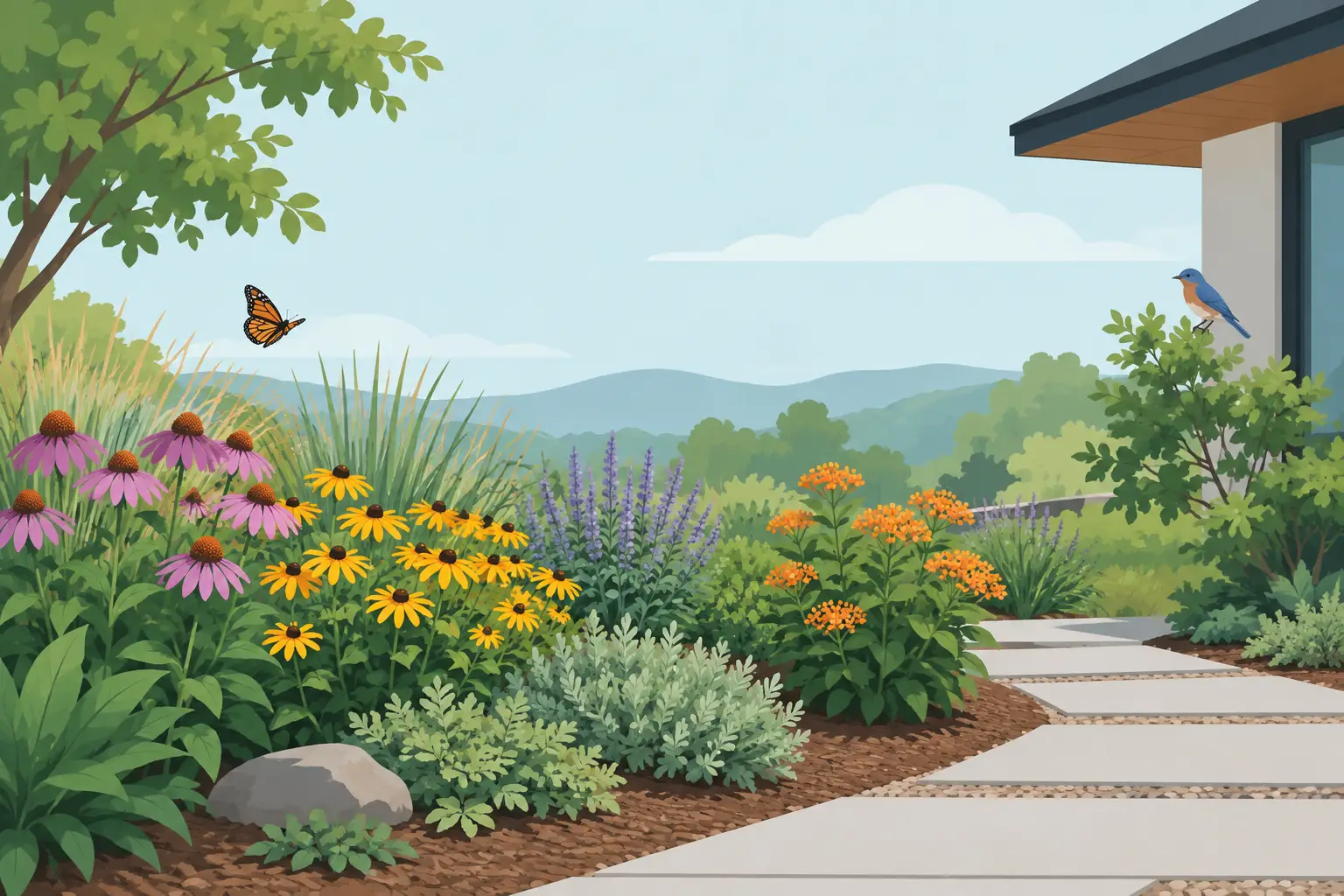
08 Oct How to Incorporate Native Plants Into Your Landscape
A well-designed landscape should feel settled into its setting, not placed on top of it. Learning how to incorporate native plants gives homeowners a way to bring that sense of belonging to the property while creating a yard built for real use, seasonal interest, and lasting performance.
Native planting does not require turning a polished outdoor living space into a wild meadow. With the right design, locally adapted trees, shrubs, grasses, and perennials can frame a pool, soften stonework, define a front entry, and make a patio feel more private and inviting. The difference is in the planning. Native plants work best when they are selected as part of a complete landscape composition, not added as an afterthought.
Start With the Landscape You Want to Live In
The strongest native plantings begin with the purpose of the space. Consider how your household moves through the yard, where you entertain, which views matter most from inside the home, and where privacy is needed. A planting plan around a front walk has different demands than one beside a dining terrace, a play area, or a naturalized property edge.
Begin by identifying the fixed elements: the house, driveway, existing mature trees, utility access, drainage patterns, patios, fences, and grade changes. These features establish the framework for every planting decision. A generous planting bed may be appropriate along the rear property line, while a narrower and more structured palette may suit the front of the home.
Native plants can support a refined design language rather than dictate it. Repetition, proportion, and clean bed lines are what make a landscape feel intentional. A mass of one grass beside a series of flowering perennials often reads more confidently than a collection of one-of-everything specimens.
Understand What “Native” Means for Your Site
A plant is native when it occurs naturally in a particular region and has evolved alongside local soils, weather patterns, insects, and wildlife. That definition is regional, so plant choices should be based on your specific area rather than a generic native-plant label.
Local conditions still matter as much as origin. A native plant suited to a sunny, dry meadow will struggle in a shaded foundation bed with heavy clay soil. Before choosing varieties, assess how much direct sun each area receives, whether water collects after rain, soil texture, exposure to wind, and the competition created by mature tree roots.
This is where thoughtful design prevents disappointment. A property may contain several distinct planting environments: a dry sunny boulevard, a damp low point, a shaded side yard, and a protected backyard garden. Each can support native plants, but not necessarily the same ones.
Match plants to sun, soil, and moisture
Choose plants for the conditions already present whenever possible. This reduces the need for supplemental irrigation, soil amendments, and ongoing replacement. It also produces healthier, fuller plantings over time.
For sunny, well-drained areas, native grasses and drought-tolerant flowering perennials can provide movement and color without looking overly formal. In partial shade, woodland-inspired layers of shrubs, ferns, and flowering plants can bring texture beneath existing canopy trees. Low areas may benefit from moisture-tolerant species that help slow and absorb runoff rather than leaving the space muddy and difficult to maintain.
Do not force a plant into the wrong location simply because it is native or visually appealing. The goal is a landscape that performs beautifully after installation, not just on planting day.
Build in Layers for a Finished, Natural Look
A mature landscape has depth. Native plants are especially effective when arranged in layers that echo the structure of a natural plant community while still serving the architecture of the home.
Start with canopy and understory trees where space allows. These provide shade, vertical scale, and long-term value. Next, use shrubs to define boundaries, screen views, soften fencing, and create visual weight through all seasons. Perennials, groundcovers, and grasses then fill the lower layer, connecting the larger elements and giving beds their seasonal character.
A practical planting design typically includes a dependable structural backbone and more expressive seasonal accents. Evergreen material, strong shrub forms, and ornamental grasses can hold the garden together in winter. Flowering natives and plants with striking fall foliage can then provide moments of color without making the entire property feel busy.
When planning around patios or walkways, consider mature size carefully. Plants that are too tall or wide can crowd circulation and block sightlines. Near seating areas, avoid placing highly attractive pollinator plants directly beside dining tables if bees may be a concern. Set them slightly back, where they can still contribute to the garden without competing with the way the space is used.
Use Native Plants to Solve Practical Problems
The most successful landscapes make beauty useful. Native plants can help address common property challenges when they are positioned with purpose.
A dense mix of shrubs and small trees can create privacy without the hard, closed-in feeling of a solid fence line. Deep-rooted plants can stabilize sloped areas and help manage erosion. Rain gardens and moisture-tolerant plantings can capture runoff from downspouts or paved surfaces, reducing pressure on low spots in the yard.
Native species also support pollinators, birds, and beneficial insects. That benefit is meaningful, but it should be integrated into the broader design rather than treated as a separate project. A well-composed border can support wildlife while still complementing contemporary architecture, formal stonework, or a carefully detailed front entrance.
There are trade-offs. A highly naturalistic planting may offer exceptional habitat value but require more room and a more relaxed visual style. A compact urban lot may call for a smaller, more disciplined palette. Both approaches can be sustainable and visually strong when matched to the property and the owner’s expectations.
Balance Native and Non-Native Selections Thoughtfully
A landscape does not have to be exclusively native to be environmentally responsible. In many custom designs, native plants form the ecological foundation while select non-invasive ornamental plants contribute evergreen structure, a particular color, or a formal character that suits the home.
The priority is to avoid invasive species, select plants with similar cultural needs, and create a cohesive composition. A planting bed that combines native grasses with carefully chosen shrubs and long-blooming perennials can offer more seasonal dimension than a strict single-category palette.
This balanced approach is often especially effective around outdoor living areas. The planting should enhance the experience of the space: soften the edge of a retaining wall, frame a fire feature, provide screening around a lounge area, or guide guests toward the front door. Plants are part of the architecture of the yard.
Plan for Establishment, Not Just Installation
Even plants adapted to local conditions need attention during their first few seasons. New roots need consistent moisture while they establish, particularly during hot or dry periods. Mulch helps retain soil moisture, moderate temperature swings, and suppress weeds, but it should be kept away from the base of trunks and plant crowns.
Expect some adjustment. Perennials may take two or three growing seasons to reach their intended presence, while shrubs and trees develop more gradually. This is one reason spacing matters. Overplanting for an immediate full look can create crowding, poor airflow, and unnecessary maintenance later.
Maintenance should be tailored to the planting style. Some native perennials benefit from being cut back in late winter or early spring, while their seed heads can provide winter interest and food for birds. Grasses may be left standing through winter for texture before being trimmed back. A knowledgeable maintenance plan preserves the design rather than reducing it to routine trimming.
Make the Design Feel Intentional Year-Round
Native landscapes are often judged too quickly by summer flowers alone. A premium result considers all four seasons: spring emergence, summer bloom, fall color, winter silhouettes, bark, berries, and the architecture of dormant grasses.
Choose a restrained palette and repeat it across the property. That repetition creates visual calm, particularly when the landscape includes several outdoor rooms or a large frontage. Allow a few feature plants to take the spotlight, but make sure the overall composition still feels connected from the curb to the backyard.
For homeowners who want a complete transformation, professional design and installation bring the planting plan into alignment with grading, drainage, hardscaping, lighting, and construction details. Redleaf Landscape approaches these elements as one finished environment, so plant material supports both the natural setting and the way the property is meant to be lived in.
The best native planting is not the one with the longest species list. It is the one that makes your property feel more established, more functional, and more distinctly yours with every passing season.